Quick answer
At a first piano lesson, a teacher usually gets to know the student, explores the keyboard, checks a few beginning skills, shares a small musical activity, and talks through the next step with the family or adult learner. It should feel welcoming and organized, not like an audition.
The First Lesson Is a Conversation, Not a Test
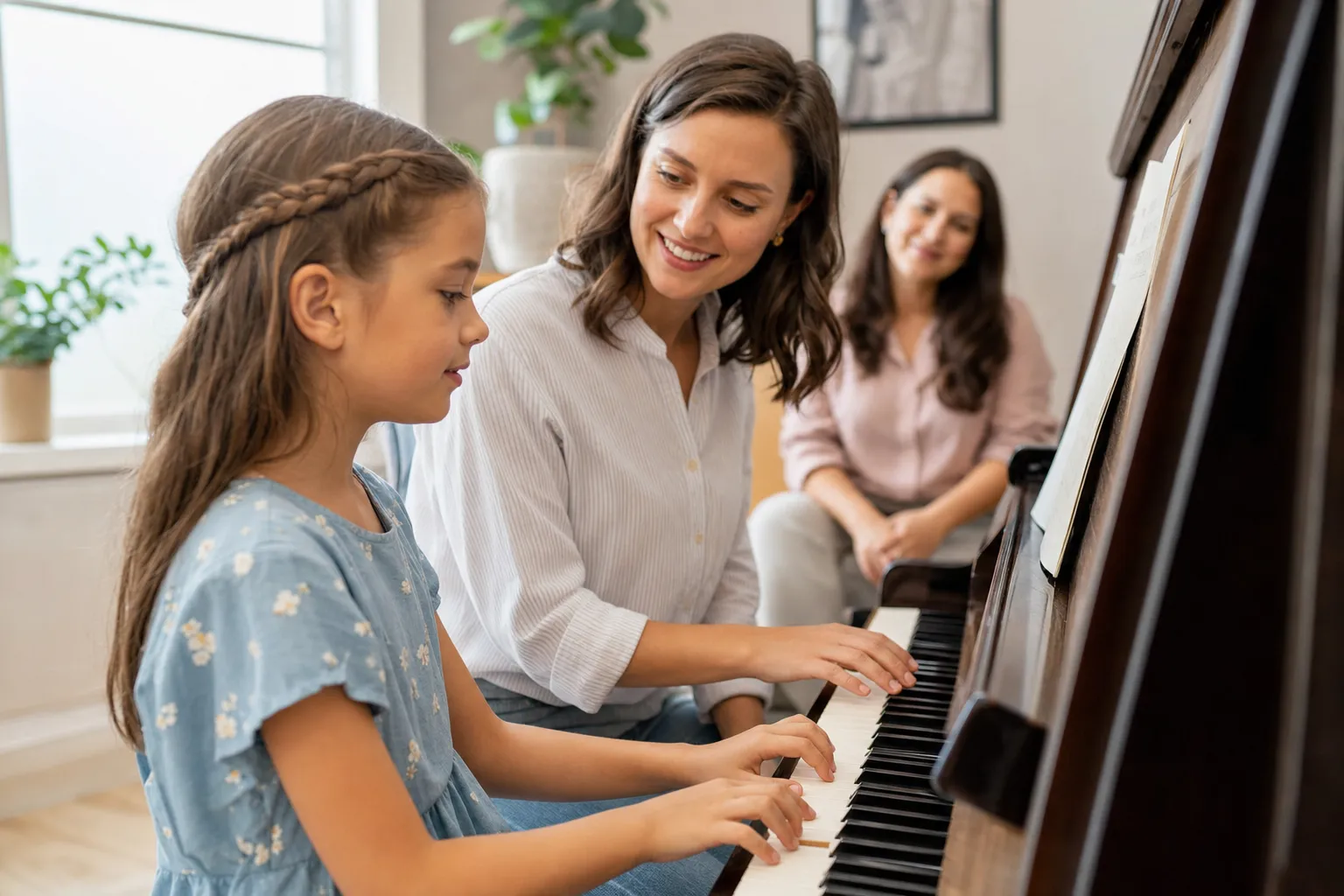
A good teacher is learning about the student as much as the student is learning about the piano.
New students often worry that they will be asked to play something immediately or prove that they are musical enough to begin. That is not the point. A first lesson should give the teacher enough information to choose an appropriate starting place, and it should give the student a real sense of whether the room, teacher, and learning style feel comfortable.
For a child, that may begin with simple questions about favorite songs, school, other activities, and what they hope to play. For an adult, it may include past musical experience, preferred styles, goals, and the realistic amount of time available for home practice. A returning player does not need to start from the beginning, and a complete beginner does not need prior knowledge to belong there.
The Music Teachers National Association's guide for families makes a similar point about matching an instrument program to a child's age and readiness. The first meeting is where that match becomes clearer. For families still deciding whether a child is ready, Amabile's guide to starting piano lessons can help frame the question before you book.
What Usually Happens During a First Piano Lesson
The exact activity list changes with age, but the goal is the same: make music feel approachable from the first few minutes.
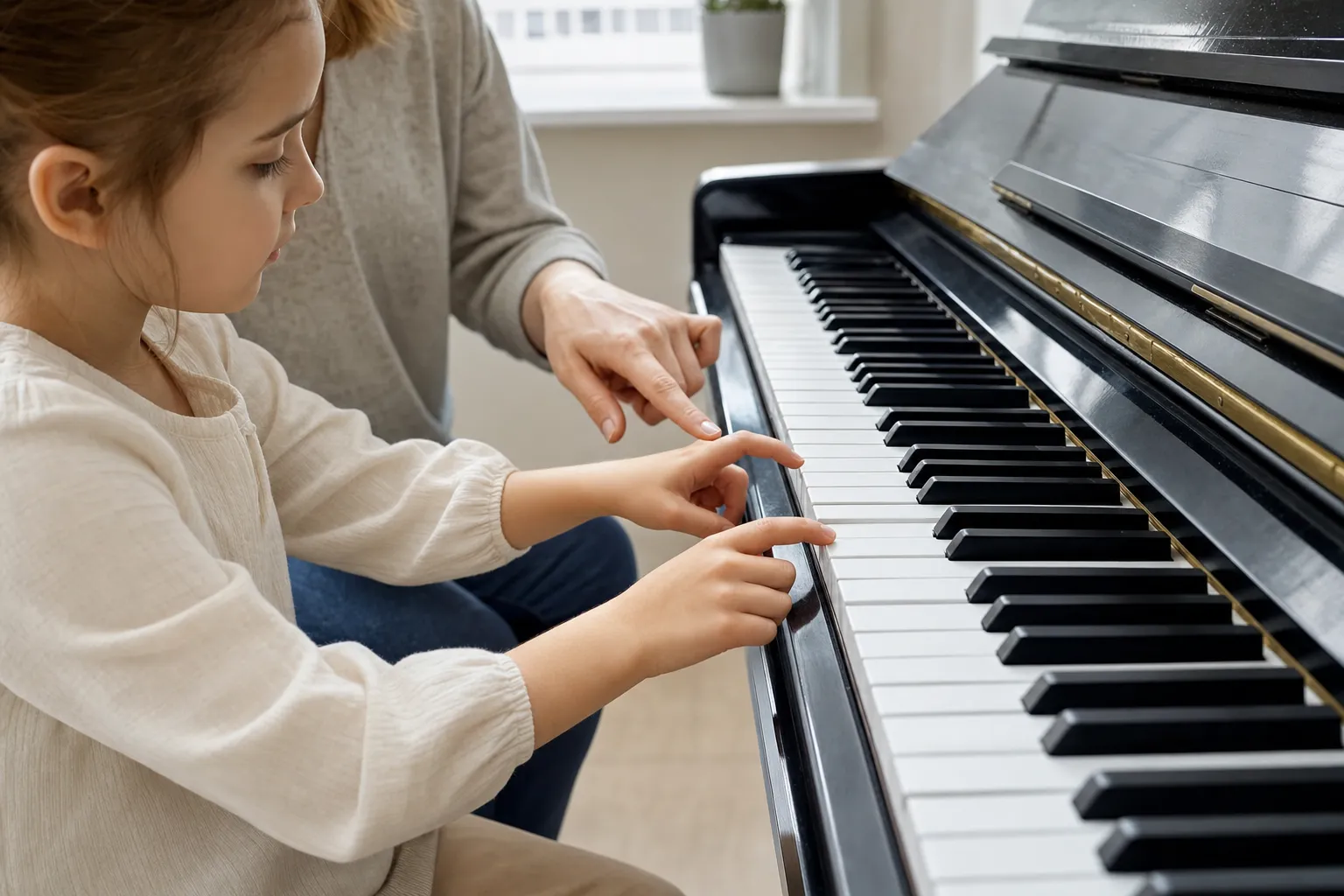
Most teachers do not spend the entire first lesson explaining music theory. Beginners need a chance to touch the instrument, hear different sounds, and connect a few simple ideas to something musical. A young child may learn through movement, rhythm copying, singing, or a game before doing much formal reading. An older beginner may spend more time with keyboard patterns, finger numbers, posture, rhythm, and a first short melody.
- Getting settled. The teacher will usually help the student adjust the bench, feet, hands, and distance from the keyboard so playing feels comfortable.
- Keyboard exploration. The student may find high and low sounds, groups of two and three black keys, or a familiar note pattern. This makes the keyboard less mysterious quickly.
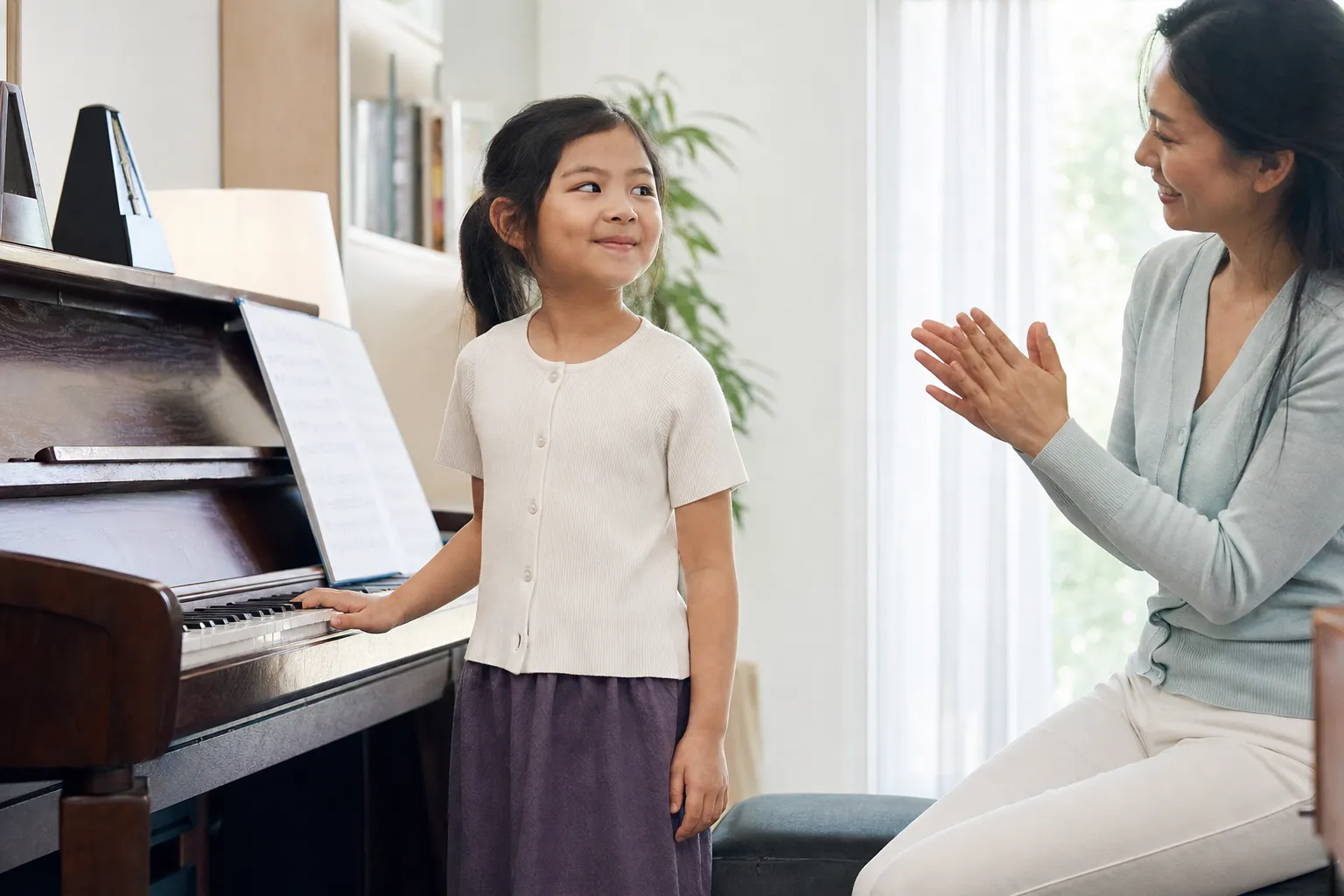
- A small rhythm or listening activity. Clapping a beat, echoing a pattern, or noticing loud and soft sounds gives the teacher useful information without making the student feel judged.
- A first musical success. It might be a tiny song, a teacher-and-student duet, improvising with black keys, or playing a rhythm. The point is to leave having made sound on purpose.
- A plan for home. The teacher explains what to practice, what equipment would help, and whether the lesson length and format feel right.
That basic order reflects what good beginner instruction tends to prioritize: exploration, technique, rhythm, listening, and a manageable assignment. Teachers may use different method books or games, but the lesson should not feel like a random collection of activities. The student should understand what happened and have one clear thing to try before the next visit.
What Should You Bring?
Bring useful context, not a suitcase full of supplies.
For a trial or first lesson, the most helpful things are simple: arrive a few minutes early, wear comfortable clothes, and be ready to share what the student enjoys and what the family hopes lessons will look like. If the student has played before, bring a current book or a piece they know. If they have never played, bring nothing except curiosity.
Parents can help by knowing a few practical details: the child's age, previous musical activities, any scheduling limits, whether there is an instrument at home, and how much adult support is realistic during practice. Adult beginners can think about the music they want to play, any past experience, and whether their goals are relaxation, reading music, accompaniment, songwriting, classical repertoire, or performance.
It is fine not to own a piano before a trial lesson. The first meeting can help clarify what kind of instrument makes sense and whether a rental or digital keyboard is a practical short-term starting point. The important thing is to ask rather than buy the first thing that appears in a late-night search result. Piano shopping has enough moving parts already.
What Parents Should Watch For
The best sign is not instant perfection. It is an engaged child who leaves knowing what comes next.
During a first lesson, parents often focus on whether their child plays a song. That can be exciting, but it is not the only signal that matters. Watch whether the teacher speaks to the child clearly, notices when attention changes, gives encouragement that is specific, and adjusts the activity when something is too easy or too hard.
A strong teacher will also explain expectations without making parents guess. You should come away knowing how lessons are structured, how home practice works, what lesson length is recommended, and who can answer scheduling or enrollment questions. For young beginners, it is normal for a parent or guardian to be involved in the first meeting. The teacher may ask you to observe quietly, help with transitions, or listen to the practice explanation at the end.
Families comparing teachers can use Amabile's piano teacher guide for a deeper look at teacher fit. A trial lesson should answer the practical question underneath every first meeting: can this student build a steady relationship with this teacher?
How First Lessons Differ by Age and Experience
The right starting point changes. The warm welcome should not.
| Student | What the first lesson may emphasize | What helps most at home |
|---|---|---|
| Young child | Comfort, movement, listening, keyboard games, and short activities | A calm routine and an adult who helps the child remember the assignment |
| School-age beginner | Keyboard geography, rhythm, finger numbers, reading readiness, and a first song | A predictable practice time and a place to keep books and notes together |
| Teen or adult beginner | Goals, prior experience, comfortable setup, basic theory, and musical interests | A realistic schedule that values short regular sessions over heroic weekend catch-up |
| Returning player | What remains from earlier study, reading level, technique, and new goals | A current book or a piece to share, plus honesty about what feels rusty |
Lesson length should match the student too. A younger beginner may benefit from a focused 30-minute session, while older children, teens, and adults can often use more time for reading, technique, repertoire, and questions. Amabile's lesson-length guide explains how 30, 45, and 60-minute lessons tend to serve different learning stages.
The First Week Matters More Than the First Day
A small home routine turns an encouraging lesson into a beginning that feels real.
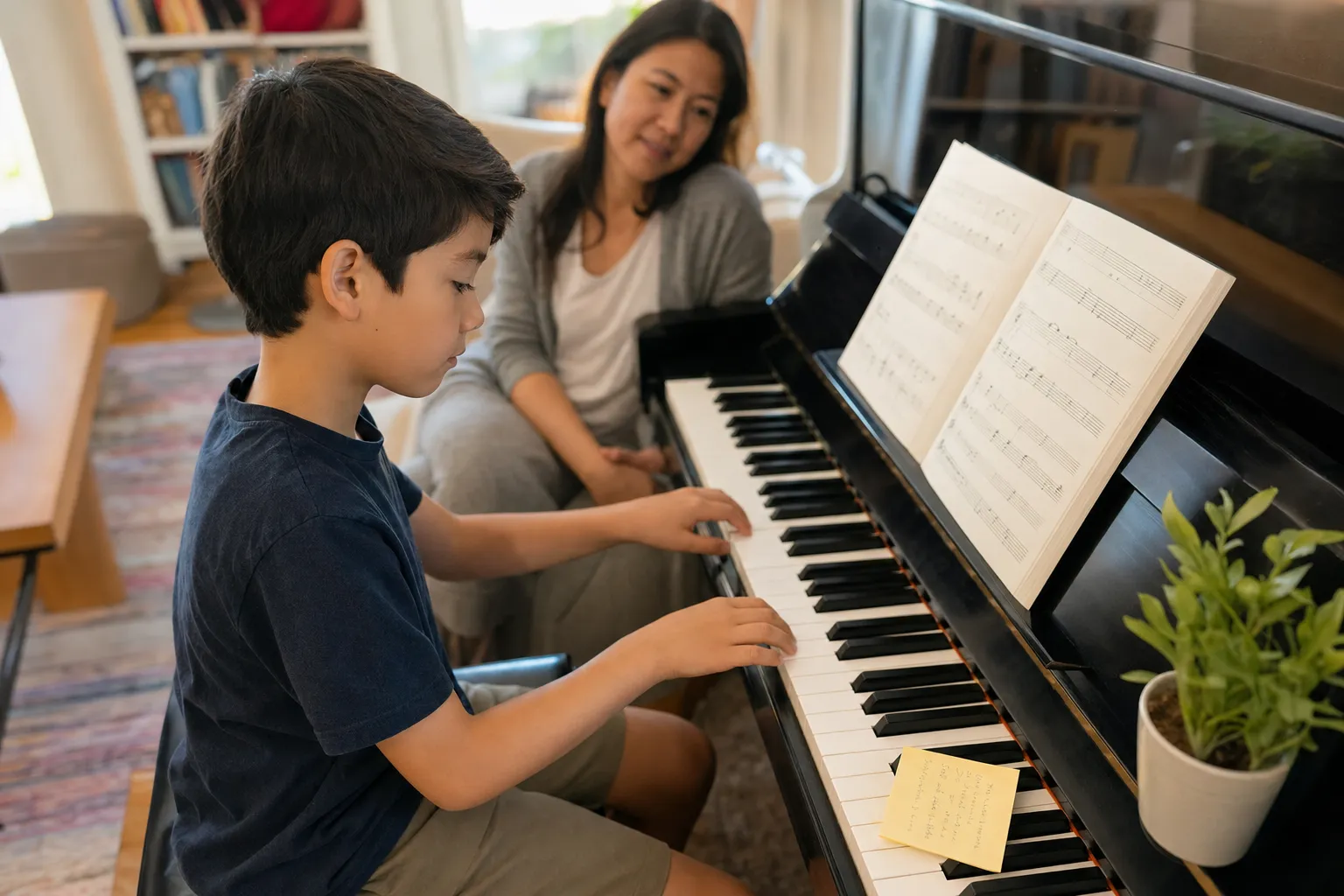
After a good first lesson, the student should not be sent home with a vague instruction to “practice more.” They should know one or two short things to repeat. That could be finding a keyboard pattern, clapping a rhythm, playing a tiny piece, or reviewing a teacher's note. The task should be small enough that a busy family can actually do it.
For children, parents do not need to become the piano teacher. They protect the routine: choose a time, help set up the music, ask the child to show the assignment, and send a question when something is unclear. For adults, the equivalent is making the piano visible in the week instead of waiting for an ideal empty evening that never appears.
The site's piano practice guide is a useful next read once the first assignment arrives. It explains how to work on a small section, slow down without getting stuck, and build a repeatable habit instead of playing through the same song from the beginning every time.
A simple first-week checklist
Before the next lesson, make sure the student can find the instrument easily, has any books or notes in one place, and knows the one assignment they are meant to show the teacher. A five- or ten-minute check-in is enough. Ask, “Can you show me the part you learned?” instead of asking whether they practiced. That question gives children a chance to feel capable and gives adults a useful opening to notice where support is needed.
If the assignment was unclear, do not wait until several lessons have passed. Write down the question while it is fresh, take a photo of the teacher's note if appropriate, and bring it to the next session. Consistency beats intensity at this stage. A short, calm return to the piano on several days helps the student remember the first lesson, feel less rusty when they come back, and start to see music as part of ordinary life rather than a once-a-week appointment.
How Amabile Helps New Piano Students
A good beginning should feel personal, clear, and easy to continue.
At Amabile School of Music, a trial lesson gives the teacher and student time to meet, make music, and choose a sensible next step. The school serves young beginners, older children, teens, and adults with piano lessons in San Francisco, Moraga, and online. That broader faculty and program structure can be helpful when a family needs the right teacher, lesson length, schedule, or age-appropriate starting point rather than a one-size-fits-all plan.
Before booking, families can explore piano lessons for kids, adult piano lessons, the faculty, lesson options and tuition, and recital opportunities. The goal is not to make the first lesson feel high-stakes. It is to help the student leave thinking, “I can do this again next week.”
Frequently Asked Questions
Do I need a piano before my first piano lesson?
No. A first lesson can help you understand what kind of instrument and setup will fit the student before you buy or rent anything. If a student continues, regular access to a piano or suitable keyboard at home becomes important for practice.
What should a beginner learn at the first piano lesson?
A beginner may learn how the keyboard is organized, find high and low sounds, copy a rhythm, use finger numbers, try comfortable playing posture, or play a very short musical pattern. The first lesson is about a useful starting point, not covering every piano skill at once.
Can parents sit in on a first piano lesson?
For young beginners, parent or guardian involvement is often helpful. A teacher may ask you to observe quietly, listen to the practice explanation, or help your child settle in. Older students and adults may prefer more independence, but clear communication at the end still matters.
How long is a first piano lesson?
A first lesson is usually the same length as the recommended ongoing lesson or trial format. Young beginners often start with a shorter focused lesson, while older students and adults may benefit from more time to discuss goals and work through a few musical activities.
What if my child is shy or nervous at the first lesson?
That is very common. A patient teacher should begin gently, use simple activities, and give the child time to warm up. The goal is not to force instant participation. It is to make the student feel safe enough to be curious and try again next time.
Related Posts
More practical guides for families preparing for the first weeks of piano lessons.
What Age to Start Piano Lessons?
Readiness signs, first lesson fit, and when a class may be the better place to begin.
How to Find a Piano Teacher
Questions that help families compare teaching style, structure, and student fit.
How to Practice Piano
A realistic home routine for turning lesson assignments into steady progress.