
Quick answer
The best way to practice piano is to make the session specific. Start with a short warm-up, choose one small section to improve, practice it slowly with correct fingering and rhythm, repeat it enough times to make the correction stick, then finish by playing something musical. Beginners usually make more progress with short, consistent sessions than with one long weekly cram. For young children, parents should help set up the routine without turning practice into a fight.
Practice Is Not The Same As Playing Through
Playing a song from beginning to end feels productive. Real practice fixes one problem at a time.
Many beginners sit at the piano, start at the first measure, play until something falls apart, sigh, and then start over from the beginning. That feels like practice because time is passing and notes are happening. But it often trains the same mistake more deeply.
Useful practice is more focused. If measure eight has the problem, measure eight gets the attention. If the left hand loses rhythm, the left hand works alone for a moment. If the fingering changes every time, the student slows down and chooses one fingering before trying to speed up. Yamaha’s practice guidance makes the same basic point in plain language: practice should include listening, slow work, small sections, and attention to what actually needs improvement.
That is why a teacher matters. A good teacher does not simply assign pages. They show the student how to work on those pages. They point out the exact spot, the exact habit, and the exact goal for the week. Without that, students often confuse repetition with improvement.
A Simple Piano Practice Routine
A good routine is short enough to repeat and clear enough that the student knows what to do without guessing.
Beginners do not need a complicated practice system. They need a reliable order. The exact assignments should come from the teacher, but this structure works well for many students.
- Set up posture, bench distance, and relaxed hands before playing.
- Warm up with a short pattern, scale, rhythm, or easy review piece.
- Work on one small trouble spot slowly and deliberately.
- Repeat that spot several times correctly before adding speed.
- Connect the fixed spot to the measure before and after it.
- Play one piece or section musically so practice ends with sound, not just correction.
- Mark what felt better and what still needs help at the next lesson.
The order matters because it prevents the most common beginner problem: bouncing between pieces without improving anything. It also helps parents. Instead of saying “go practice” and hoping for the best, they can help the child follow a short checklist from the teacher.
How Long Should Piano Practice Be?
The right practice length depends on age, lesson length, assignment size, and attention span.
Families often ask for one perfect practice number. A number can help, but it should not become the whole point. A focused 15 minutes can beat a distracted 45 minutes. Still, students do need enough repetition between lessons for skills to settle.
Amabile’s own parent guidance gives a practical benchmark: around 20 minutes of daily practice for a 30-minute lesson, 30 minutes for a 45-minute lesson, and 40 minutes for a 60-minute lesson. That framework is useful because it connects home practice to the amount of material a teacher can reasonably assign in the lesson.
| Student stage | Useful starting point | What matters most |
|---|---|---|
| Young beginner | 10 to 20 focused minutes | Consistency, parent support, and ending before frustration takes over |
| Older child or teen | 20 to 35 focused minutes | Specific assignments, slow correction, and steady rhythm work |
| Adult beginner | 20 to 45 focused minutes | Regular sessions that fit real life instead of heroic weekend bursts |
If a child cannot handle the recommended time yet, shorten the session and tell the teacher. Practice should be challenging, but it should not become a nightly negotiation that makes the child resent the instrument.
Practice Slowly Before You Practice Fast
Speed is the reward for clean coordination. It is not the starting point.
Most piano mistakes are not mysterious. The student is usually asking the brain, eyes, ears, and hands to coordinate faster than they can manage yet. Slowing down gives the student time to choose the right note, use the intended finger, keep the rhythm steady, and listen to the sound. Yamaha’s piano posture guidance is also a useful reminder that setup matters before the first note: body position, arm comfort, and relaxed movement affect how well practice works.
Slow practice should still have a pulse. That might mean counting out loud, tapping first, or using a metronome once the student understands the rhythm. The goal is not to turn practice into a mechanical click test. The goal is to build enough control that the rhythm stays steady when the music becomes more expressive.
A useful rule is simple: if you cannot play the section correctly three times slowly, it is not ready to be faster. This can feel painfully obvious. That is why it works.
What Parents Should Do During Practice
Parents do not need to become the teacher. They do need to protect the routine.
For young students, home practice is partly a family habit. A six-year-old is rarely going to manage time, remember assignments, interpret teacher notes, and stay emotionally balanced without adult support. That does not mean the parent should hover over every note. It means the parent helps create the conditions for practice to happen.
Good parent support often looks like this:
- choose a predictable practice time before the day gets away from everyone
- keep the books, pencil, assignment notebook, and instrument ready
- ask the child to show the teacher’s assignment instead of inventing one
- praise effort, listening, and careful repetition more than speed
- send the teacher a question when the assignment is unclear
- avoid turning every missed note into a correction from across the room
The last point matters. A parent can accidentally become the critic, which makes the child defensive before the teacher ever gets a chance to help. If practice is falling apart repeatedly, the fix is usually a clearer assignment, a shorter routine, or a teacher check-in.
How To Practice When Motivation Drops
Motivation comes and goes. A clear routine keeps progress from depending on mood.
Every student hits weeks when practice feels dull. This is normal. The answer is not always a bigger speech about commitment. Sometimes the student needs a smaller assignment, a clearer goal, a piece they actually like, or a recital on the calendar that makes practice feel connected to something real.
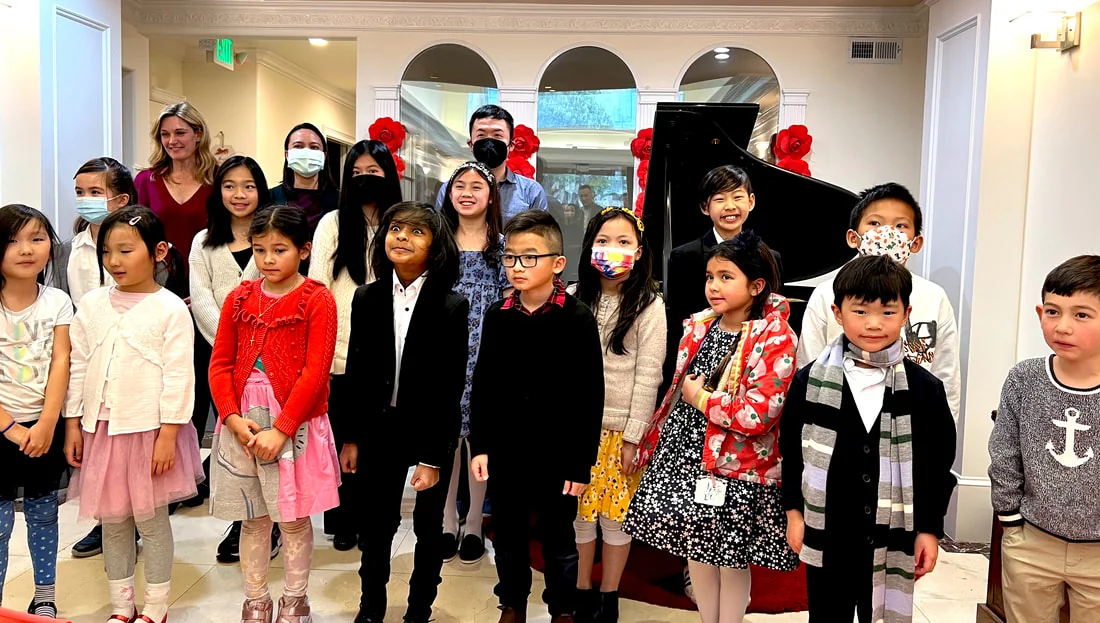
Performance opportunities can help because they give practice a reason. At Amabile, students have regular chances to perform, including seasonal recitals and more frequent school events. For beginners, the value is not showing off. It is learning how small daily effort becomes something shareable.
Motivation also improves when students can hear progress. Record a short clip at the start of the week and another near the end. Let the student compare. Progress often feels invisible while it is happening, especially when the teacher is steadily raising the level of challenge.
Common Practice Mistakes
Most practice problems are fixable once you know what they are.
Here are the habits that slow beginners down most often:
- starting from the beginning every time instead of isolating the hard part
- playing too fast before the hands know what to do
- changing fingering every repetition
- ignoring rhythm and only chasing the right notes
- practicing only the favorite piece and skipping the assignment
- waiting until the day before the lesson to practice
- turning practice into a parent-child power struggle
The fix is usually boring in the best possible way: slow down, shrink the section, repeat correctly, and make practice frequent enough that the student does not have to relearn everything each week.
What If You Cannot Get To The Piano?
A real instrument matters, but some practice can happen away from the keyboard.
Students still need regular time at the piano. There is no way around the physical coordination of keys, sound, touch, and listening. But a busy day does not have to become a zero-practice day. If the student cannot sit at the instrument, they can still review the assignment, clap the rhythm, name notes, count out loud, listen to a recording, or tap the fingering pattern on a table.
This is especially useful for older children and adults who lose practice time to school, work, travel, or family schedules. Five minutes of mental review will not replace real playing, but it keeps the music present in the mind. It also makes the next piano session less intimidating because the student is not opening the book cold.
For younger children, away-from-piano practice should stay simple. Ask them to clap the rhythm, sing the melody, or show the finger numbers with relaxed hands. The point is not to squeeze productivity out of every spare minute. It is to keep the assignment familiar enough that the next real practice session starts faster.
How Lessons Make Practice Easier
A strong lesson should send the student home knowing exactly what to do next.
Good piano teaching removes a lot of guesswork. The teacher chooses material that fits the student, catches technical issues early, explains how to practice the assignment, and adjusts the plan when home practice is not working. The Music Teachers National Association’s assessment materials also frame strong teaching around whether students leave with the tools to work independently. That is why a weekly lesson is not only about the 30, 45, or 60 minutes in the room. It shapes the whole week.
Amabile teaches piano students in San Francisco, Moraga, and online, with options for young beginners, older children, teens, and adults. Families can compare piano lessons, kids piano lessons, adult piano lessons, lesson lengths and tuition, and recital opportunities before choosing a path.
If you are not sure whether the current routine is enough, a trial lesson can help. A teacher can listen, watch how the student learns, and recommend a practice plan that fits the student’s age, goals, and schedule.
Frequently Asked Questions
How do beginners practice piano effectively?
Beginners practice effectively by working on small assignments slowly, repeating the exact spot that needs improvement, using consistent fingering and rhythm, and practicing several days a week. Playing from the beginning every time is usually less effective than isolating a hard section.
How long should a beginner practice piano each day?
Many beginners do well with 10 to 30 focused minutes, depending on age and lesson length. Young children may need shorter sessions with parent support, while older students and adults can usually handle longer practice when the assignment is clear.
Should piano practice happen every day?
Daily practice is helpful, but consistency matters more than perfection. Practicing most days of the week is usually better than doing one long session right before the next lesson because the brain and hands need repeated contact with the material.
How can parents help a child practice piano?
Parents can help by setting a regular practice time, keeping materials ready, checking the teacher’s assignment, encouraging careful repetition, and communicating with the teacher when practice becomes confusing or frustrating. Parents do not need to teach every note.
What should I do if my child refuses to practice piano?
Start by making the routine shorter and clearer. Ask the teacher whether the assignment is too hard, too vague, or too long. If the child still resists, the teacher may need to adjust the music, pacing, or practice expectations before the habit can improve.
Related Posts
Piano Lessons for Beginners: What to Expect
A parent-friendly guide to first lessons, lesson length, readiness, and teacher fit.
What Age to Start Music Lessons?
A practical guide to music lesson readiness, first instruments, and trial lessons.