Quick answer
Good piano lessons for beginners start with fundamentals, clear routines, and a teacher who knows how to pace early wins. Most beginners do not need complicated theory or long assignments at the beginning. They need a strong foundation in posture, rhythm, note reading, listening, and home practice. For many young children, 30-minute lessons are a sensible start. Older children, teens, and adults often progress better with 45 minutes. The best teacher is warm, organized, and able to match instruction to the student rather than forcing every beginner through the same script.
What Beginners Usually Learn First
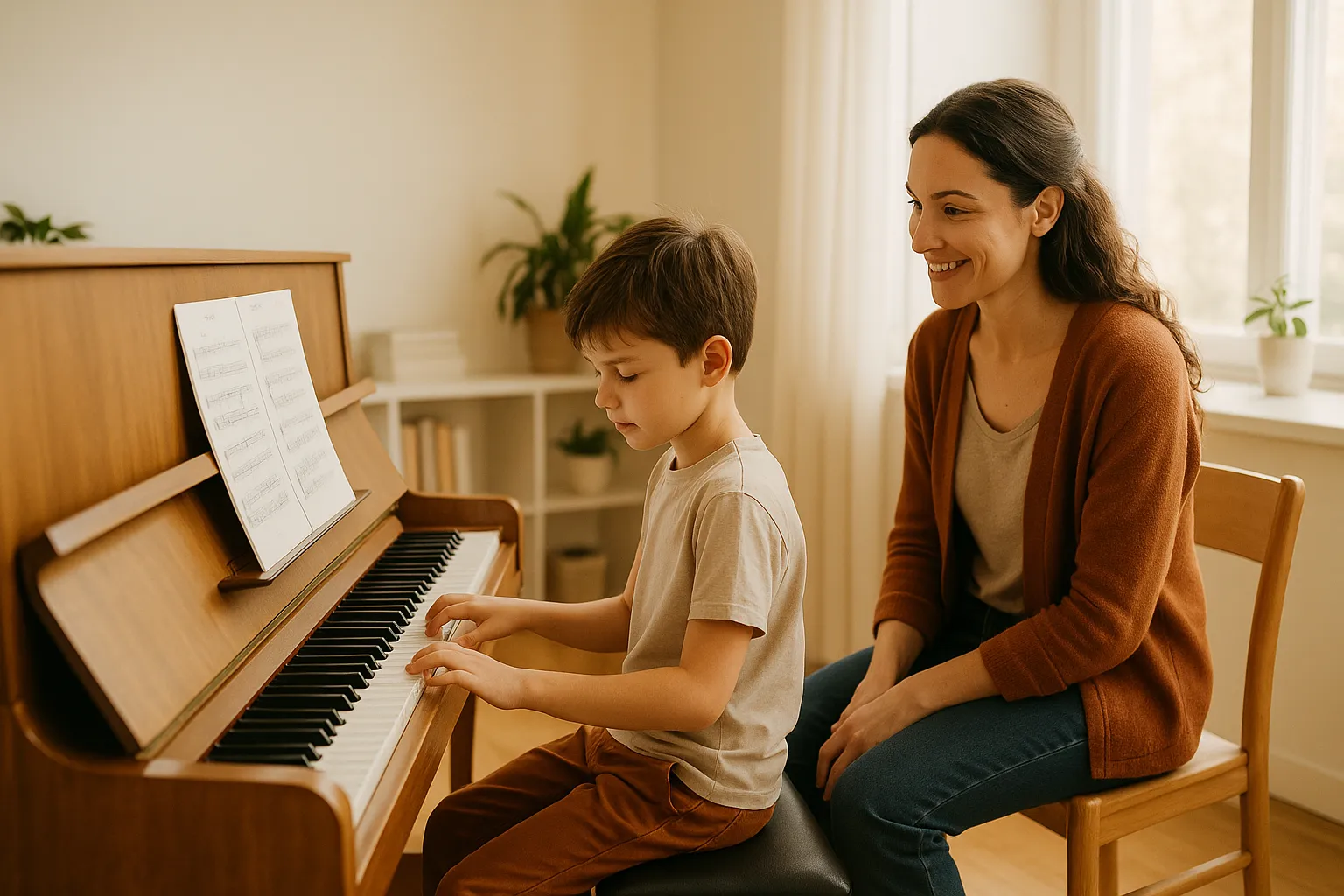
The first months should feel clear and manageable. Good teachers build confidence while laying down the habits that matter later.
Many families imagine beginner piano lessons as a quick path to songs, but the stronger goal at the start is learning how to learn the instrument. That means getting comfortable at the keyboard, understanding simple directions, and building the first practice habits that make progress steady rather than random.
For most beginners, the early lessons cover posture, bench position, hand shape, finger numbers, rhythm patterns, simple note reading, and keyboard geography. MTNA teaching materials for young beginners also emphasize the first lesson as a place to introduce posture, distance from the keyboard, hand position, basic keyboard patterns, and actual playing from day one. That is a useful benchmark because strong beginner lessons should feel active, not theoretical. citeturn0search12turn0search0
In practice, a beginner should expect the first month or two to include:
- learning the layout of the keyboard and how black-key patterns help students find notes
- basic rhythm work, clapping, counting, and pulse awareness
- simple pieces with short assignments that can actually be repeated at home
- teacher feedback on posture, curved fingers, and relaxed movement
- guidance for parents or the student on how to practice between lessons
That may sound modest, but it is exactly what sets up better playing later. When beginners rush past the basics, they often end up relearning hand position, rhythm accuracy, or note reading after habits have already hardened.
What The First Three Months Should Feel Like
A good beginner experience is not about speed alone. It is about building momentum that the student can keep.
By the end of the first few months, most beginners should not expect advanced repertoire. They should expect visible comfort and small, repeatable progress. A child or adult beginner should be starting to read simple patterns, keep a steadier beat, play short pieces with more control, and understand what daily or near-daily practice is supposed to look like.
The first months also shape motivation. MTNA guidance for parents notes that choosing a qualified teacher is essential and that many programs introduce piano around age five, while younger children often do better in introductory formats that include movement and guided exploration. citeturn0search1turn0search2
That matters because a beginner who feels lost often quits before real progress begins. A good teacher will sequence things so the student can experience success early, then slowly widen the challenge. The early goals are usually not flashy. They are practical:
- get comfortable sitting at the instrument
- understand simple weekly assignments
- build consistency at home
- develop confidence through small wins
- start hearing and correcting simple mistakes
If those things are happening, the student is on a healthy track even if the songs still sound simple.
30 Minute Vs 45 Minute Vs 60 Minute Lessons
The right lesson length depends on age, attention, and how much material the student can handle well in one sitting.
One of the biggest questions around piano lessons for beginners is lesson length. Families often assume shorter is better because beginners know less. In reality, the best choice depends on the student’s age, stamina, and goals.
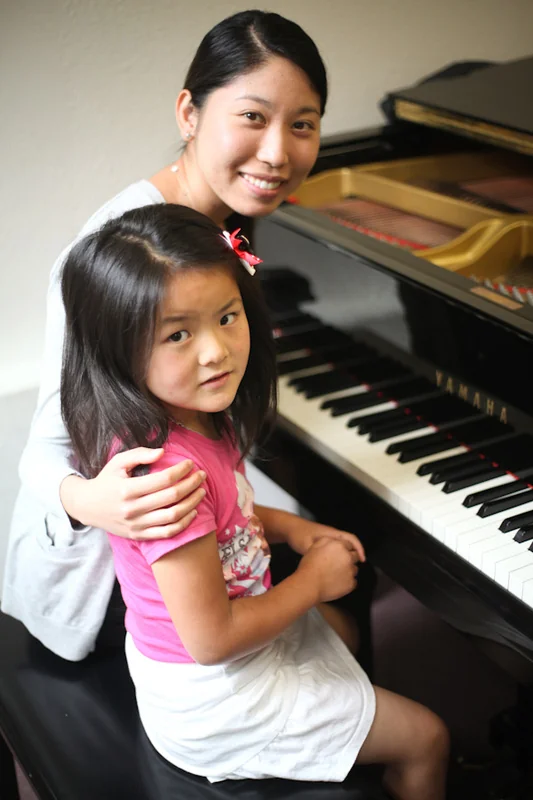
A 30-minute lesson is often a strong fit for ages five and six. It gives enough time to check posture, review practice, introduce new material, and end with a clear assignment without stretching a young child beyond useful focus. A 45-minute lesson often works better once a student is older, more focused, or juggling more reading, technique, and repertoire in the same week. A 60-minute lesson is usually better reserved for advanced students or adults who want more depth in one session.
Amabile’s own published structure reflects this logic: 30-minute private lessons are positioned for younger beginners, while 45 minutes is the minimum package for students age seven and above, with 60 minutes generally suited to more advanced work. citeturn0search1
| Lesson length | Usually best for | Main advantage |
|---|---|---|
| 30 minutes | Ages 5 to 6 and some true beginners | Focused instruction without overload |
| 45 minutes | Age 7 and up, teens, and most adults | More time for correction, reading, and musicality |
| 60 minutes | Advanced students and deeper adult study | Room for more detailed work in one session |
The key is not choosing the cheapest or longest option. It is choosing the format that lets the student stay engaged and actually use the lesson well.
Are Children Ready To Start Piano Lessons
Age matters, but readiness matters more than a birthday alone.
Parents often ask for the one right age to begin. There is no perfect universal number, but there are strong patterns. MTNA’s parent guidance says formal music lessons often begin when children are starting formal school, usually around first grade, and that many programs introduce piano at age five. It also notes that younger children may be better served by programs designed around movement, listening, and guided exploration. citeturn0search1
That lines up closely with what many schools see in practice. Some four-year-olds are ready for an introductory keyboard class. Many five-year-olds are ready for private lessons if they can follow simple instructions and stay engaged for a short lesson. By age seven, many children can handle longer lessons and more layered assignments.
Instead of asking only how old your child is, ask whether your child can:
- sit and focus for a short guided activity
- listen and follow one- or two-step directions
- show interest in music or the instrument
- repeat small tasks without frustration taking over
- handle a simple home routine with help from a parent
If the answer is mostly yes, a beginner pathway may make sense. If not, a group class like Little Mozart can be a better first step because it introduces rhythm, notes, keyboard basics, singing, and movement in a more age-appropriate format.
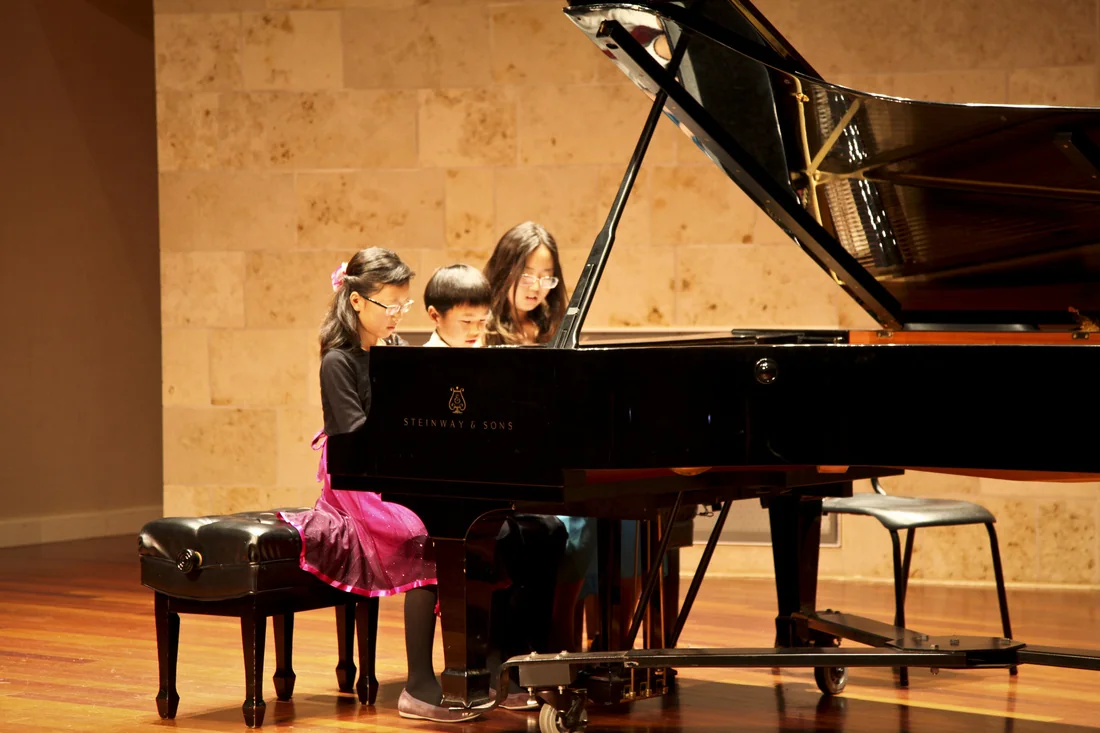
What To Look For In A Beginner Piano Teacher
Teacher fit matters more than families often realize, especially in the first year.
The best beginner piano teacher is not simply the most accomplished performer. Beginners need someone who can break things down, keep lessons encouraging, and know when to slow down. MTNA describes a professional music teacher as someone who provides personalized guidance and helps students grow with confidence and joy. That is exactly the standard beginners need. citeturn0search2
Look for signs that the teacher understands the realities of early study:
- they have real experience with beginners, not only intermediate or advanced students
- they explain clearly without overwhelming the student
- they know how to work with children and communicate with parents when needed
- they give realistic assignments instead of vague advice to practice more
- they correct posture, rhythm, and reading gently but consistently
- they make the student feel both supported and accountable
Trial lessons are especially useful here. A trial lets you see whether the teacher can connect, whether the pacing feels right, and whether the student leaves feeling curious rather than defeated. Families comparing local options may also want to read the school’s testimonials, review the faculty page, and compare how clearly the school explains its parent questions and policies.
How Much Should A Beginner Practice
At the beginning, consistency matters more than long sessions.
One of the easiest ways to make beginner piano lessons work is to keep home practice simple and repeatable. Families often assume practice has to be long to count. Usually it is better for beginners to practice briefly and consistently than to squeeze everything into one or two long sessions each week.
Amabile’s own FAQ shares a practical starting point: around 20 minutes daily for a 30-minute lesson, 30 minutes for a 45-minute lesson, and 40 minutes for a 60-minute lesson. That should not be treated as a rigid universal law for every child, but it is a helpful framework because it connects lesson length with realistic home follow-through.
For many young beginners, a good early practice routine looks like this:
- sit down at the same time most days if possible
- review the easiest assigned task first
- repeat only a few specific items from the lesson
- stop while attention is still intact
- let the teacher adjust the next assignment if the routine is too long or too hard
Adults should think similarly. Short, frequent sessions usually build more skill than waiting for one perfect uninterrupted hour on the weekend.
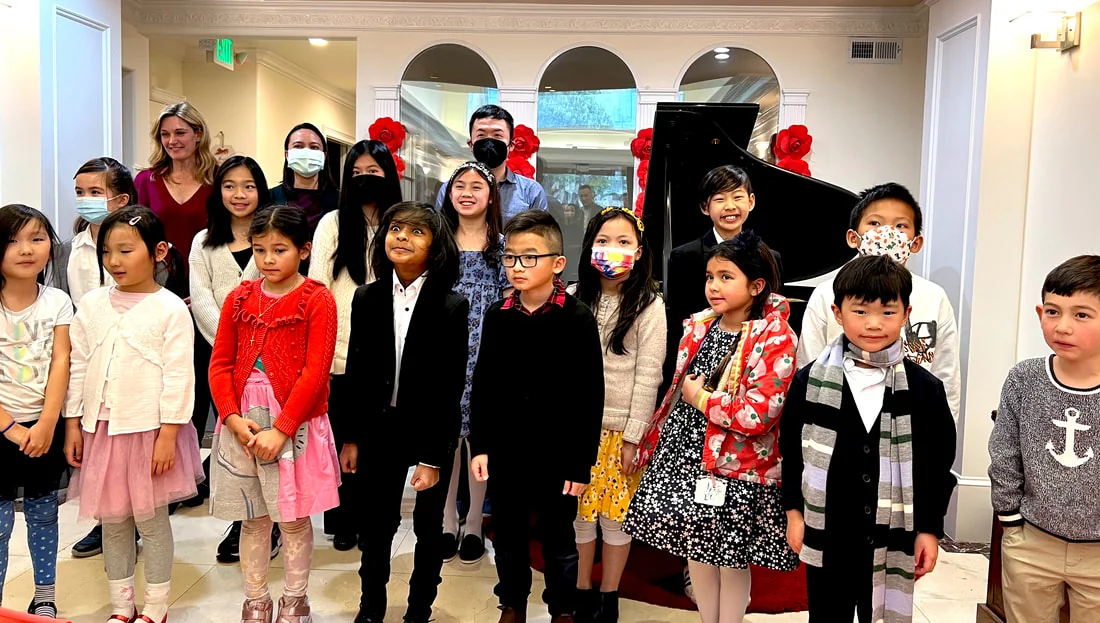
Why Performance Opportunities Help Beginners
Recitals are not only for advanced players. They often help beginners stay motivated and build confidence early.
For some families, recitals sound like something to think about later. In reality, beginner-friendly performance opportunities can be one of the best parts of early study. They give lessons a visible purpose and help students connect practice with progress.
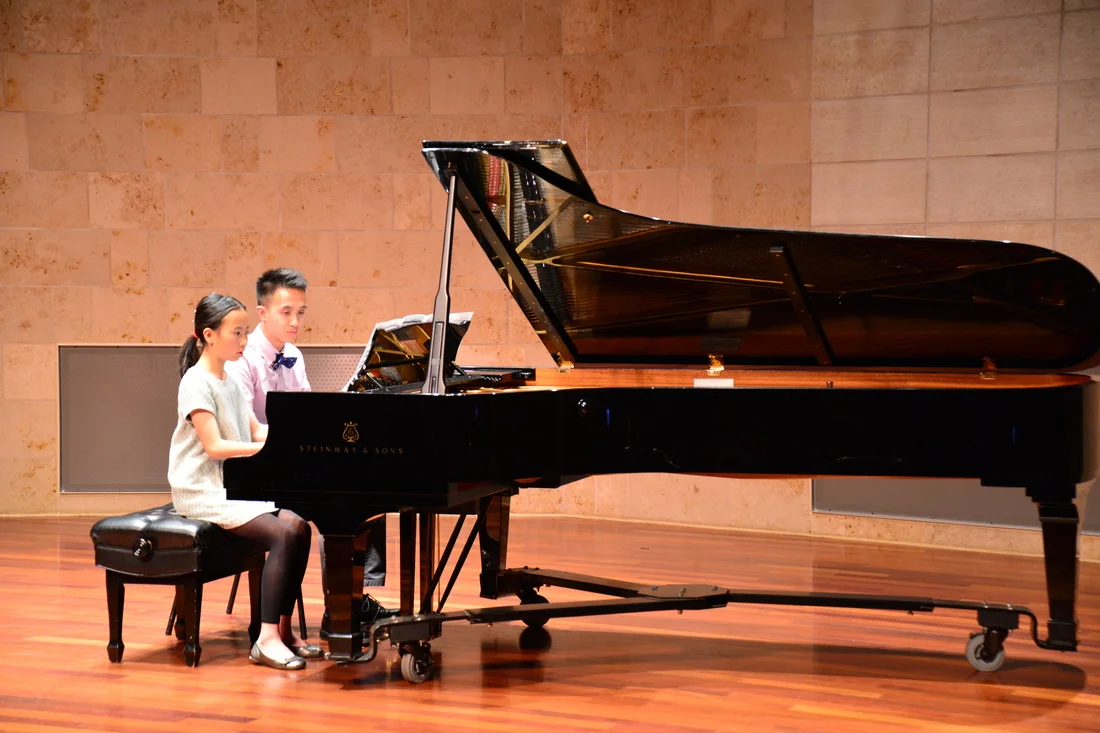
At Amabile, recital and performance opportunities are a central part of the student experience. The school offers students a performance opportunity at least once every two months, with larger seasonal recitals and low-stress formats for younger beginners. That structure can help a child feel that music lessons are building toward something tangible rather than staying abstract week after week.
Performance should never feel like pressure for its own sake. Done well, it becomes a confidence-building checkpoint. It teaches students how to prepare, how to recover from nerves, and how to share something they have worked on. That is part of why many parents value a school that offers more than just weekly lesson time.
What Adult Beginners Should Know
Adults often need a different kind of encouragement, but the same fundamentals still matter.
Adults starting piano sometimes feel behind before they even begin. The reality is simpler. Adult beginners usually learn well when expectations are clear and the teacher respects both the student’s goals and schedule. The fundamentals are still the fundamentals: hand position, reading, rhythm, listening, coordination, and practice habits.
The main difference is that adults often benefit from more explanation around why they are doing something, plus enough lesson time to connect concepts cleanly. That is one reason 45-minute lessons are often stronger for adults than 30-minute lessons. Adults are usually balancing jobs, family schedules, or a long break from formal learning, so clarity matters even more.
If that sounds like your situation, it may help to look at Amabile’s adult piano lessons page alongside the school’s broader program overview to compare formats and decide what kind of support you want.
How Amabile Can Help
If you are comparing piano lessons for beginners in the Bay Area, the goal is to make your next step feel clear and low risk.
Amabile School of Music offers piano lessons for Bay Area families with warm teachers, clear beginner support, and recital opportunities that help students build confidence from the start. Families can compare lesson lengths and tuition, review San Francisco and Moraga locations, and learn more about performances before booking.
For younger beginners, Amabile also offers the Little Mozart class for age four students who may be better served by a group introduction before moving into private study. For school-age children, teens, and adults, trial lessons make it easier to evaluate teacher fit and decide whether 30, 45, or 60 minutes is the right starting point.
That is often the best next step for beginners. A trial lets you see how the teacher communicates, whether the pacing feels right, and whether the student leaves wanting to come back.
Frequently Asked Questions
What should beginners expect in their first piano lessons?
Most beginners start with posture, hand shape, keyboard geography, finger numbers, rhythm basics, simple note reading, and a few short home assignments. Good first lessons should feel encouraging and practical rather than overwhelming.
Are 30 minute piano lessons long enough for beginners?
For many young beginners, yes. A 30-minute lesson is often enough for ages five and six because it gives time for focused work without asking a child to sustain too much concentration. Older children, teens, and adults often benefit more from 45-minute lessons.
What is a good age to start piano lessons?
Many children are ready for private piano lessons around age five, while some age four beginners do better in a group introductory class. Readiness depends on attention, interest, listening, and the ability to follow simple directions, not age alone.
How do I choose a beginner piano teacher?
Look for a teacher who works well with beginners, explains clearly, keeps lessons encouraging, and gives realistic practice assignments. A trial lesson is often the easiest way to judge fit.
How much should a beginner practice piano?
Beginners usually do best with short, regular practice most days of the week. The exact amount should match the student’s age, lesson length, and assignments, but consistency matters much more than occasional marathon sessions.