Quick answer
The best age to start music lessons depends on the kind of lesson. Babies, toddlers, and preschoolers can benefit from music play, singing, movement, and rhythm games. Many children are ready for more formal private lessons around ages five to seven, especially for piano or violin, when they can follow directions, focus for a short lesson, and practice with family support. The strongest starting point is not the youngest possible age. It is the age when music feels structured enough to help and enjoyable enough to continue.
Why There Is No One Perfect Starting Age
Readiness is a mix of age, attention, body size, motivation, and the lesson format.
It is tempting to ask, “What age should my child start music lessons?” and hope for one clean answer. The honest answer is more useful: children can start musical learning very early, but not every kind of music lesson fits every age.
The Music Teachers National Association explains that preschool music programs are usually built around singing, movement, rhythm, sounds, and interactive activities, while formal lessons often begin when students are starting school, commonly around first grade. The National Association for Music Education also argues against the idea that young children are too young to engage in meaningful music learning. Those two ideas fit together well: early music can start young, but formal private instruction should match the child.
That distinction helps families avoid two common mistakes. One is waiting too long because a child is “not ready for real lessons” even though they would love a playful music class. The other is pushing formal one-on-one instruction too early, then assuming the child dislikes music when the format was simply too demanding.
A better question is, “What kind of music experience is right for this child right now?” For a four-year-old, that may be a group class with singing, rhythm, movement, and simple keyboard exploration. For a six-year-old who can focus and follow directions, it may be a private piano, violin, guitar, ukulele, drum, or voice-adjacent introductory path. For an older beginner, it may be a more direct private lesson with clearer practice expectations.
A Practical Age-by-Age Guide
The best starting format changes as children grow.
Every child develops differently, but these age ranges can help you choose a sensible first step.
| Age range | Usually best fit | What to watch |
|---|---|---|
| Birth to 3 | Music play, singing, movement, clapping, and parent-child activities | Keep it joyful, short, and responsive |
| Ages 4 to 5 | Playful group classes or carefully paced beginner lessons after evaluation | Attention span, listening, and frustration tolerance |
| Ages 5 to 7 | Many children can begin private lessons, especially with piano or violin | Teacher fit and parent support matter a lot |
| Ages 8 and up | Private lessons across a wider range of instruments and lesson lengths | Let the child have a voice in the instrument choice |
At Amabile, private lessons generally begin at age five and continue through adulthood. Four-year-olds can be evaluated for readiness, and many younger beginners start well in Little Mozart, a group class that builds keyboard basics, singing, rhythm, movement, posture, and confidence before private study.
That gives families a flexible path. A child does not need to be forced into private lessons before they are ready, but they also do not need to wait passively if they are already drawn to music.
Readiness Signs Matter More Than The Birthday
A ready child does not have to be advanced. They need enough focus, curiosity, and support to use the lesson well.
Age is a useful starting point, but it is not a complete readiness test. Two five-year-olds can be very different. One may be eager to copy patterns, listen to instructions, and try again after a mistake. Another may love music but need more time before a weekly private lesson feels productive.
The CDC’s age-five developmental milestones include examples such as following rules or taking turns when playing games, singing or dancing for others, and doing simple tasks with growing independence. Music lessons are not a developmental test, but those kinds of skills are relevant because lessons ask children to listen, wait, repeat, and respond to guidance.
A child may be ready for beginner music lessons when they can usually:
- focus on a guided activity for 20 to 30 minutes with breaks or changes of pace
- follow one- and two-step directions from an adult who is not a parent
- show real interest in music, songs, rhythm, or a specific instrument
- try again after a small mistake without shutting down
- practice at home with short parent-supported routines
- handle the physical size and coordination demands of the instrument
If several of those signs are missing, that does not mean music should wait completely. It may mean the child needs a different format first: group music, movement, singing, rhythm games, or informal exploration at home.
Which Instruments Work Well For Young Beginners?
Some instruments are easier to start young because the first sounds are more accessible.
Piano is a common first instrument because children can see the layout, make a clear sound right away, and learn rhythm, note direction, and coordination without needing to support an instrument with their body. Violin can also work well for young children when the instrument size, teacher approach, and family support are right.
Other instruments may be better a little later. Guitar and ukulele require finger pressure and hand size. Drums require impulse control, listening, and coordination. French horn often needs more physical maturity, breath control, and hand size. Voice lessons for young children should be handled carefully, with an emphasis on healthy singing, pitch, musicianship, and confidence rather than adult-style vocal training.
That is why a school-wide program can help. Instead of asking a parent to diagnose everything alone, a trial lesson or evaluation lets a teacher see how the child responds and recommend the right path. Families can also compare Amabile’s program overview, piano lessons for kids, children’s violin lessons, guitar lessons for kids, and drum lessons for kids before choosing.
When Starting Earlier Helps
Early starts work best when the experience is playful, musical, and age appropriate.
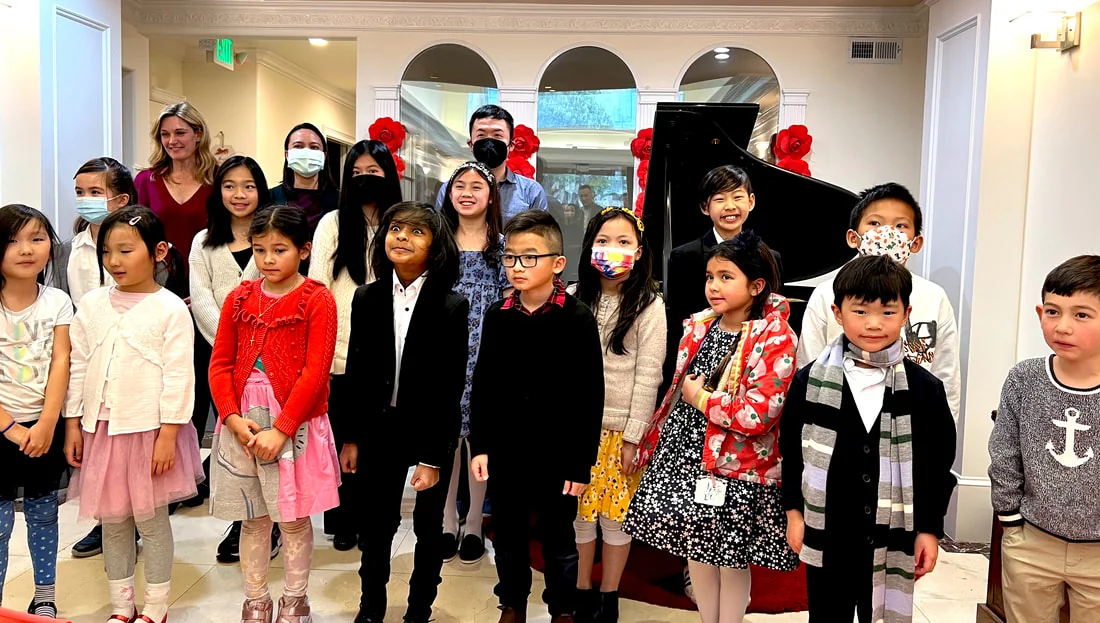
Starting early can be wonderful when the goal is not perfection. Young children can build a sense of beat, listening, singing, movement, confidence, and comfort around instruments. They can learn how to take turns, copy patterns, and feel music in the body before reading notation becomes central.
NAfME’s early childhood guidance is helpful here because it frames young children as capable music learners, not as children who must wait until they are older to do anything meaningful. But that does not mean every young child should sit through a formal private lesson. For many preschoolers, music learning works best through play, short activities, movement, and repetition.
Starting earlier tends to work well when:
- the teacher specializes in young children
- the lesson includes movement, rhythm, singing, and games
- the child is not expected to practice independently
- parents understand that progress may look small from week to week
- the focus is musical readiness, not rushing into advanced material
This is exactly where a group format can be valuable. Children get structure, peer energy, and a gentle entry into musical habits without the pressure of a fully private lesson too soon.
When Waiting A Little Helps
Waiting is not failure. Sometimes it protects a child’s long-term interest.
If a child resists every structured activity, cannot follow simple directions yet, or becomes distressed by correction, waiting a few months can be wise. A later start with enthusiasm is usually better than an early start that turns music into a weekly battle.
Waiting can also help when the desired instrument is not physically practical yet. A child may love guitar but not have the finger strength for a productive first year. They may want French horn before their hands, breath, or posture are ready. In those cases, piano, singing-based musicianship, rhythm class, or ukulele may be a better bridge.
The important thing is to keep music positive while you wait. Sing at home. Attend student recitals. Let the child listen widely. Try rhythm games. Visit a school for a trial or consultation. Waiting should not mean disappearing from music; it should mean choosing the right next step instead of forcing the wrong one.
How Parents Can Make The First Year Easier
A child’s first year depends on the teacher, the format, and the home routine.
Young beginners rarely succeed on lesson time alone. They need a teacher who gives clear assignments and a family routine that makes practice feel normal. That does not mean parents need to be musicians. It means they need to help the child sit down, remember what the teacher assigned, and keep practice short enough to repeat.
A good first-year routine usually includes:
- the same lesson time each week when possible
- a short practice routine on most days, not one long session before the next lesson
- a clear place for books, instrument, and assignment notes
- encouragement for effort, listening, and repetition, not just correct notes
- regular communication with the teacher when practice is too easy, too hard, or unclear
Families should also choose a school that gives students something to work toward. Amabile offers performance opportunities at least once every two months, along with seasonal recitals and supportive events for younger beginners. Those milestones can help children understand why steady practice matters. You can learn more on the recitals and performances page.
How Amabile Can Help
If you are unsure whether your child is ready, the next step should be a low-pressure conversation or trial.
Amabile School of Music helps Bay Area families choose a starting point that fits the child, not just the calendar. Younger children can begin with Little Mozart when a playful group foundation is the best fit. Children who are ready for private instruction can explore music lessons for kids across piano, voice, violin, guitar, bass guitar, ukulele, French horn, and drums.
Families can compare lesson lengths and tuition, review faculty, and choose the San Francisco, Moraga, or online option that fits their schedule. A trial lesson is often the clearest way to see how your child responds to the teacher, the format, and the instrument.
The goal is not to start as early as possible. The goal is to start in a way your child can enjoy, understand, and continue.
Frequently Asked Questions
What age should my child start music lessons?
Many children are ready for private music lessons around ages five to seven, but readiness matters more than age alone. Younger children can still benefit from playful group music, singing, movement, rhythm, and early keyboard exploration.
Is age four too young for music lessons?
Age four is often a good time for a playful group class or an evaluation. Some four-year-olds are ready for carefully paced instruction, while others do better building rhythm, listening, and confidence before private lessons.
What is the best first instrument for a child?
Piano is a common first instrument because children can make a clear sound immediately and see the keyboard layout. Violin can also work well for young beginners with the right teacher and instrument size. The best choice depends on interest, body size, attention, and teacher fit.
Should my child start with group music or private lessons?
Group music is often better for younger children who need movement, games, peer energy, and shorter bursts of attention. Private lessons are usually better once a child can follow directions, focus one-on-one, and practice at home with support.
How do I know if my child is ready for private lessons?
Look for interest in music, the ability to follow simple directions, enough focus for a short lesson, tolerance for gentle correction, and a home routine that can support short practice sessions. A trial lesson is often the clearest readiness check.
Related Reading
More Amabile guides for families comparing beginner lessons and early music options.
Piano Lessons for Beginners: What to Expect
A parent-friendly guide to first piano lessons, lesson length, readiness, and teacher fit.

Beginner Drum Lessons for Kids
What young drummers learn first, how practice works, and how to choose a beginner teacher.
How Much Are Piano Lessons?
A clear guide to lesson costs, lesson length, and value when comparing piano options.