Quick answer
To find a piano teacher, start by matching the teacher to the student’s age, level, goals, personality, and schedule. Then look for clear teaching experience, a structured but flexible lesson plan, realistic practice guidance, visible communication with parents or adult students, and a trial lesson that feels organized rather than rushed. A great teacher is not just the most advanced pianist in the room. They are the person who can help this student keep learning.
Start With the Student, Not the Resume
Credentials matter, but fit decides whether lessons actually work week after week.
Many families begin the search by asking, “Who is the best piano teacher near me?” That sounds sensible, but it skips the harder question: best for whom? A shy six-year-old beginner, a transfer student with bad practice habits, a teenager who wants jazz chords, and an adult beginner who is embarrassed to start all need different things from a teacher.
A teacher’s training, performance background, and experience all matter. But they only become useful when they are connected to the student’s actual goals. If a child needs warmth and structure, the best teacher is not necessarily the flashiest performer. If an adult wants classical technique after years of self-teaching, the best teacher is not necessarily the person with the most cheerful studio photos.
Before you compare teachers, write down the student’s age, musical background, attention span, preferred music, practice reality, and lesson format needs. Amabile’s piano lessons, kids piano lessons, and adult piano lessons pages are separated for this reason: beginners do better when the teacher and program are matched to the student, not flattened into one generic “piano lessons” bucket.
What Good Piano Teachers Have in Common
Strong teachers may have different personalities, but the fundamentals are surprisingly consistent.
The Music Teachers National Association’s parent guide suggests asking about teaching experience, education, professional development, studio policies, lesson structure, and whether you can visit or observe. That is a useful list because it moves the conversation away from vague promises and toward how lessons actually run.
For a beginner, look for a teacher who can explain rhythm, reading, technique, and practice in plain language. For a young child, look for someone who can switch between focused work and short activities without losing the lesson’s direction. For an adult, look for a teacher who respects the student’s goals instead of treating every adult like a child who pays their own tuition.
Good piano teachers also know how to pace correction. Beginners need feedback, but a lesson that is only correction becomes exhausting. The teacher should be able to say what improved, what needs work, and what the student should do before the next lesson.
| What to check | What a strong answer sounds like | Red flag |
|---|---|---|
| Experience | They have taught students near your age and level before. | They only describe their own playing. |
| Lesson structure | They can explain what happens in a typical lesson. | Everything sounds improvised every week. |
| Practice plan | Assignments are specific, short enough to repeat, and age-appropriate. | They simply say “practice more.” Revolutionary. |
| Communication | Parents or adult students know what improved and what comes next. | You leave unsure what the lesson accomplished. |
Ask These Questions Before You Commit
The best questions reveal how the teacher thinks, not just what they charge.
A trial lesson or consultation should make the teacher’s process clearer. You do not need to interrogate anyone like you are hiring a Supreme Court justice. You just need enough information to understand whether the teacher is organized, kind, realistic, and aligned with the student’s needs.
Useful questions include:
- What ages and levels do you teach most often?
- How do you structure a beginner piano lesson?
- How do you choose method books, pieces, or repertoire?
- How much should this student practice between lessons?
- How do you help students who resist practice?
- How do parents receive feedback after lessons?
- Do students have performance or recital opportunities?
- What happens if the teacher fit is not right?
The last question is especially important. A well-run music school should be able to help families find a better match if the first teacher is not the right fit. That is one advantage of a faculty-based school over a single independent teacher: there is more room to match personality, schedule, instrument focus, and teaching style.
Teacher-fit checklist
For young beginners
Look for warmth, short clear instructions, movement, games, parent guidance, and patience with repetition.
For school-age kids
Look for reading, rhythm, technique, steady assignments, and encouragement that keeps progress visible.
For teens
Look for stronger goal-setting, repertoire choice, performance options, and a teacher who respects musical taste.
For adults
Look for efficient explanations, flexible goals, realistic practice routines, and zero weirdness about starting later.
Check the Teaching Environment
A great teacher still needs a setting that helps lessons stay consistent.
Piano lessons are easier to sustain when the environment supports the student and the family. That includes the instrument, room setup, scheduling process, recital opportunities, communication, make-up policy, and whether the school has staff who can answer questions when the teacher is teaching.
Families often focus on price first, which is understandable. But the better comparison is value: teacher quality, scheduling stability, communication, performance opportunities, and whether the student is likely to keep going. Amabile’s pricing page explains lesson lengths and monthly tuition, while the locations page helps families compare San Francisco, Moraga, and online options.
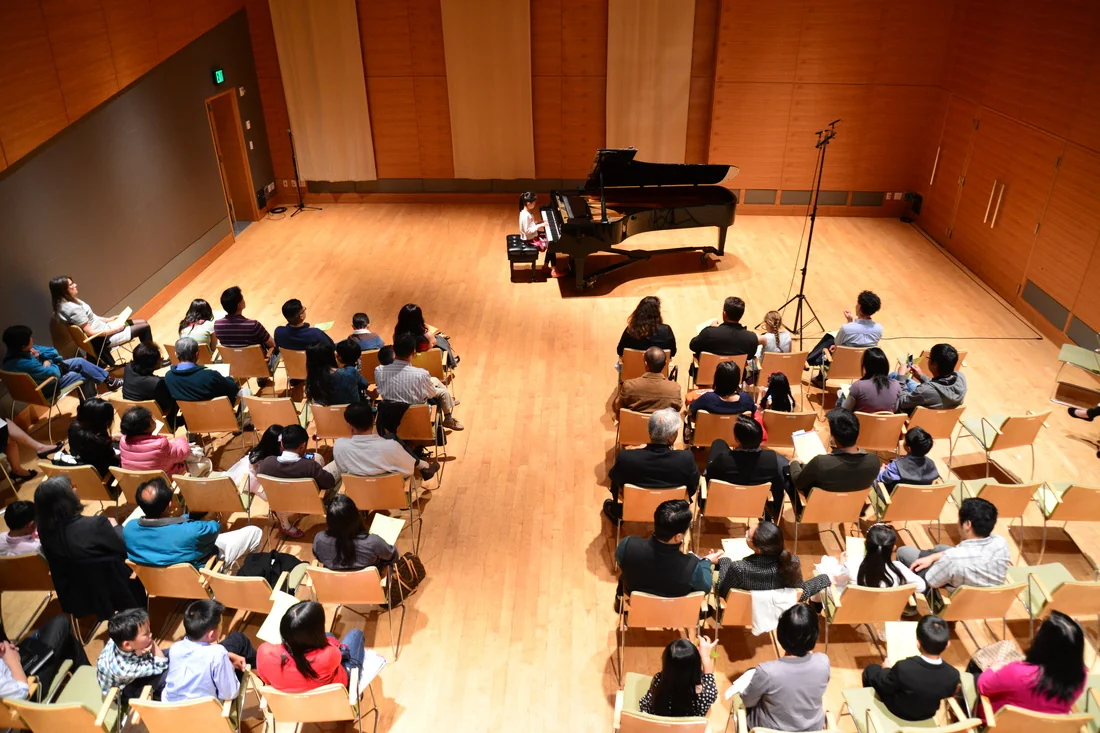
Also ask what happens beyond the weekly lesson. Recitals, studio classes, and informal performance moments give students a goal. Without milestones, practice can start to feel like pushing a shopping cart with one bad wheel: technically moving, spiritually unpleasant.
Independent Teacher or Music School?
Both can work. The right choice depends on how much support your family needs around the lesson itself.
An excellent independent piano teacher can be a wonderful fit, especially for a student with a clear goal and a reliable schedule. The relationship can be personal, flexible, and long-lasting. The main risk is that everything depends on one person: their schedule, teaching style, make-up policy, recital access, and whether they are the right match for the student.
A music school gives families more structure. There may be multiple teachers, front desk support, clearer enrollment policies, recital systems, and a better chance of switching teachers if needed. That structure matters for busy families who want lessons to be consistent without personally managing every detail.
The MTNA certification program describes professional standards for music teachers around preparation, teaching practices, business management, and ongoing learning. Whether you choose an independent teacher or a school, those are the kinds of signals worth looking for: skill, professionalism, and a serious approach to teaching.
| Option | Best for | Questions to ask |
|---|---|---|
| Independent teacher | Students who find a strong personal match and need a specific teacher. | What happens for recitals, absences, schedule changes, and long-term goals? |
| Music school | Families who want teacher matching, administrative support, and performance structure. | How are teachers matched, and can we adjust if the fit is not right? |
Use the Trial Lesson Carefully
A trial lesson should tell you more than whether the student had a nice time.
During a trial lesson, watch how the teacher starts. Do they greet the student directly? Do they ask useful questions? Do they explain tasks clearly? Do they notice the student’s response and adjust? Do they give the family a next step at the end?
For a child, the best sign is not instant perfection. It is engagement. Did the student try? Did they understand something new? Did the teacher make correction feel manageable? Did the parent leave with a clearer sense of what kind of lesson format, length, and teacher personality would fit?
After the trial, ask yourself what felt clearer. You should know whether the student is ready for weekly lessons, what lesson length makes sense, what home practice should look like, and whether the teacher's communication style fits your family. If the answer is only "the teacher was nice," that is pleasant but incomplete. Nice is the appetizer. A clear plan is dinner.
For an adult, a good trial lesson should feel respectful and specific. The teacher should ask about goals, prior experience, time available for practice, preferred styles, and any technique issues. Adult beginners do not need condescension with a metronome. They need clarity.
How Amabile Helps Families Find the Right Piano Teacher
The goal is not to place every student with any open teacher. The goal is to make the first match thoughtful.
Amabile teaches piano across San Francisco, Moraga, and online, with faculty who work with young beginners, school-age students, teens, and adults. That range matters because teacher fit changes by age and goal. A five-year-old starting first lessons needs different pacing than an adult returning after twenty years.
Families can browse the faculty page, compare program options, review common enrollment questions, and book a trial lesson when they are ready to meet a teacher. The trial lesson is the practical bridge between research and a confident decision.
If you are choosing for a child, bring the child’s age, personality, musical interests, and schedule constraints. If you are choosing for yourself, bring your goals and what has or has not worked before. Better information leads to a better match. Wild concept, apparently.
Ready to compare piano teachers with real context?
Book a trial lesson and tell Amabile about the student’s age, goals, location, and schedule. The first step is simply finding the right fit.
Frequently Asked Questions
Short answers for families and adults comparing piano teacher options.
How do I find a good piano teacher?
Start with the student’s age, goals, level, schedule, and personality. Then compare teachers by experience with similar students, lesson structure, practice guidance, communication, and whether a trial lesson feels organized and encouraging.
What should I ask a piano teacher before starting lessons?
Ask what ages and levels they teach, how they structure lessons, how they choose music, what practice should look like, how they communicate progress, and whether students have recital or performance opportunities.
Is a music school better than an independent piano teacher?
Neither is automatically better. A strong independent teacher can be excellent. A music school can be better for families who want teacher matching, administrative support, clear policies, and built-in recital opportunities.
Should kids and adults look for different piano teachers?
Often, yes. Children need age-appropriate pacing, parent communication, and a teacher who can keep lessons encouraging. Adults need efficient explanations, flexible goals, and practice plans that respect real schedules.
What is the best way to know if a piano teacher is the right fit?
A trial lesson is usually the clearest test. Watch whether the teacher explains clearly, adjusts to the student, gives useful feedback, and leaves the family with a specific next step.