
A Comfortable Start
Learn At The Right Pace
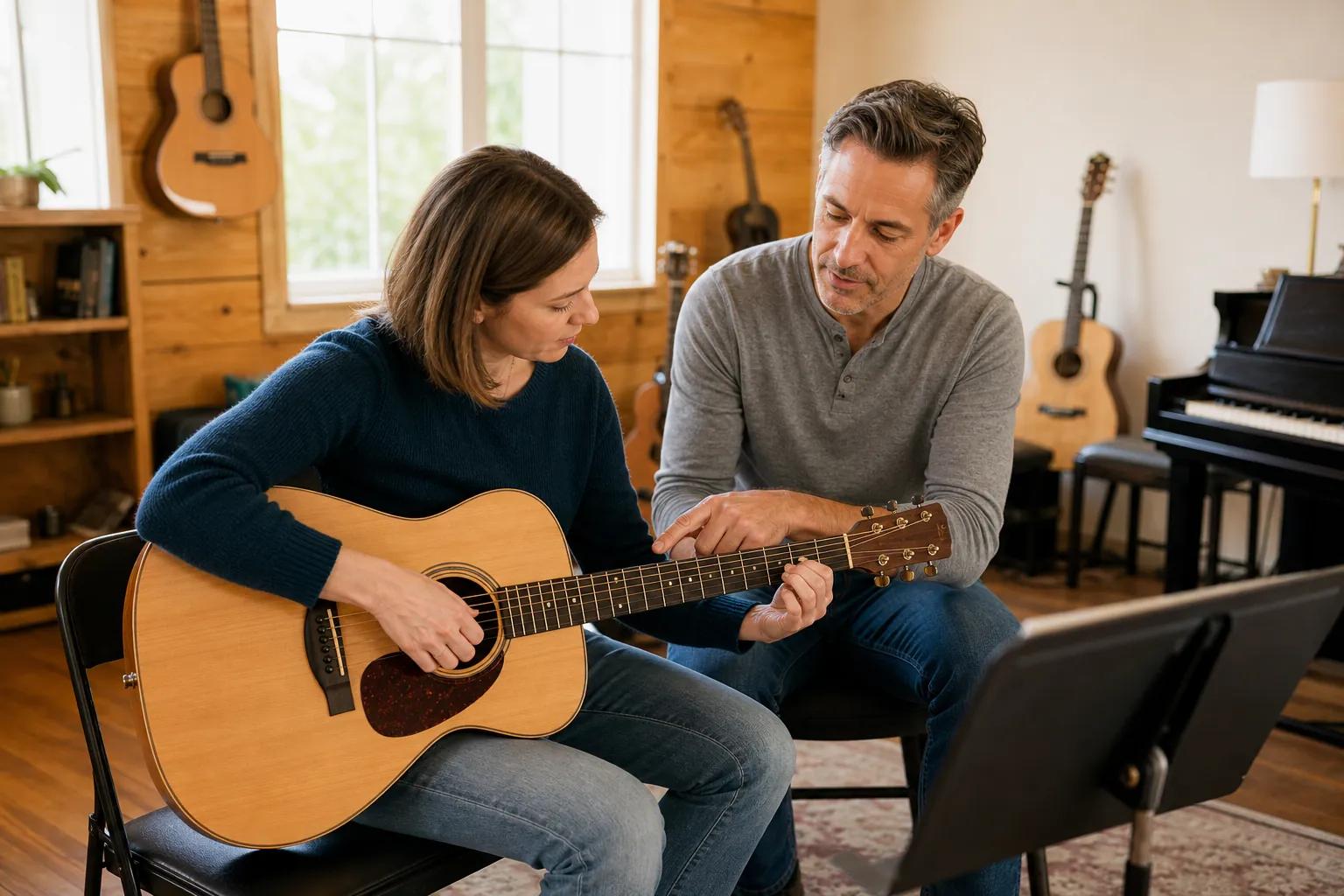
Begin with posture, rhythm, simple notes, chords, and songs in an order that makes sense for the student.
San Francisco, Moraga, And Online
Private guitar lessons for children, teens, and adults who want a welcoming teacher, a clear starting point, and a routine that works in real life.
Established
Since 2008
Faculty
30+ Teachers
Lesson Formats
In Person + Online
Lesson Options
30, 45, Or 60 Minutes
When someone searches for guitar lessons nearby, convenience matters. So does finding a teacher who can meet the student at the right level. A first lesson should not feel like a test. It should make the next step clear, whether the student is holding a guitar for the first time, picking it up again after years away, or ready to move beyond the songs they already know.
Guitar is a flexible instrument with many possible paths. Students may be drawn to chords and singing, melodies, pop songs, classical music, school ensembles, or writing their own material. Private instruction gives each student time to work on the details that matter most, without trying to keep up with a group or guess what to practice next.
At Amabile, the lesson can begin simply and grow with the student. A teacher can slow down a tricky chord change, help a younger player build coordination, or give an adult learner a focused plan that makes a busy week feel more manageable.
A Comfortable Start
Begin with posture, rhythm, simple notes, chords, and songs in an order that makes sense for the student.
Personal Attention
One-on-one feedback can solve a technique or rhythm problem before it turns into frustration at home.
Music That Connects
Technique and reading become more useful when students connect them to melodies, accompaniment, and songs they enjoy.
A Routine That Lasts
Choose San Francisco, Moraga, or online lessons to give a weekly music routine a better chance of sticking.
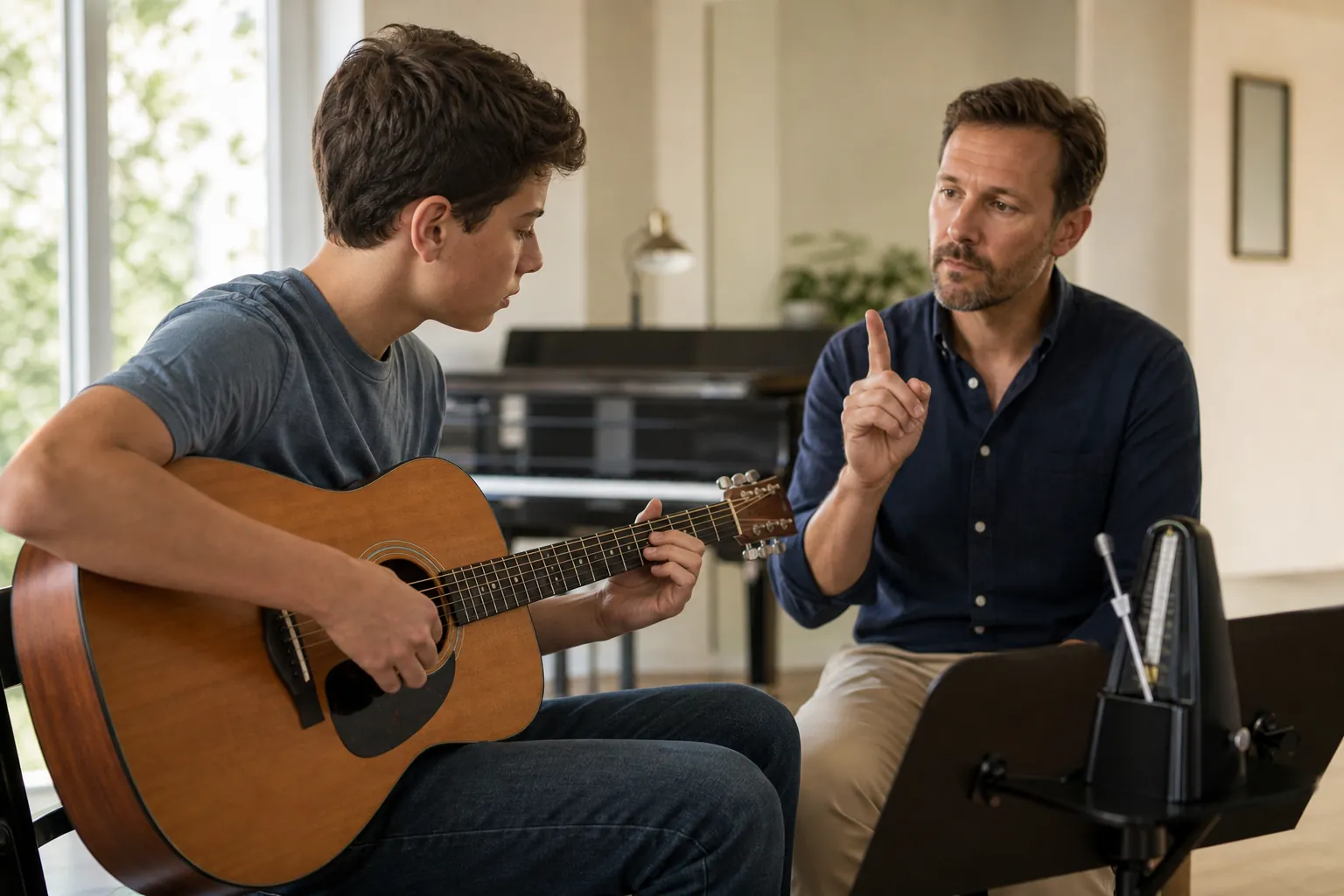
Each lesson gives the student something concrete to work on now and a clear way to continue between sessions.
Comfort, posture, and sound
Early guidance helps students hold the guitar comfortably, use both hands with less tension, and make a sound they are pleased to hear.
Rhythm before rushing
Students learn to count, listen, and keep a steady pulse so chord changes and melodies have a dependable musical foundation.
Chords, melodies, and reading
The teacher can connect note reading, chord shapes, strumming, fingerpicking, and repertoire in a way that supports the student's goals.
A practice plan that feels realistic
A focused assignment gives students a useful place to begin at home, instead of leaving them with a vague instruction to practice more.
For a younger beginner: lessons can turn interest into a foundation. The work stays approachable while the student develops listening, rhythm, hand coordination, and the confidence to play a short piece from beginning to end.
For a teen: private time can help with a favorite style, a school music part, a more challenging song, or the skill of accompanying a voice. Students can bring questions that do not fit neatly into a busy group setting.
For an adult beginning or returning: lessons create structure without requiring a student to become a full-time musician. The teacher can help select attainable material and build progress around work, family, and other commitments.
For a family comparing instruments: a trial lesson is a practical way to meet a teacher, see how the student responds to the guitar, and decide what lesson format feels right before adding another activity to the calendar.
A trial lesson is a chance to meet the teacher and find a sensible starting point. Students do not need previous lessons, a finished song, or a complete home setup before they arrive.
The teacher may ask what the student hopes to play, listen to their sense of rhythm, and work through a first chord, melody, or technique. For a younger student, a parent can share useful context about interests, schedule, and what they hope music lessons will provide.
By the end, the next step should feel more concrete. Students and families can decide whether the teacher, lesson length, location, and learning plan feel like a good match before moving forward.
The best lesson plan is the one a student can repeat. For families, that often means choosing a campus that works with school, work, and other activities. For adults, it can mean reserving a consistent time and protecting it as a welcome creative part of the week.
Amabile offers in-person guitar lessons in San Francisco and Moraga, with online lessons available when learning from home makes more sense. A trial is a useful time to discuss the student's goals, weekly routine, and what kind of setup is available.
Students do not need long, unfocused practice sessions to make progress. A teacher can help shape short sessions around a warm-up, one chord or rhythm task, and a musical piece that gives the practice time a satisfying finish. Small, repeatable sessions are easier to sustain than a plan that asks too much too soon.
Thirty-minute lessons can be a strong first fit for younger beginners. Forty-five or sixty minutes create more room for students who want deeper work with technique, reading, repertoire, or performance preparation.
Students do not need an elaborate setup before they begin. The first lesson can clarify what guitar size, practice space, and accessories make sense for the student's age and goals.
The right teacher helps a student feel heard, appropriately challenged, and clear about what comes next. A trial lesson makes that decision easier before a new routine is added to the calendar.
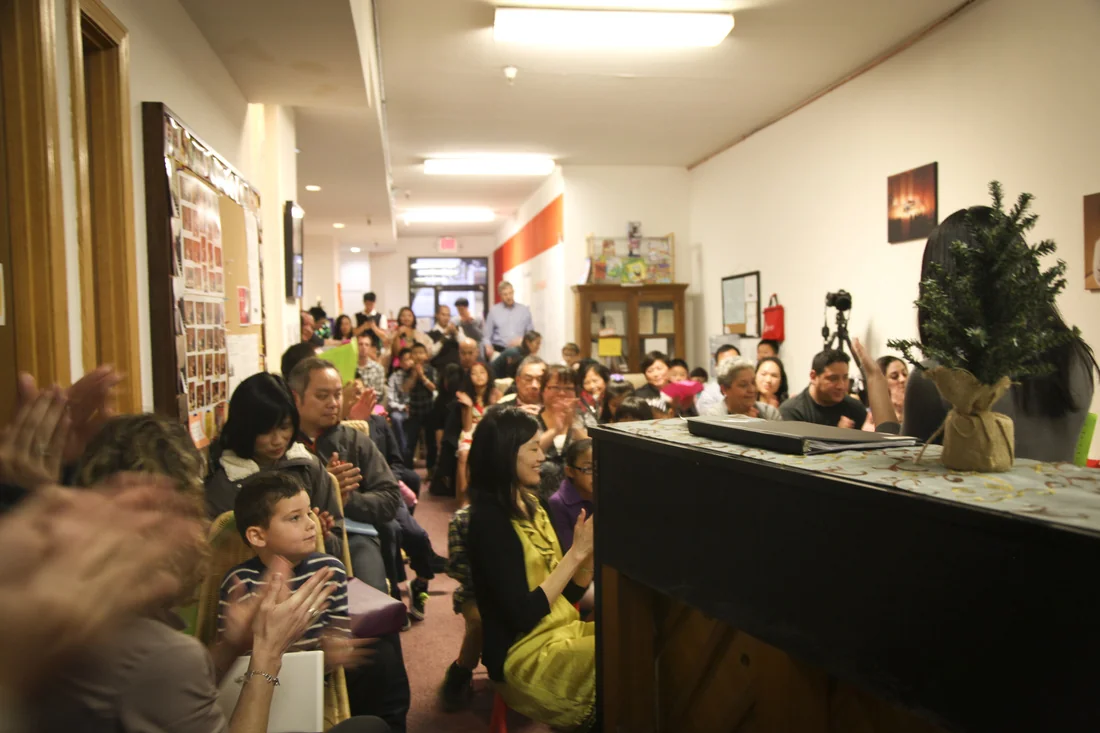
Some guitar students are happy playing at home. Others enjoy working toward a piece they can share. Amabile offers recital and performance opportunities for students who want that extra milestone.
Low Pressure
Students can gain confidence in a supportive setting and choose a performance pace that feels right.
Real Milestones
A recital goal can give weekly practice direction and help students recognize the work they have put in.
Convenience matters when a lesson needs to become part of a real week. Families from San Francisco can visit the Sunset Parkside campus, while the Moraga campus is a nearby option for Lamorinda families, including Lafayette and Orinda. Online lessons offer another flexible path when travel is not the best fit.
Both locations provide a dedicated place for students to focus with a teacher. The best choice depends on the student's schedule, where the family is coming from, and the learning experience that feels most comfortable. The team can help talk through those details when scheduling a trial.
Sunset Parkside District
1213 Vicente Street, San Francisco, CA 94116
In-person and online lessons are available seven days a week.
(415) 682-7738Serving Lamorinda
1001 Country Club Drive, Suites D & A, Moraga, CA 94556
In-person lessons are available Monday through Saturday, with online options seven days a week.
(925) 376-6328Yes. Beginners can start with basic posture, rhythm, simple notes, chords, and familiar songs. A teacher introduces each skill in a sequence that helps the student feel successful while building a dependable foundation.
Yes. Amabile works with children, teens, and adults. The teacher adjusts the lesson pace, material, goals, and practice expectations to fit the student's experience, interests, and schedule.
No. A trial lesson is a good place to discuss the student's age, goals, and available practice space before deciding what instrument and accessories make the most sense.
Yes. Online guitar lessons are available alongside in-person options in San Francisco and Moraga. A trial lesson can help determine which format makes the most sense for the student's setup and weekly routine.
Lessons are available in 30, 45, and 60 minute formats. The best length depends on the student's age, attention, goals, and the amount of work they want to cover in each session.
Book a trial lesson and share the student's age, preferred location, whether online or in-person works best, and what they are excited to play.