Quick answer
Beginner singing lessons are not an audition. They are a structured way to learn how your voice feels when it is free, how to match pitch more reliably, and how to practice a song without pushing for a bigger sound than your voice is ready for. A good first month is modest on purpose: a few useful skills, short practice sessions, and feedback that helps you hear what is changing.
You Do Not Need To Be Born A Singer
Singing is a coordinated skill. A beginner starts by learning what to notice, not by trying to sound impressive.
Many people arrive at a first lesson with a private rule in their head: sing only when no one is listening. They may like music deeply but assume they are too late, too off-key, or too inexperienced to learn. Those fears are common, and they are not a useful measure of what can improve. Pitch matching, rhythm, breath coordination, clear words, and musical expression all become easier when they are worked on one at a time.
The first goal is not to copy a favorite recording. Recordings are shaped by an artist’s voice, key, microphone, and production. A beginning singer needs music that sits comfortably and exercises that make a specific job easier to feel. The National Association of Teachers of Singing is a useful reminder that healthy voice study belongs in the hands of trained teachers, not in a race to force range or volume.
What Happens In A First Singing Lesson
A useful first lesson gives you a starting point and a small plan for the week.
Your teacher will usually ask what you want singing to be for. Maybe you want to enjoy karaoke without bracing for the chorus, join a choir, prepare for musical theater, write songs, or finally feel comfortable hearing your own recorded voice. Those goals matter because a singer who wants a relaxed hobby needs a different first plan from someone preparing an audition.
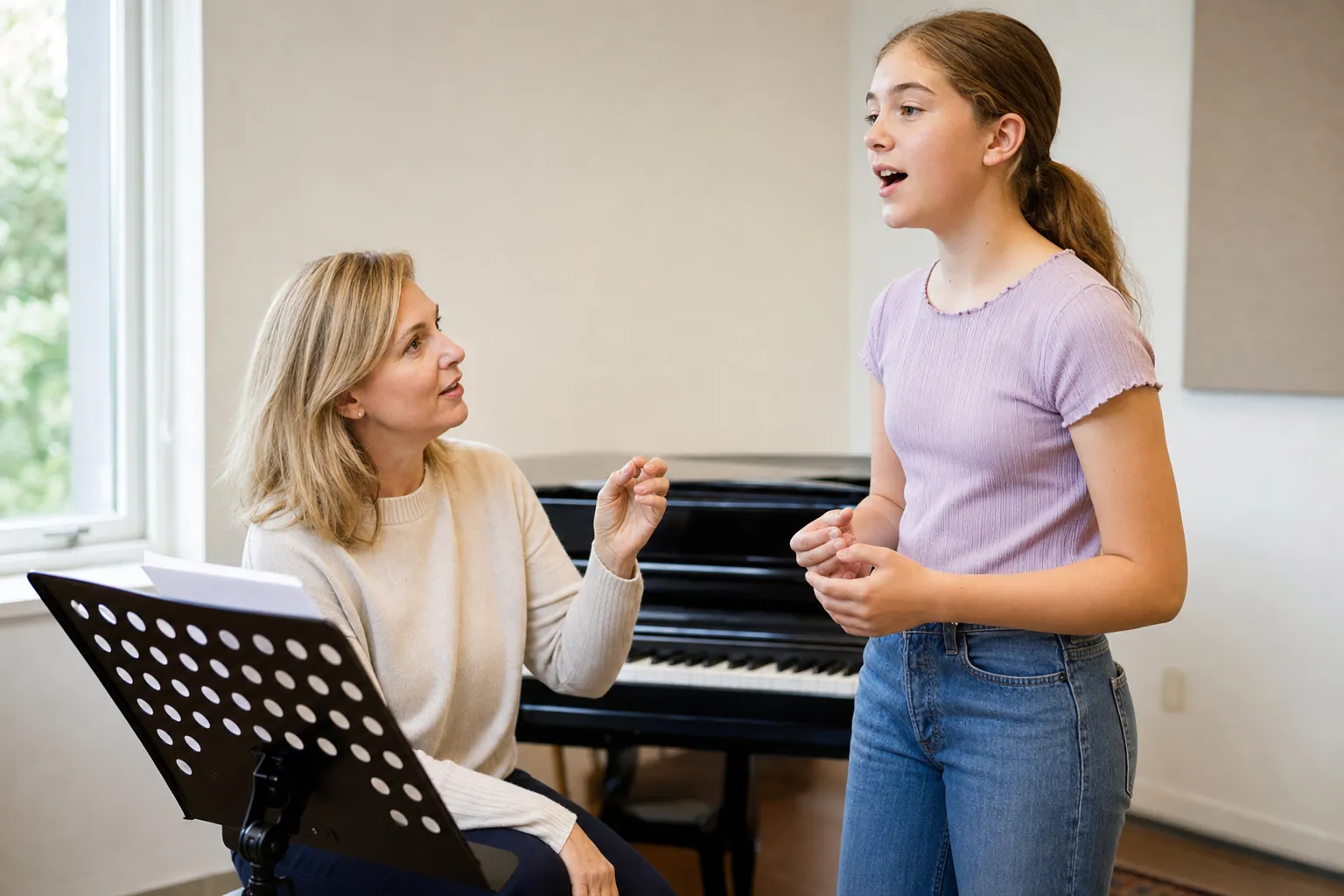
You may begin with simple posture and breathing observations, gentle sounds, matching a few notes, rhythm work, or a short phrase from a familiar song. The teacher is listening for what is already working and what needs a clearer explanation. You should leave knowing one or two things to practice, not carrying a list of technical vocabulary you cannot use yet.
| Early focus | What it can feel like | Why it matters |
|---|---|---|
| Easy breath | A quiet inhale and steady, unforced exhale. | It gives a phrase support without gripping. |
| Pitch matching | Finding a note, then staying with it. | It connects what you hear with what you sing. |
| Comfortable tone | A clear sound that does not feel squeezed or shouted. | It keeps technique sustainable as songs grow harder. |
| Simple song work | A small phrase in a key that fits your voice. | It turns individual skills into real music. |
Build A First-Month Practice Routine
Short, specific practice is more useful than one heroic session on the weekend.
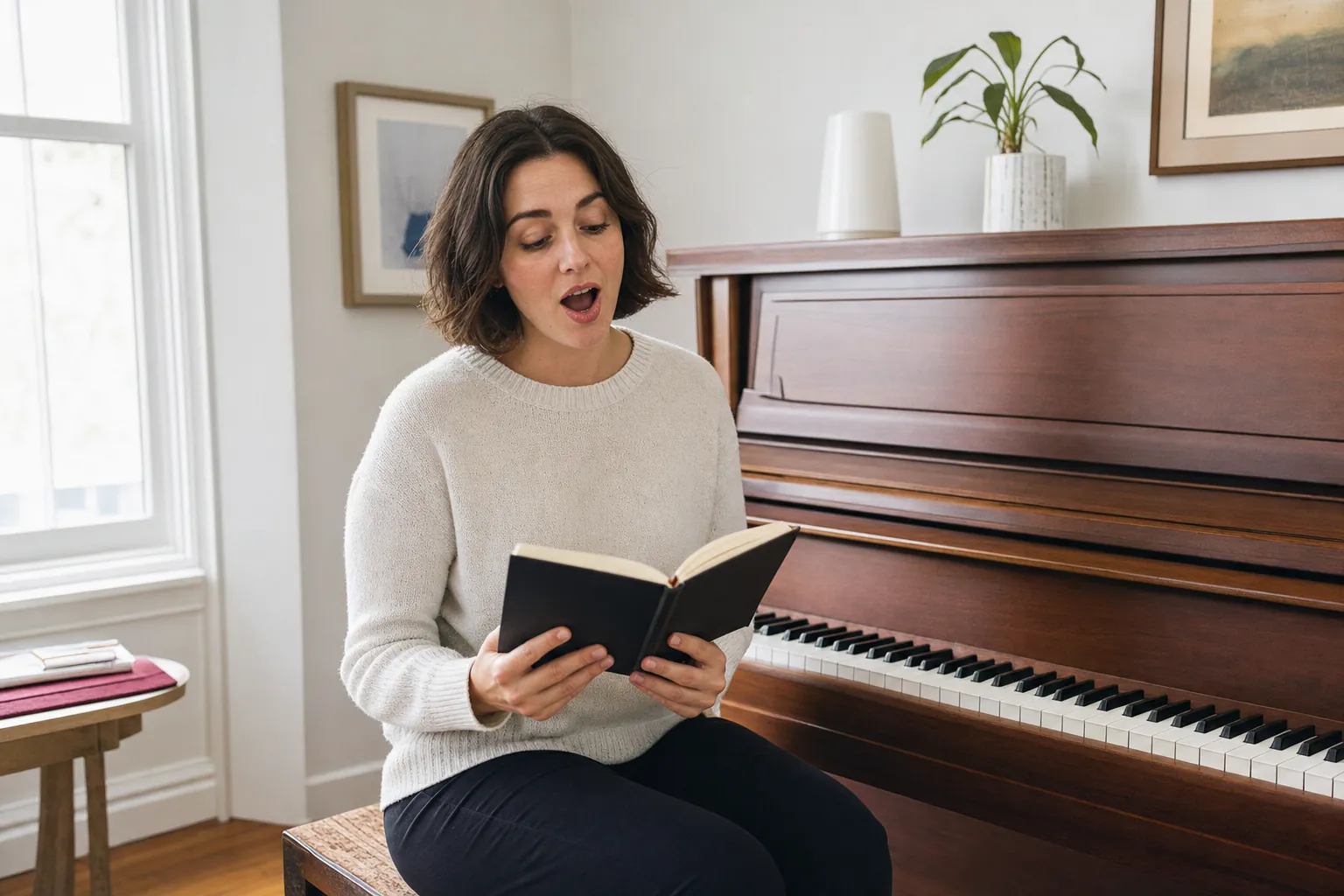
Start with about 10 to 15 minutes, three or four times a week, unless your teacher suggests a different plan. Choose a quiet time when you can listen without rushing. Water, a music stand or lyric sheet, and a simple way to hear a reference pitch are enough for a beginner. You do not need a home studio.
A sensible session might include two minutes of settling the body and breath, three minutes of gentle exercises chosen by the teacher, four minutes of careful pitch or rhythm work, and a few minutes on one song section. Stop while the voice still feels easy. Repeating a difficult chorus at full volume until it feels rough is not discipline. It is usually a sign to slow down, lower the key, shorten the task, or ask for help.
Make practice measurable without becoming harsh about it. A useful note might say, “I matched the first three notes twice,” or “the bridge still feels breathless.” Bring those observations to the next lesson. They give the teacher something real to adjust. If you enjoy recording, a brief private voice memo once every few weeks can help you notice changes that daily listening hides.
Choose Songs That Let You Learn
The right first song creates repetition you can actually enjoy.
Pick something you want to return to, but do not assume the original recording is in the right key for your voice. A teacher can help you choose a comfortable section, simplify the rhythm, or move the key. Starting with a smaller range and a clear melody lets you work on pitch and phrasing without fighting every note.
Early songs do not need to be childish or boring. They need to give you a fair chance to hear progress. A good question is not “Can I sing this exactly like the artist?” It is “Can I sing this phrase with an easy breath, a steady beat, and a sound that still feels like me?” As those answers improve, the song list can grow with your confidence.
Use Feedback Without Losing Your Nerve
Beginners improve faster when feedback is specific, kind, and connected to one repeatable action.
Singing can feel unusually personal because the instrument is part of your body. That is why vague comments such as “be more confident” or “just sing louder” are rarely helpful. Better feedback names one thing you can hear or feel: begin the phrase a little lower, keep the final vowel easy, clap the rhythm before singing it, or release the shoulders before the breath. A good teacher does not ask you to fix everything in one attempt.
At home, listen for one detail at a time. If you are practicing a pitch exercise, do not also judge your tone, facial expression, and whether you sound like your favorite artist. First ask whether the notes are matching. On another pass, notice whether the breath feels calm. Separating those jobs makes a recording less intimidating and makes progress easier to recognize.
It also helps to use neutral language. Replace “I am terrible at this” with “the middle note keeps dropping” or “I lose the rhythm after the second line.” Those observations give you and your teacher something workable. They turn a frustrating moment into a question with a next step.
What Progress Can Look Like
Early gains are often quieter than a dramatic high note, but they are real and worth noticing.
In the first few weeks, progress may look like starting a note closer to the pitch, staying with a phrase through the end, remembering a rhythm, or feeling less tense in the jaw and neck. After a few months of regular study, many beginners can approach songs with more dependable coordination and a clearer sense of what to practice. The pace is different for every singer, and a teacher can help set expectations that fit your voice and schedule.
Keep a short list of musical wins: a chorus you can now sing without stopping, a breath that lasts one extra phrase, a rhythm you can clap accurately, or a recording that sounds more settled than it did last month. This is not about grading yourself. It is a way to make the small changes visible enough that you keep going.
Know When To Pause And Ask
Singing should feel active and engaged, never painful.
Do not practice through pain, burning, repeated cracking, or persistent hoarseness. Rest, hydrate, and speak with a qualified clinician if a voice concern continues. A voice teacher can help with healthy technique and musical coordination, while persistent medical symptoms deserve medical attention. The National Institute on Deafness and Other Communication Disorders offers practical voice-care guidance, including staying hydrated and avoiding habitual shouting.
There is also a gentler kind of pause: discouragement. If an exercise seems impossible, that does not mean you have failed. Tell the teacher exactly what happened. You may need a slower tempo, a different vowel, a lower starting pitch, or a smaller piece of the skill. Good instruction removes mystery before it adds difficulty.
How To Choose A Beginner Voice Teacher
Look for clear feedback, a comfortable working relationship, and a plan that matches your actual goal.
During a trial lesson, notice whether the teacher listens first and explains one thing at a time. Do you understand what the exercise is for? Does the correction feel specific enough to try again? Can you say what to practice this week? Warmth matters, but so does clarity. Empty praise cannot tell you how to improve.
Ask about experience teaching beginners, the kind of music you hope to sing, lesson length, practice expectations, and whether in-person or online study fits your schedule. Amabile families can review faculty profiles, current lesson options and tuition, and Bay Area locations before a trial. The goal is not to find a magic teacher. It is to find a thoughtful person who can help you take the next useful step.

How Amabile Helps Beginner Singers
A first lesson should make singing feel more possible, not more intimidating.
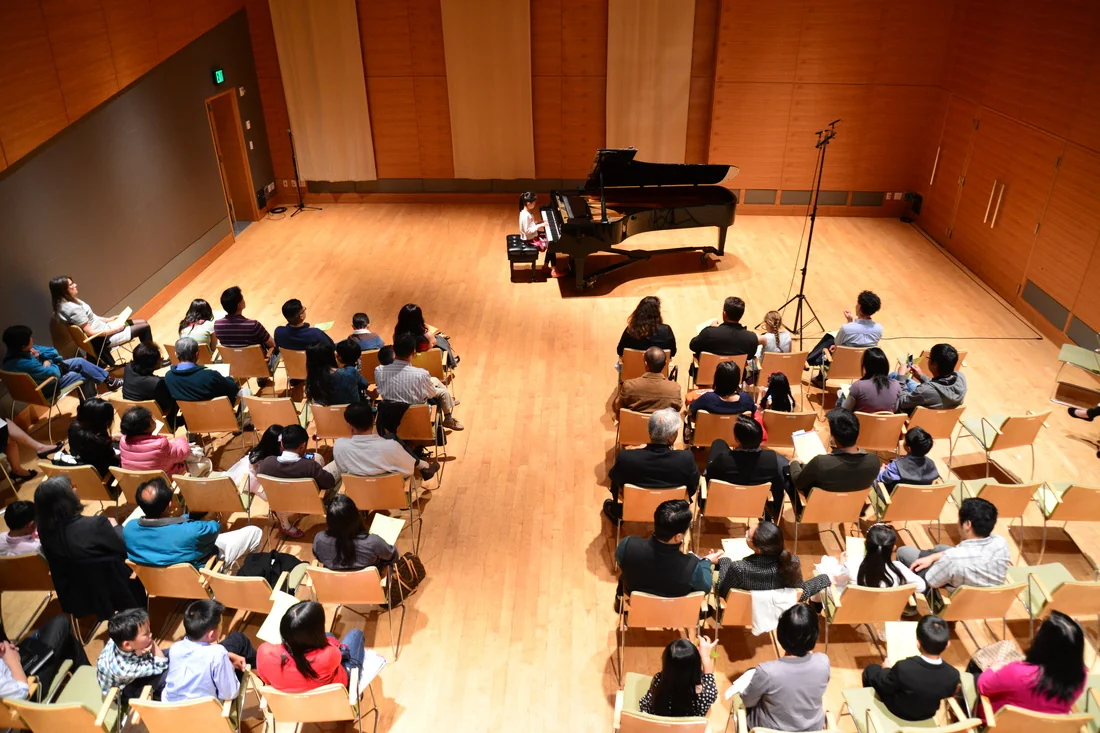
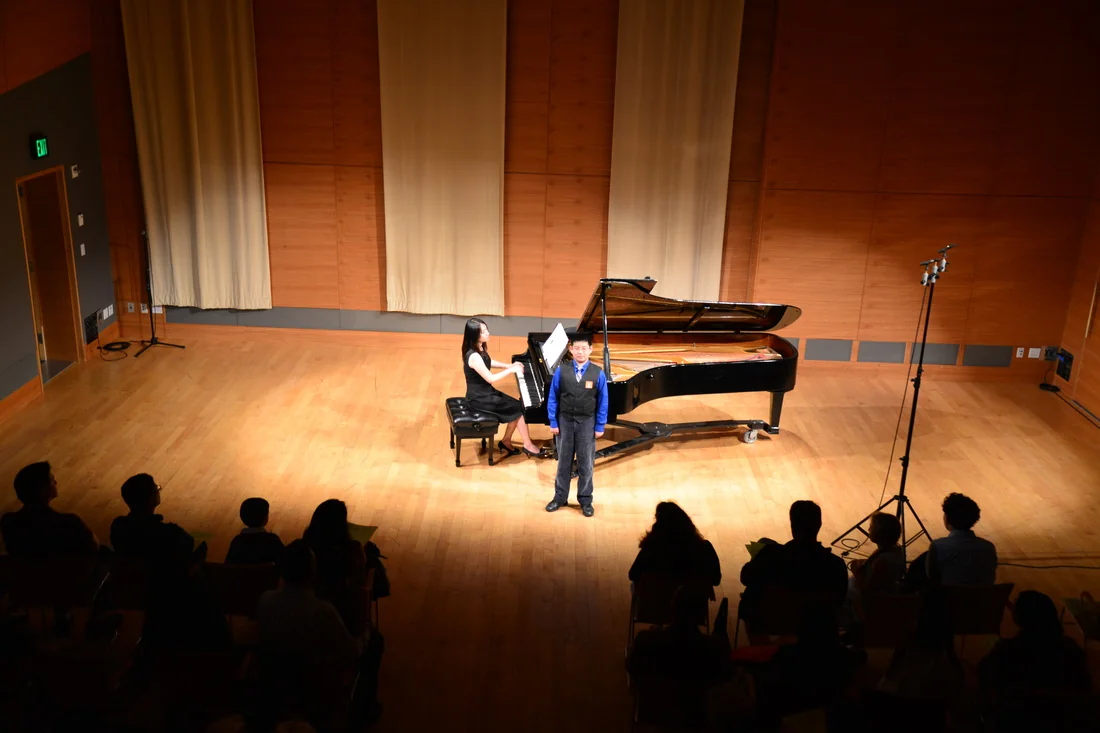
Amabile School of Music offers voice lessons for beginners in San Francisco, Moraga, and online. A trial lesson is a practical place to talk through your goals, try a few guided exercises, and decide on a realistic first routine. Students can build toward clearer pitch, healthier habits, songs they enjoy, and, when they are ready, a chance to share music in an Amabile recital.
Explore voice lessons, read the guide to practicing singing at home, or book a trial when you are ready for individual feedback. The first step can be small. It just needs to be one you can repeat.
Frequently Asked Questions
Can I take singing lessons if I have never sung before?
Yes. Beginner lessons are designed for people with no formal training. A teacher can start with your goals, listening skills, comfortable range, and simple exercises instead of assuming you already know music theory or vocal terms.
How often should a beginner practice singing?
Many beginners make a good start with short, focused sessions on several days each week. Your teacher can tailor the routine to your voice, goals, and schedule. Stop if singing becomes painful or persistently hoarse.
Do I need to know how to read music for voice lessons?
No. Reading can be useful, but it is not a requirement for a first voice lesson. Beginners can work with listening, rhythm, lyrics, simple notation, and songs they enjoy while gradually building broader musical skills.
Can adults learn to sing?
Yes. Adults can begin at any age. Clear goals, a realistic practice routine, and regular feedback help adults build confidence and coordination without pretending that progress needs to happen overnight.
Should I choose online or in-person singing lessons?
Both can work. In-person lessons provide a dedicated learning space, while online lessons can be convenient with a quiet room and a reliable camera and audio setup. The best format is one you can attend consistently and use for regular practice.
Related Posts
More practical guidance for singers building confidence and steady habits.