Quick answer
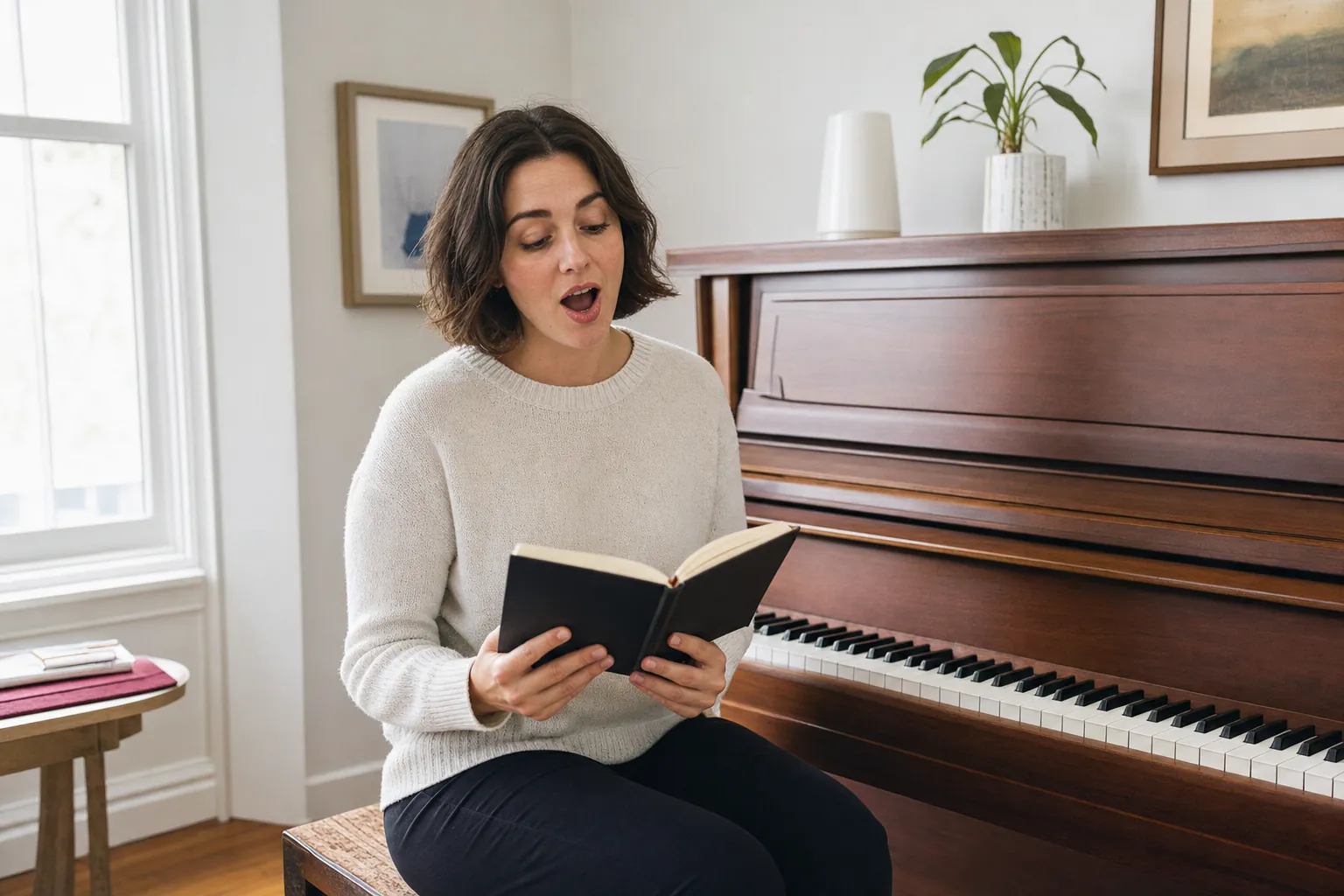
Practice singing at home by using a simple order: settle your body, warm up gently, work on one skill or a short song phrase, listen back, and finish before the voice feels tired. For most beginners, ten to twenty focused minutes on most days is more useful than one long session that turns into strain or guesswork.
Practice Is Different From Singing Through Songs
A favorite song belongs in practice. It just should not be the whole practice session.
It is easy to call any time spent singing practice. Put on a track, sing from the top, feel good about the chorus, and call it a day. That can be joyful, and joy matters. But it does not always show you what is improving or what needs attention.
Real practice has a small target. Maybe one line goes flat at the end. Maybe the words rush when the melody climbs. Maybe breathing is noisy, or the tone becomes tight after the first verse. Choose one issue, shrink it to a phrase, and give yourself several calm attempts. That is how a frustrating song becomes something you can actually work on.
This is especially important for beginners. The voice is hard to watch while you are using it, and the sound you hear inside your own head is not exactly what other people hear. A routine gives you a way to learn without trying to judge every note in real time. It also makes the early stages described in Amabile's guide to learning to sing feel less mysterious.
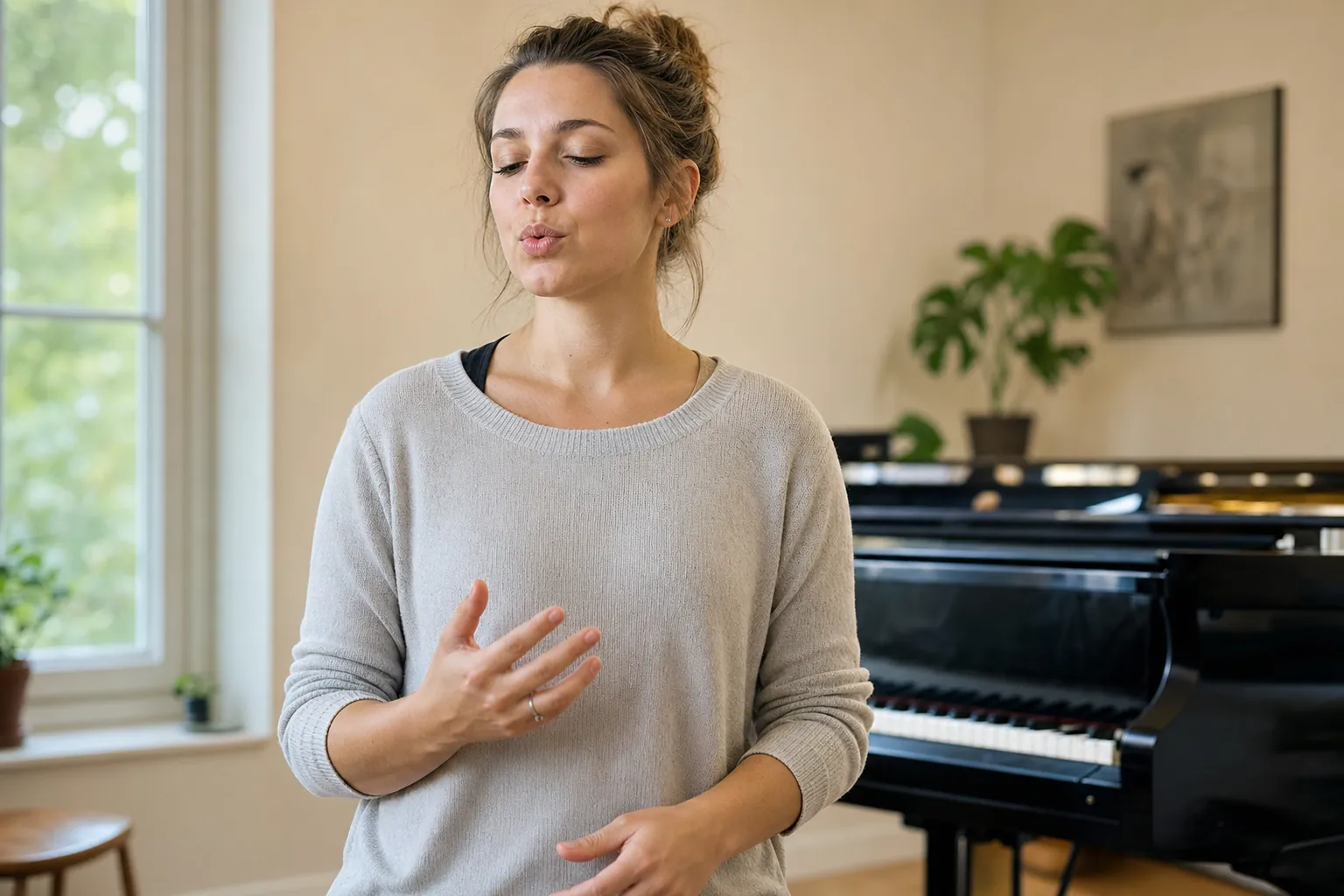
A Simple Singing Practice Routine
Use the same basic sequence until it feels ordinary. Consistency is more valuable than an elaborate plan you do once.
The exact exercises should come from a teacher who knows the singer. Still, a healthy home routine can be simple enough for a child, teen, or adult to remember.
- Settle first. Stand or sit comfortably, release your shoulders and jaw, and notice whether you are tired, congested, or trying to rush.
- Warm up gradually. Start with easy humming, lip trills, gentle slides, or the exercises your teacher assigned. The National Association of Teachers of Singing's warmup guidance recommends a few minutes of physical preparation before singing.
- Choose one skill. Spend a few minutes on one pitch pattern, vowel, breath cue, rhythm, or transition between notes. Keep it light enough that you can repeat it without forcing.
- Work on a small song section. Use the skill inside two to four measures or one short lyric. Slow down before you repeat. If the problem changes, stop and name the new problem instead of blindly doing more repetitions.
- Sing something you enjoy. End with a comfortable part of a song, an old favorite, or a quick review piece. Practice should include musical pleasure, not only correction.
- Make one note for next time. Write down what improved and what you want to ask at the next lesson. A single clear note is enough.
A session can be brief. Ten calm minutes with one clear task is a real practice session. The next day, return to the same routine. That repetition builds a bridge between lessons instead of asking the singer to start over each week.
Warm Up Gently Instead of Trying to Sound Big Right Away
The goal is coordination, not volume.
A warmup is not an audition. It is a chance to reconnect breath, sound, listening, and movement before a song adds words, emotion, and higher notes. Start in a comfortable range and let the sound stay easy. If an exercise feels pinched, loud, scratchy, or difficult to control, make it smaller or stop rather than trying to overpower it.
Many singers like lip trills because the buzzing sound makes it harder to push too much air through the phrase. Gentle hums can help a beginner focus on smooth sound and simple pitch changes. Sirens or slides can be useful when assigned carefully, because they let the singer travel through a range without turning every note into a target. The specific exercise matters less than the feeling: easy, responsive, and repeatable.
Hydration and rest belong in the wider routine too. The National Institute on Deafness and Other Communication Disorders notes that the voice is produced by vibration of the vocal folds and recommends paying attention to changes such as persistent hoarseness, strain, or losing high notes. Water is not a magic fix for technique, but a well-rested, well-hydrated singer is usually better able to notice what the voice is doing.
Never use practice to push through pain. If singing hurts, if breathing feels difficult, or if a rough or strained voice lasts more than a few weeks, it is sensible to pause and get medical guidance. A voice teacher can guide music learning; a health concern deserves a qualified healthcare professional.
How Long Should You Practice Singing?
Start with enough time to be focused, not enough time to prove endurance.
There is no single number that fits every singer. A young child may do best with five to ten minutes of playful, well-chosen work. A teen preparing for a school performance may need more time split across technique, lyric work, and song sections. An adult beginner may have twenty focused minutes but only a few days that fit comfortably into a busy week.
| Singer | A useful starting point | Best use of the time |
|---|---|---|
| Young beginner | 5 to 10 minutes | One easy warmup, a small song moment, and a positive finish |
| Older child or teen | 10 to 20 minutes | Teacher-assigned exercises, one problem phrase, and song work |
| Adult beginner | 15 to 25 minutes | A repeatable routine that fits real life and avoids weekend cramming |
Stop before the voice feels worn out. More time is not automatically better, especially when a singer is practicing without feedback. Regular lessons and short home sessions are a stronger combination than a long session followed by days of avoiding the music. Families considering a first lesson can use Amabile's voice lesson readiness guide to think through a sensible starting point.

Use Your Phone as a Listening Tool, Not a Reason to Criticize Yourself
A short recording helps you notice patterns that disappear while you are busy singing.
Record a short phrase once, listen, make one change, then record it again. Do not make ten recordings and search for perfection. The point is to compare a before and after, not to prove that every note is flawless.
When listening back, choose one question: Did the pitch settle? Did the ending stay connected? Could I understand the words? Did the breath feel calmer? A narrow question gives you useful information. A vague question such as “Do I sound good?” usually leads straight to self-consciousness.
Parents can use the same approach with children, but the tone matters. Ask, “Which take felt easier?” or “Can you hear the part you fixed?” rather than commenting on every imperfect sound. The goal is to teach listening, not to turn home into a second lesson. For a fuller picture of age-appropriate expectations, see Amabile's parent guide to singing lessons for kids.
Choose Songs That Let You Practice Well
A song can be meaningful and still be the wrong fit for today's voice.
Beginners often choose songs based on admiration. That is understandable. But the original artist's range, style, breath control, and recording setup may have very little to do with the singer at home. A good practice song feels challenging in one or two places, not impossible from the first line.
Look for a song that sits comfortably for most of the verse, has a clear melody, and gives you room to repeat small sections. Change the key if needed. Use a quieter arrangement. Work on the chorus later if it is the part that pulls the voice too high or makes you push. The song is supposed to serve learning, not demand a dramatic imitation.
If your goal is a specific style, a teacher can help choose material that builds toward it. Amabile's beginner voice lesson options give singers a place to start with goals, range, basic listening skills, and comfortable repertoire rather than one-size-fits-all exercises.
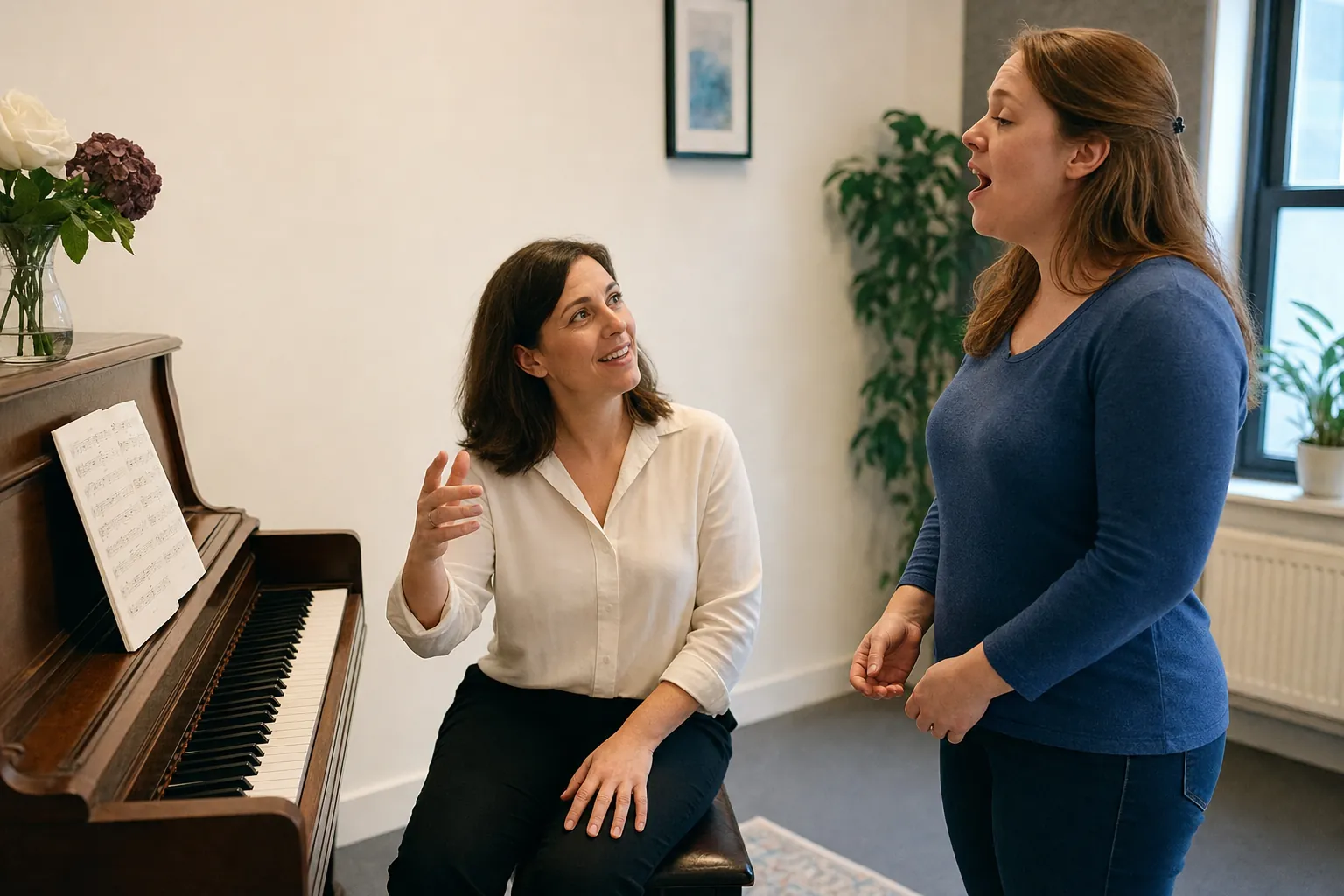
What a Teacher Adds to Home Practice
Good feedback keeps a singer from practicing the same wrong solution every day.
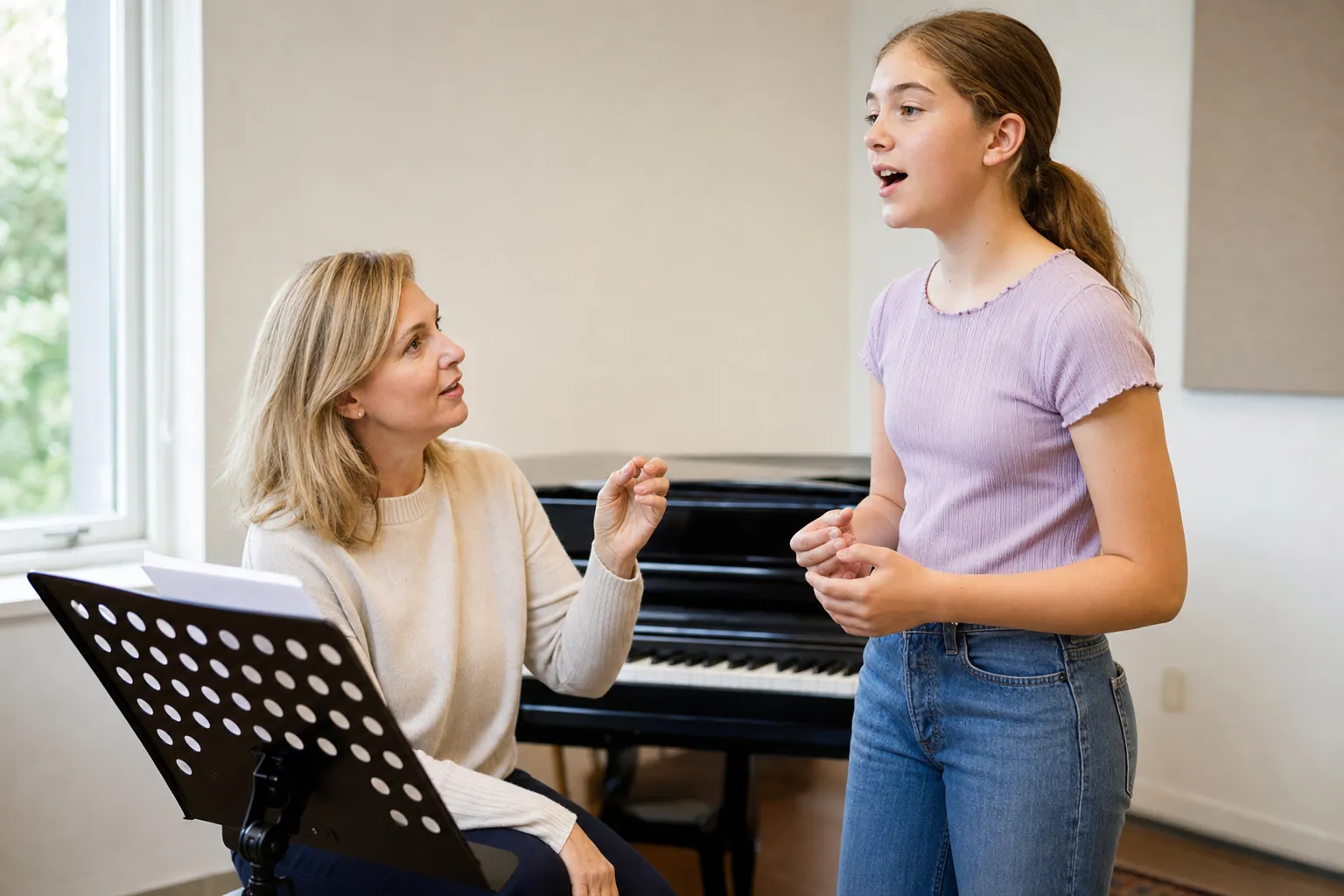
Home practice creates repetition. A teacher makes sure the repetition is pointed in a useful direction. They can hear when a singer is reaching for a note, choosing a vowel that makes the phrase harder, or trying to fix a rhythm problem with more volume. Those are details that are easy to miss alone.
The best assignments are specific enough to take home. A singer should leave knowing which warmup to repeat, which phrase to isolate, what “better” will sound or feel like, and when to stop. That structure is just as useful in an in-person lesson as it is in an online voice lesson.
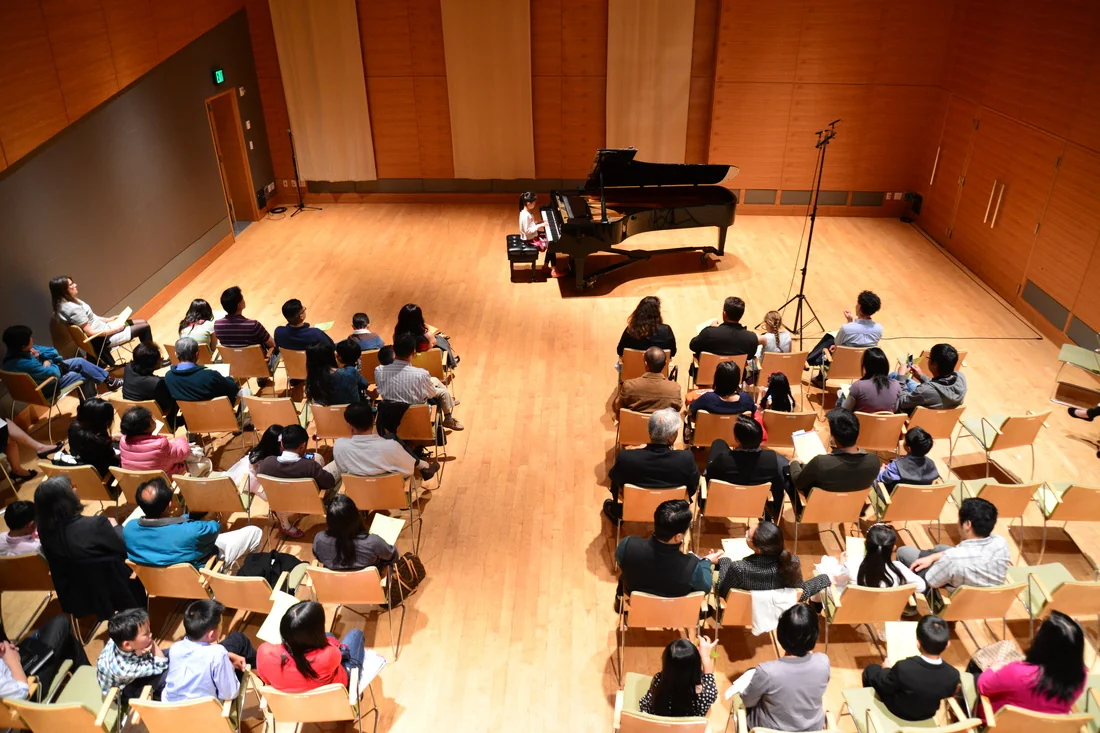
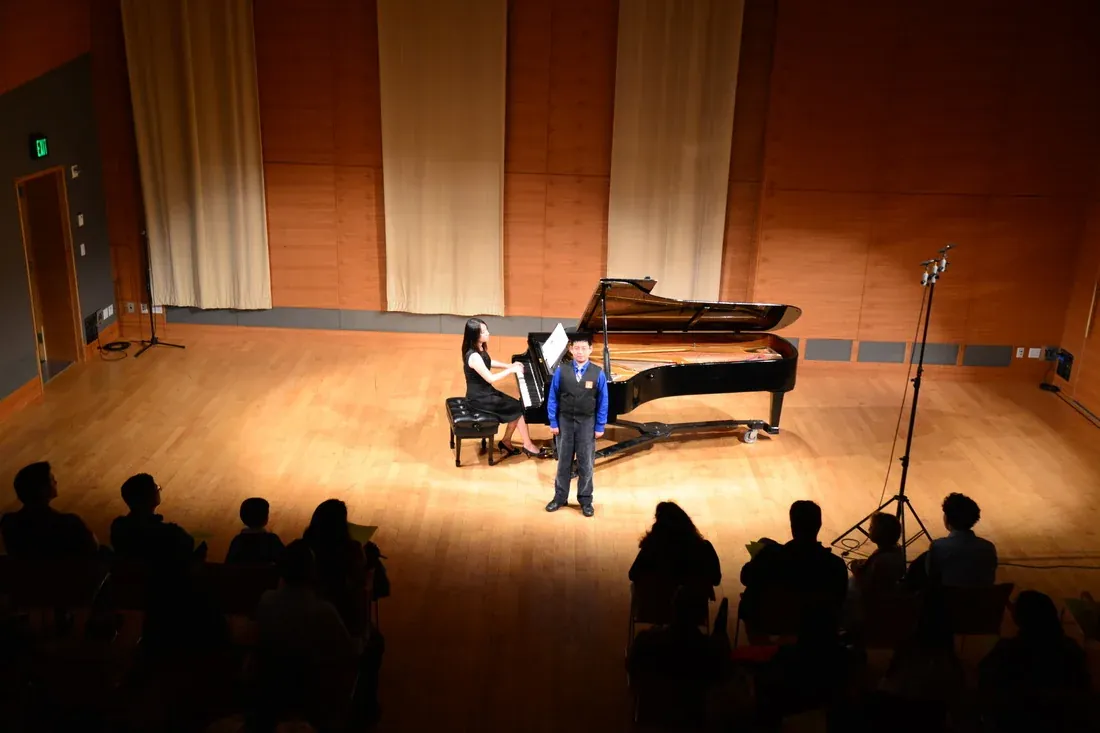
Amabile students can also connect home practice to real milestones through recital and performance opportunities. A first performance does not need to be a pressure test. It can be a short, well-prepared song that lets a singer feel what daily practice has made possible.
A Simple Weekly Plan
The plan should be easy to resume after a busy day, not so strict that one missed session ruins the week.
- Day 1: Review the teacher's main exercise and identify one song phrase to improve.
- Day 2: Repeat the warmup and record the short phrase once.
- Day 3: Slow the phrase down, check words and rhythm, then reconnect it to the surrounding line.
- Day 4: Take a lighter day: warm up, sing something comfortable, and stop early.
- Day 5: Make a second recording and write one question for the next lesson.
That is enough. A singer who follows this plan most weeks will have more useful information and more stable habits than someone who waits for a perfect, uninterrupted hour. If you are ready for individual feedback, review Amabile's lesson options and tuition or book a trial lesson.
Frequently Asked Questions
How often should beginners practice singing at home?
Most beginners do well with short, focused sessions on most days. Start with ten to twenty minutes if the voice feels comfortable, and shorten the time for young children or on tired days. Consistency matters more than one long weekly session.
Should I practice singing every day?
Many singers like a frequent routine, but daily practice should not mean pushing through fatigue or pain. A gentle warmup, a short technical task, and a comfortable song section can be enough. Build in lighter days when the voice needs rest.
Can I improve my singing without a teacher?
You can build useful listening and practice habits at home. A teacher is valuable because they can identify details that are hard to hear in your own voice, choose exercises that fit your goals, and keep you from relying on strain or imitation.
What should I do if my voice hurts while practicing?
Stop singing rather than trying to work through pain. Rest, reduce the demand on the voice, and speak with a healthcare professional if pain, persistent hoarseness, breathing difficulty, or other concerning symptoms continue. A singing routine should not hurt.
What is the best warmup for singing?
The best warmup is one that feels easy, matches the singer's current level, and has been chosen for a clear purpose. Gentle humming, lip trills, and simple slides are common starting points, but a teacher can tailor the routine to the singer and the music.
Related Posts
More practical guidance for singers and families deciding what a confident next step looks like.