Quick answer
Many children can begin singing lessons in the early elementary years when they enjoy singing and can follow simple directions. The lesson should be gentle and age-appropriate, with playful work on pitch, rhythm, breathing, and confidence rather than a big adult sound. A trial lesson is often the best way to judge readiness.
When Are Kids Ready for Singing Lessons?
Age matters, but interest, attention, and the teacher's approach matter more.
Parents usually ask about age first, which makes sense. A preschooler who sings all day in the back seat feels ready to the family. A quiet eight-year-old who only sings when no one is listening may feel less obvious. The useful question is not "what is the magic age?" It is "can this child learn in a way that protects the voice and keeps singing joyful?"
For very young children, the best start may look more like early music than formal vocal training. They can sing simple songs, echo short patterns, move to a steady beat, hear high and low sounds, play rhythm games, and learn how to use an easy speaking and singing voice. That kind of lesson builds musical awareness without asking a small child to act like a miniature Broadway lead.
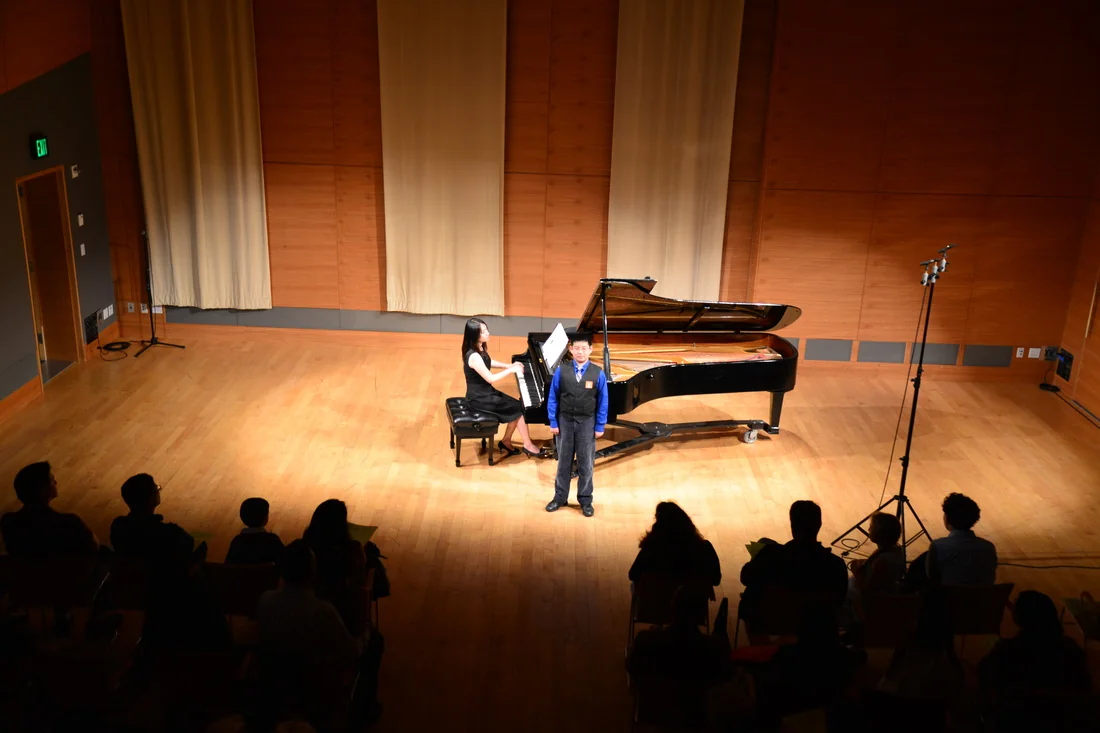
Many school-age children can handle more structured private voice lessons when they can follow directions, repeat a short exercise, stay engaged for a lesson block, and accept gentle correction. At Amabile, families can compare voice lessons, all music programs, and Little Mozart if a younger child still needs a playful group start.
Readiness signs
They want to sing
Interest matters because voice practice is personal. A child who enjoys singing is easier to guide.
They can copy short patterns
Echoing rhythm, pitch, and words helps the teacher build skills safely.
They can handle feedback
Lessons work better when correction feels like help, not criticism.
They can stay playful
A young singer should leave feeling encouraged, not squeezed into perfection.
What Kids Learn in Beginner Voice Lessons
Good beginner lessons teach the child how to use the voice, not just which song to sing.
A strong first voice lesson does not need to be dramatic. In fact, it usually should not be. The teacher is listening for how the child naturally uses the voice, how they match pitch, how they breathe, how they pronounce words, and how they respond to direction. Then the teacher gives small, manageable adjustments.
Beginner singing lessons for kids often include posture, relaxed breathing, easy warmups, call-and-response singing, simple pitch matching, rhythm, diction, and age-appropriate songs. The lesson may also include confidence work: standing tall, finishing a phrase, trying again after a missed note, and learning that mistakes are information rather than a family emergency.
The National Institute on Deafness and Other Communication Disorders advises singers to avoid overusing the voice, rest when sick, avoid extremes such as screaming or whispering, and use good breathing support. That is exactly why children's voice lessons should be gentle and skill-based. The goal is not volume. The goal is a child who can sing with more ease, control, and confidence.
| Lesson area | What it builds | What parents may notice |
|---|---|---|
| Pitch matching | Listening and singing notes more accurately. | The child starts hearing when a note is high, low, or close. |
| Breathing | Calmer phrases and less throat pushing. | Songs sound steadier and less shouted. |
| Diction | Clearer words and musical storytelling. | Lyrics become easier to understand. |
| Performance habits | Stage confidence and finishing a song. | The child becomes less afraid to try in front of others. |
Healthy Voice Comes First
Children's voices are still developing, so the teacher should never chase a forced adult sound.
The biggest mistake in children's singing is confusing effort with quality. A child can sound impressive for a moment by pushing, belting, or copying a favorite singer too aggressively. That does not mean it is a good habit. A thoughtful voice teacher helps the child find a clear, easy sound and gradually builds control from there.
Parents do not need to become vocal technicians, but they should watch for common warning signs. If a child is hoarse after singing, complains that singing hurts, regularly yells through songs, or is being asked to imitate sounds that feel too big for their age, slow down and ask questions. Singing should feel active, not painful.
This is also why teacher fit matters so much. A good teacher for children can explain technique in kid-friendly language, choose music that suits the child's voice, and keep the lesson warm even when correcting details. A teacher who works beautifully with adults is not automatically the right teacher for an eight-year-old. Children need precision, but they also need patience. Lots of it. More than most adults would like to admit.
Private, Group, or Online Singing Lessons?
The best format depends on age, confidence, goals, and schedule.
Private lessons are best when a child needs individual feedback. The teacher can hear the child's natural range, adjust exercises, choose songs carefully, and respond to personality. This is useful for children who are serious about singing, preparing for auditions, building confidence, or needing help with pitch and technique.
Group singing can be useful for younger or more social children because it reduces pressure. Children hear peers, practice rhythm and lyrics together, and learn to participate without feeling like every sound is under a microscope. The tradeoff is that group lessons cannot give the same level of individual correction.
Online voice lessons can also work when the setup is clear and the teacher can hear the student well. They are especially helpful for busy families or older students who can focus independently. Amabile offers online voice lessons as well as in-person options, which gives families flexibility without having to start over with a different school.
How to Choose a Singing Teacher for a Child
Look for warmth, vocal judgment, and a lesson that gives the child a clear next step.
A polished singer is not always a good children's teacher. Parents should look for someone who knows how to sequence learning, protect the voice, choose appropriate songs, and explain ideas without making the child self-conscious. The student should feel seen, not inspected.
In a trial lesson, listen for clear teaching. Does the teacher explain one thing at a time? Do they demonstrate? Do they notice when the child is confused? Do they give specific praise instead of empty "great job" confetti? Do they leave the family with a simple assignment?
The Music Teachers National Association encourages families to ask about a teacher's background, policies, expectations, and evaluation approach. For voice lessons, add a few singing-specific questions: what music will fit this age, how do you handle vocal strain, how much should my child practice, and how will we know progress is happening?
Trial lesson questions
- What should my child work on first: pitch, breathing, confidence, rhythm, or song choice?
- Which lesson length fits this age and attention span?
- What should practice sound like at home this week?
- How do you keep the voice healthy when a child wants to sing loudly?
- Are there recital or low-pressure performance opportunities when the student is ready?
What Practice Should Look Like at Home
Young singers need short, repeatable practice more than marathon sessions.
A child does not need to sing for an hour a day to benefit from lessons. In many families, that would mostly create bargaining, avoidance, and the occasional dramatic collapse near bedtime. Short, consistent practice is usually better.
For beginners, practice might mean a few minutes of warmups, echo patterns, one assigned song section, and a quick review of lyrics. The teacher should tell the family exactly what to repeat. Parents can help by making practice normal and low-pressure: same general time of day, no teasing, no yelling corrections from the kitchen, and no demanding a performance for every visiting relative.
If the child is tired, sick, or hoarse, rest matters. NIDCD's voice care guidance specifically warns against speaking or singing when the voice is hoarse or tired. That is not overprotective. It is basic maintenance for the instrument your child carries around all day.
How Recitals Help Young Singers
Performance gives lessons a real goal when the student is ready.
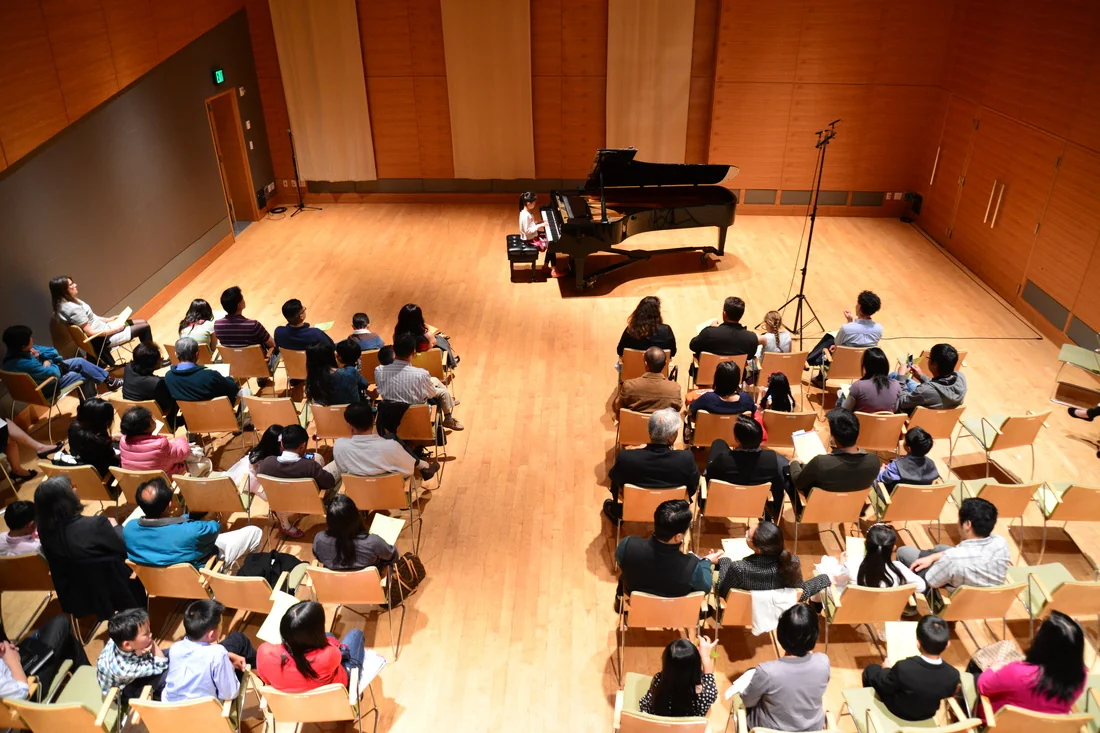
Not every child needs to perform right away. Some need time to trust the teacher, understand the lesson routine, and feel comfortable hearing their own voice. But once a child is ready, a recital can be powerful. It gives practice a reason, teaches preparation, and helps students learn that nerves are manageable.
Singing is vulnerable because the instrument is the body. A supportive performance environment helps children build confidence without turning music into a test of personal worth. The goal is not to manufacture a tiny celebrity. The goal is a student who can prepare, stand up, sing clearly, and feel proud of the work.
Amabile's recital opportunities give students regular milestones, while the faculty, pricing, and locations pages help families compare the practical details before they book.
How Amabile Can Help
Amabile gives young singers a warm, structured way to try voice lessons without guesswork.
Amabile School of Music offers voice lessons for kids, teens, and adults in San Francisco, Moraga, and online. Families choose Amabile for experienced teachers, flexible scheduling seven days a week, published lesson options, office support, and performance opportunities that make progress visible over time.
If your child loves to sing, the best next step is a trial lesson. It gives the teacher a chance to hear the child's voice, understand their confidence level, and recommend the right lesson length or program path. It also lets your child feel the room, the teacher, and the pace before the family commits.
Frequently Asked Questions
What age should kids start singing lessons?
Many children can begin age-appropriate singing lessons in the early elementary years, especially if they enjoy singing and can follow simple directions. Younger children may do better with playful music classes before formal private voice lessons.
Are singing lessons safe for children?
Yes, singing lessons can be safe for children when the teacher uses gentle, age-appropriate exercises and avoids forcing volume, range, or an adult vocal sound. Lessons should emphasize healthy habits, listening, breathing, and confidence.
What happens in a first singing lesson for kids?
A first lesson usually includes simple warmups, listening, pitch matching, rhythm, breathing, and an easy song or phrase. The teacher is also learning how the child responds to instruction and what kind of music will fit.
How long should a child's voice lesson be?
Many younger beginners do well with 30-minute lessons. Older children, teens, and students preparing for performances may benefit from 45 minutes when they can stay focused and use the extra time well.
Can singing lessons help a shy child?
They can, if the teacher is patient and the environment is supportive. Voice lessons should not pressure a shy child into instant performance. They should build confidence through small wins, clear structure, and steady encouragement.
Do kids need to practice singing every day?
Daily practice can help, but young beginners usually need short, focused practice more than long sessions. A few minutes of assigned warmups, echo patterns, or song work several days a week is a realistic start.
