Quick answer
Most beginners notice a few useful changes within the first one to three months: clearer pitch matching, easier songs, more control over volume, and less panic around a note that used to feel impossible. After six to twelve months of regular lessons and practice, many singers have a more dependable warmup, a growing song list, and a clearer idea of how to work through problems. Becoming a confident intermediate singer usually takes a few years because breath, pitch, range, coordination, listening, and performance confidence develop together.
What Does "Learn to Sing" Actually Mean?
A first song, a reliable voice, and a polished performance are all real milestones. They are just not the same milestone.
People ask how long it takes to learn to sing because they want a finish line. The trouble is that singing has several finish lines, and they depend on the goal. A child may want to sing more comfortably in choir. A teen may be preparing for musical theatre. An adult may want to stop hiding during karaoke or feel more at ease with favorite songs. Each goal asks for a different kind of progress.
Early progress might mean matching a short pitch pattern, breathing without lifting the shoulders, or singing one verse with a steadier tone. Those wins matter. They show that the student is learning to hear and coordinate the voice. A later milestone is being able to repeat that work on a new song without needing the teacher to solve every problem first.
That is why promising a fixed number of weeks would be silly. Singing is physical, musical, and personal. The better question is: what would useful progress look like for this student in the next three months, and what routine will make that likely?
A Realistic Singing Timeline for Beginners
The first signs of change often come quickly. A more dependable voice takes repeated, well-guided work.
Every singer develops at a different pace, but these ranges are useful planning markers for someone taking regular lessons and practicing between them. They are not guarantees, and they should never be used to make a student feel behind.
| Timeline | Typical progress | What matters most |
|---|---|---|
| First month | Comfortable starting pitch, simple warmups, posture awareness, short song phrases | Feeling safe enough to experiment |
| 1 to 3 months | Better pitch matching, easier breath coordination, a few familiar songs with more control | Short, regular practice |
| 6 to 12 months | More range awareness, cleaner transitions, stronger listening, early performance preparation | Weekly teacher feedback |
| 1 to 3 years | Reliable technique habits, broader repertoire, more expressive singing, growing independence | Patience and suitable songs |
| 3+ years | Intermediate or advanced growth based on goals, style, practice, and performance experience | Depth, artistry, and consistency |
The purpose of a timeline is not to rush someone through it. It is to make the next stage visible. Students stay motivated when they can recognize real progress before they have reached their biggest goal.
What Beginners Can Expect in the First Three Months
The beginning is less about chasing high notes and more about building a voice that feels easier to use.
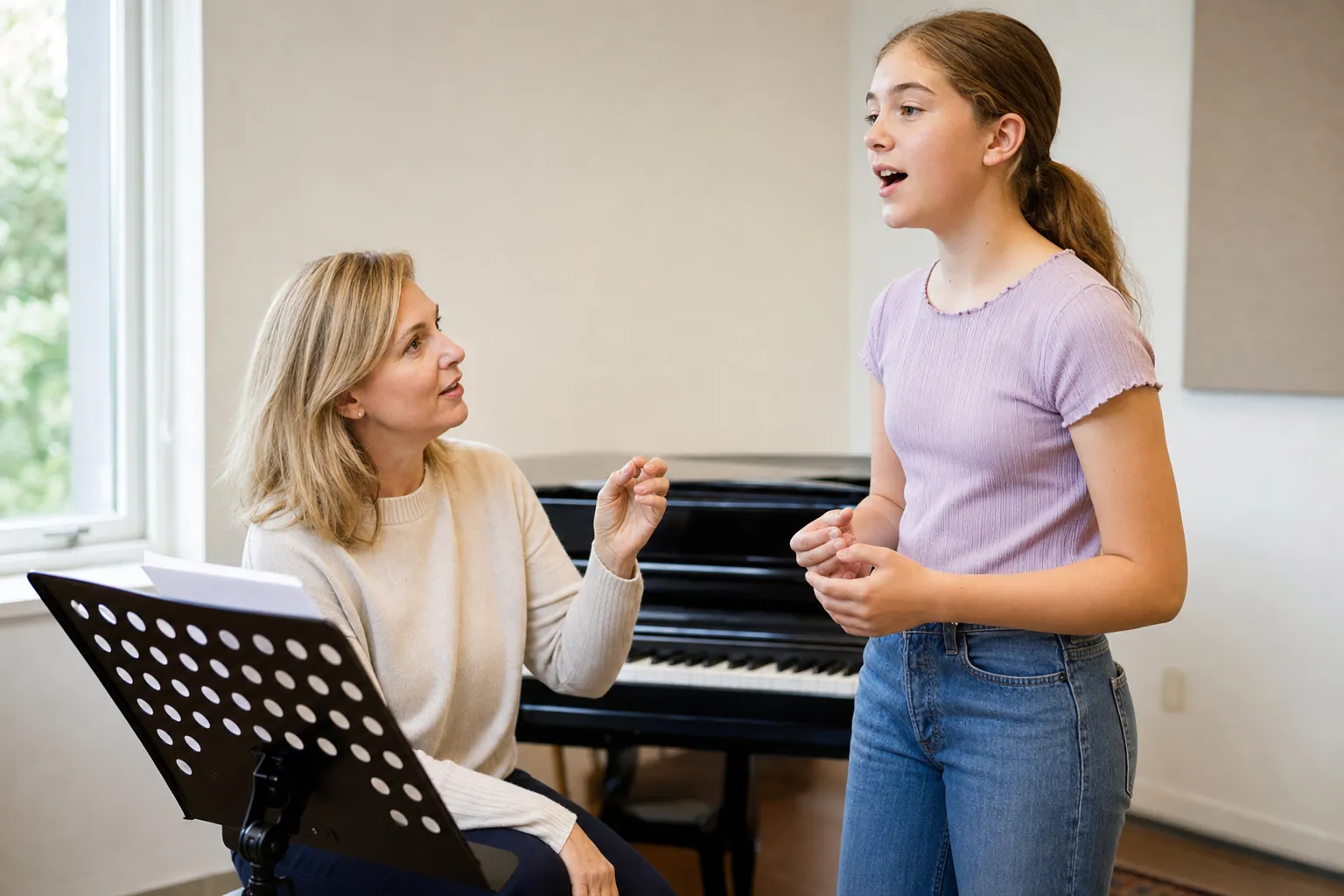
The first few lessons are usually about listening and coordination. A teacher may check where the student is most comfortable, work on matching short patterns, introduce an easy warmup, and choose a song that does not force the voice to do too much too soon. This can look modest from the outside, but it is the part that prevents a singer from building every song on tension.
By the second or third month, many beginners can hear mistakes sooner and know one or two ways to respond. They may slow down, change a vowel, use a lighter sound, reset the starting note, or return to a short exercise. That is a bigger improvement than it sounds. A student who has one dependable recovery tool is much less likely to freeze when a song gets difficult.
For children, progress may show up as more willingness to sing, clearer pitch imitation, and less embarrassment about trying again. For adults, progress may look like trusting the process long enough to stop judging every note while it is still happening. Neither experience is glamorous, but both create the conditions for stronger singing later.
What Changes the Timeline Most?
Natural ability can help, but routine, coaching, and song choice usually decide whether progress lasts.
Consistent lessons matter because singing feedback is hard to give yourself. It is easy to repeat a phrase that feels right but is slightly flat, pushed, or disconnected. A teacher can hear the pattern, choose a smaller exercise, and help the student make one useful adjustment at a time. That keeps practice from becoming an hour of rehearsing the same problem.
Song choice matters just as much. A song that is a little challenging can build confidence. A song that lives outside the student's comfortable range can make every practice session feel like a test. Good teachers use repertoire to stretch a singer without making strain, frustration, or imitation of an adult recording the default plan.
Health matters too. The National Association for Music Education's health guidance notes that healthy singing depends on correct use of the voice and that overuse or misuse can create problems. A useful lesson should leave a singer with clearer choices, not with pain or persistent hoarseness.

How Much Practice Helps a Singer Improve?
Short, specific practice sessions usually do more than one long push right before a lesson.
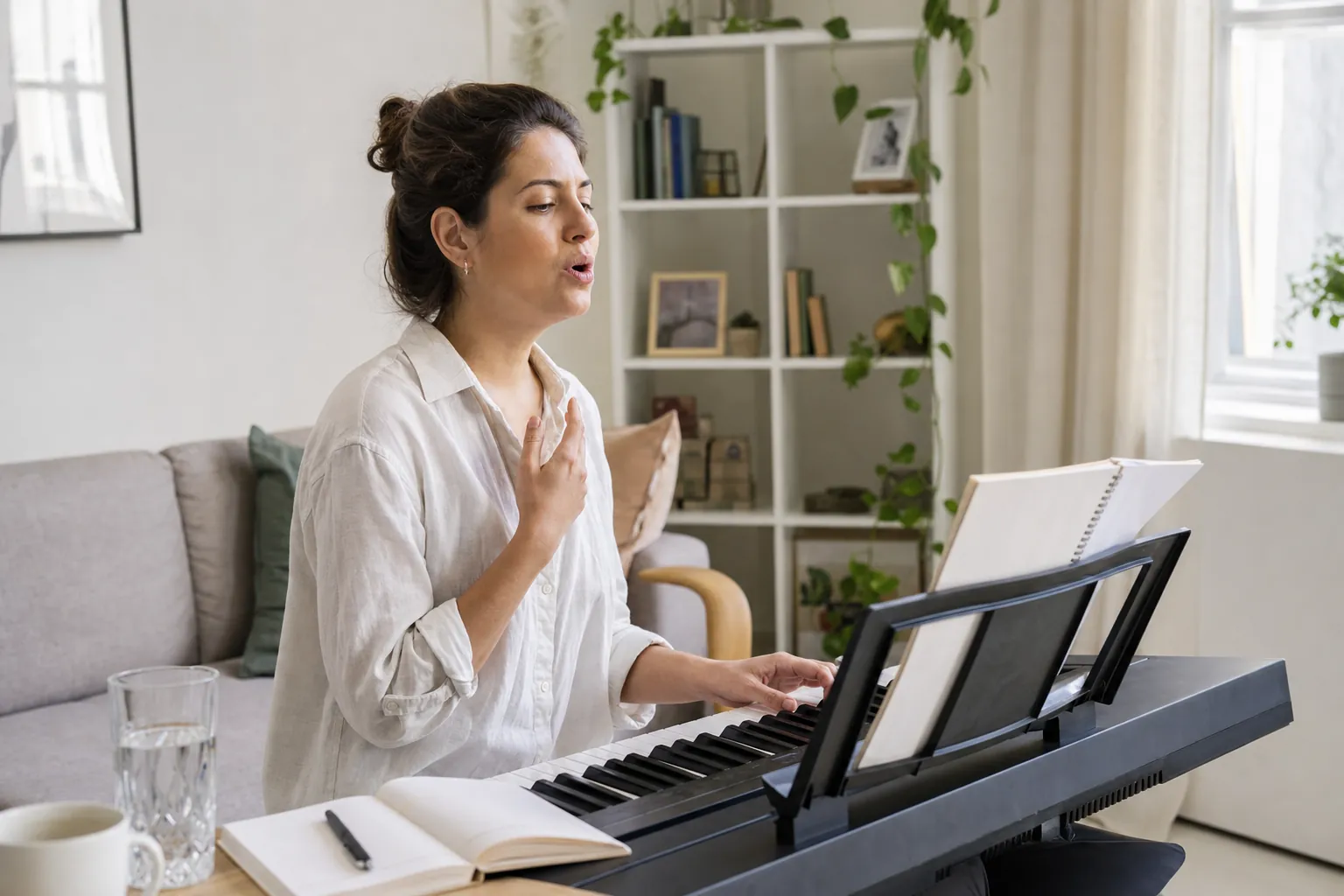
Beginners do not need marathon practice sessions. They need a routine that gives the voice and ear frequent reminders of what the teacher explained. Ten focused minutes on most days can be more useful than an exhausted hour once a week, especially for young singers or busy adults.
A practical practice session might include a gentle warmup, one pitch or rhythm exercise, a small section of a song, and a quick note about what felt easier or harder. If the assignment is too vague to explain in a sentence, it will be difficult to repeat at home. Ask the teacher to name the one or two things that should improve before the next lesson.
Practice should not feel punishing. Singing is a physical skill, so rest matters. Stop if the voice hurts or becomes unusually tired. The goal is to build coordination and confidence, not to prove toughness by pushing through every rough day.
Kids, Teens, and Adults Need Different Timelines
The same fundamentals apply, but the lesson format and expectations should match the person singing.
Young children learn through play, imitation, movement, and short tasks. A child who loves to sing may still need a gentle entry point before formal private coaching. Amabile's Little Mozart class gives age four beginners a musical foundation through singing, rhythm, movement, and keyboard basics, while school-age children can move into more focused lessons when that format fits.
Teens can often understand technique more directly, but the voice is changing and self-consciousness is real. Teachers should choose songs thoughtfully, keep the atmosphere supportive, and avoid treating a changing voice as a problem to be conquered. The National Association of Teachers of Singing's work on children's voices makes the same larger point: young singers benefit when instruction respects the unique needs of their developing voices.
Adults may understand instructions quickly and bring clear musical goals, but the body still needs repetition. An adult can know exactly what a relaxed breath should feel like and still need time before it becomes automatic in a song. That is not a lack of talent. It is how physical learning works.
When Are Singers Ready to Perform?
A first performance can come early when the piece fits and the setting feels supportive.
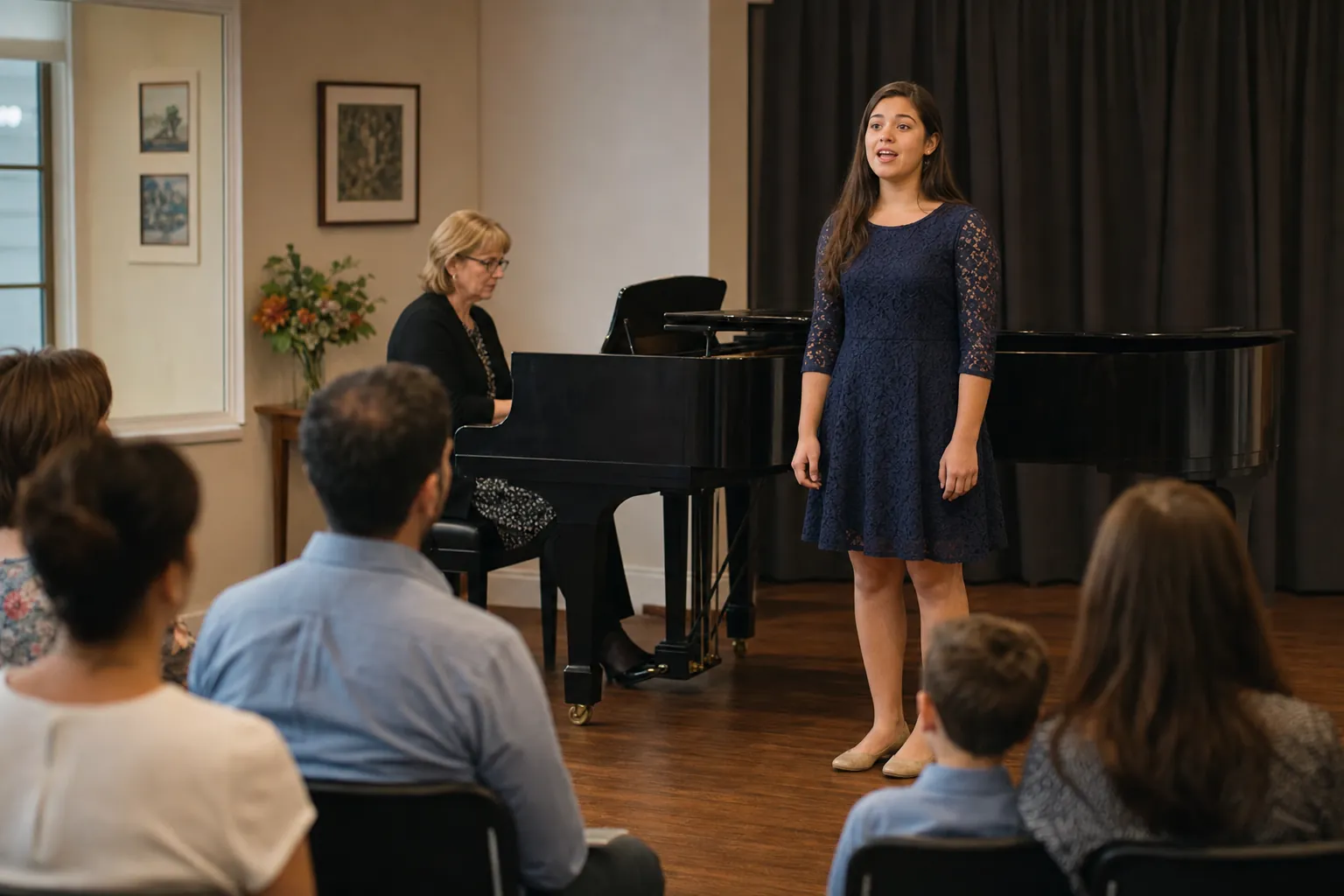
A singer does not need to be advanced before performing. They need a song that is manageable, enough preparation to recover from a small mistake, and an audience environment that treats the moment as growth rather than judgment. For many beginners, a short performance gives practice a reason to exist beyond "because the teacher said so."
Performance also develops skills that private practice cannot: starting calmly, continuing after an imperfect phrase, listening to accompaniment, and feeling the difference between singing alone and sharing a song with other people in the room. Those small experiences often make future lessons feel more meaningful.
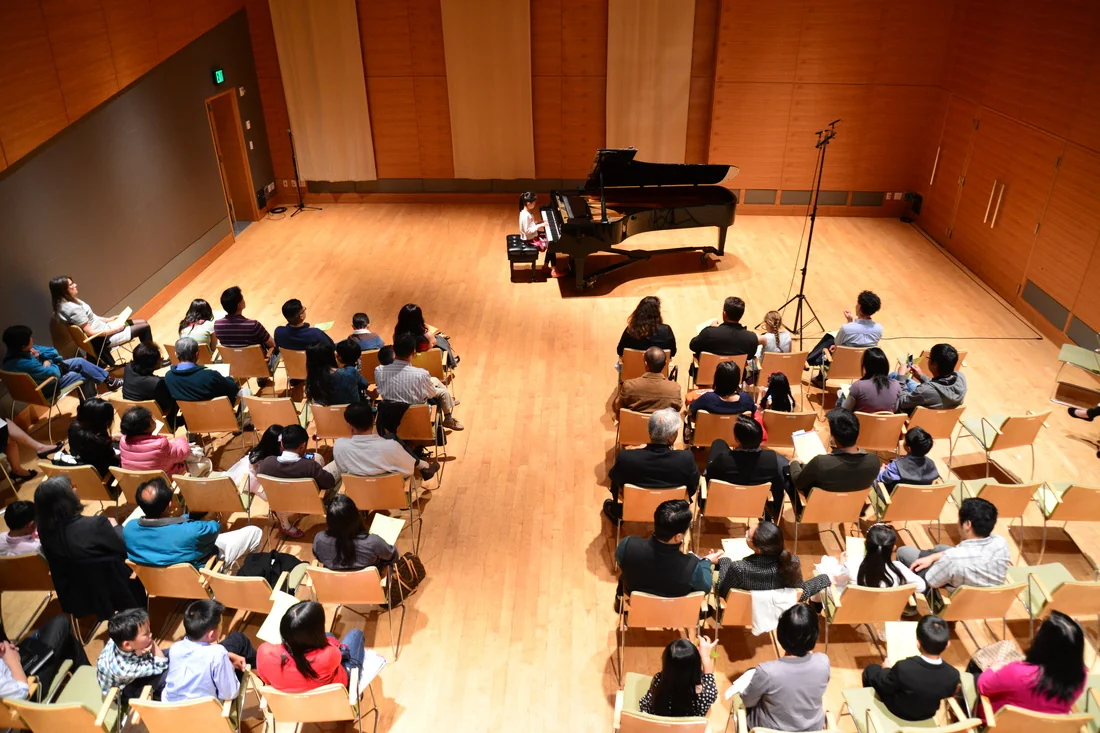
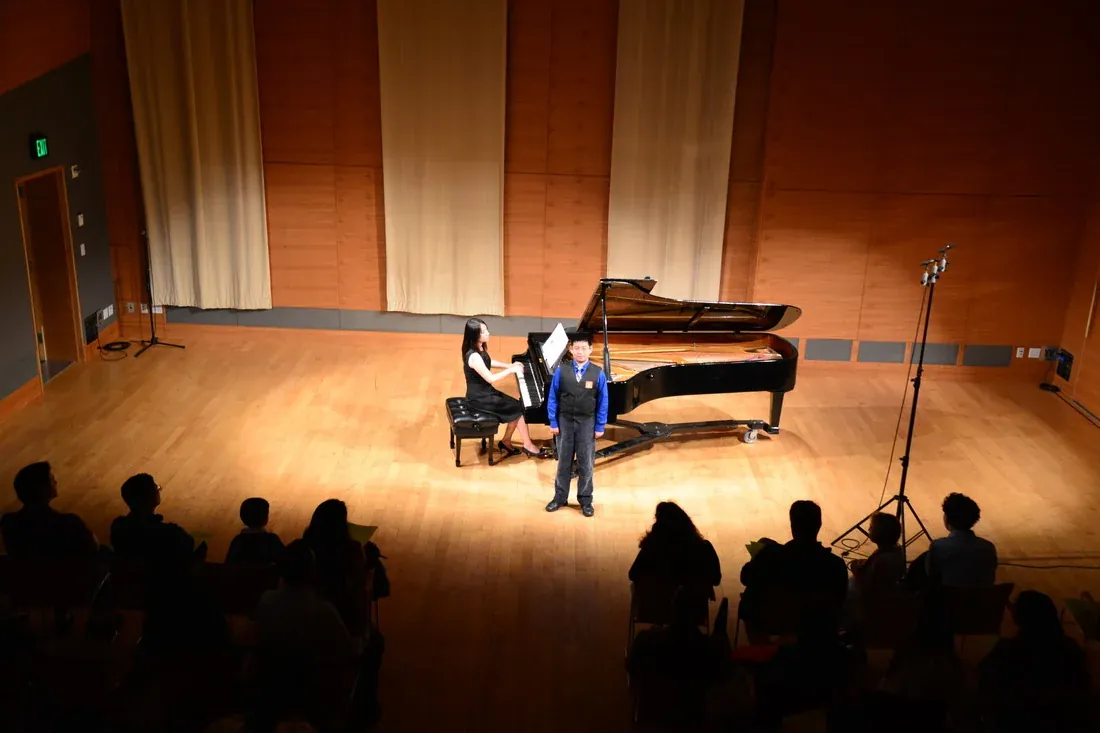
Amabile's recital and performance opportunities give students regular milestones to work toward. The right first performance is not a pressure test. It is a manageable chance to build confidence.
How to Know Voice Lessons Are Working
Progress is not just a bigger range or a harder song. It is greater control, understanding, and confidence.
Look for small signs that the student can do something more independently than before. They may choose a better starting note, notice when the pitch drifts, use a warmup without being prompted, or move through a song with less tension. Those details are more useful than chasing a dramatic before-and-after moment.
Parents can ask a teacher what changed over the past eight to twelve weeks and what the next two goals are. A clear answer helps families see that a lesson plan is moving somewhere. Students can ask the same question, especially when they feel discouraged by a song that is still in progress.
Related reading can help families make sense of the decision too. Singing Lessons for Kids explains what a strong start looks like for younger students, while What Age to Start Voice Lessons? helps parents judge readiness and lesson fit.
How Amabile Can Help
The quickest useful progress starts with a teacher, lesson length, and practice plan that fit the student.
Amabile School of Music offers voice lessons for children, teens, and adults in San Francisco, Moraga, and online. Families can meet the faculty, compare lesson lengths and tuition, and choose the location or online format that makes consistent weekly study realistic.
A trial lesson is often the clearest first step. It lets the teacher hear where the singer is today, understand the student's goals, and recommend a next step that feels achievable. That is more useful than guessing from a video, a range chart, or a famous singer's origin story.
Frequently Asked Questions
Can I learn to sing in three months?
You can make meaningful progress in three months, especially with regular lessons and short practice sessions. Many beginners improve pitch matching, breathing awareness, song confidence, and basic vocal control in that time. Long-term consistency is what turns those early gains into a dependable singing voice.
How long does it take to become a good singer?
That depends on the goal. Singing a few songs more comfortably can happen in months, while reliable technique, style, range awareness, and performance confidence often take years of steady work. Progress is usually faster when the student practices consistently and works with a teacher who chooses suitable exercises and repertoire.
Can adults learn to sing?
Yes. Adults can build pitch awareness, breath coordination, range, tone, and confidence at any age. Adults may understand explanations quickly, but the physical coordination of singing still needs repeated practice. A supportive teacher can make the early stage feel much less intimidating.
How often should a beginner practice singing?
Short, focused practice on most days is a strong starting point. Many beginners do well with about 10 to 20 minutes that includes a gentle warmup, a targeted exercise, and a small part of a song. Stop if singing hurts or creates unusual fatigue.
Do singing lessons help people who think they are tone deaf?
Many people who describe themselves as tone deaf simply have not had enough practice matching and listening to pitch. A teacher can assess what the student hears and help build those skills in small, manageable steps. Some hearing or voice concerns need medical guidance, but a lack of confidence is not proof that someone cannot learn.