Quick answer
The best piano recital tips are less about avoiding every mistake and more about making the performance familiar. Choose a piece that fits the student, practice the hardest spots with a clear plan, run the whole piece without stopping, and rehearse the small stage routine before recital day. Families can help most by keeping the event calm and treating it as a chance to share progress, not a verdict on talent.
Choose A Piece The Student Can Own
The right recital piece stretches a student without turning every practice session into a rescue mission.
A good recital choice has musical interest, but it also leaves room for the student to listen, recover, and enjoy playing. A piece far beyond the student's reading, rhythm, or coordination can create a long stretch of anxious repetition. The goal is not to select the most difficult music possible. It is to select music that lets the student demonstrate a real next step.
Ask the teacher what the piece is meant to develop. It may build steady pulse, hand coordination, phrasing, pedal control, reading, memorization, or a more confident sound. Once the purpose is clear, a student can notice progress in more than one way. They are not only counting wrong notes. They are learning how the piece moves and what it is trying to say.
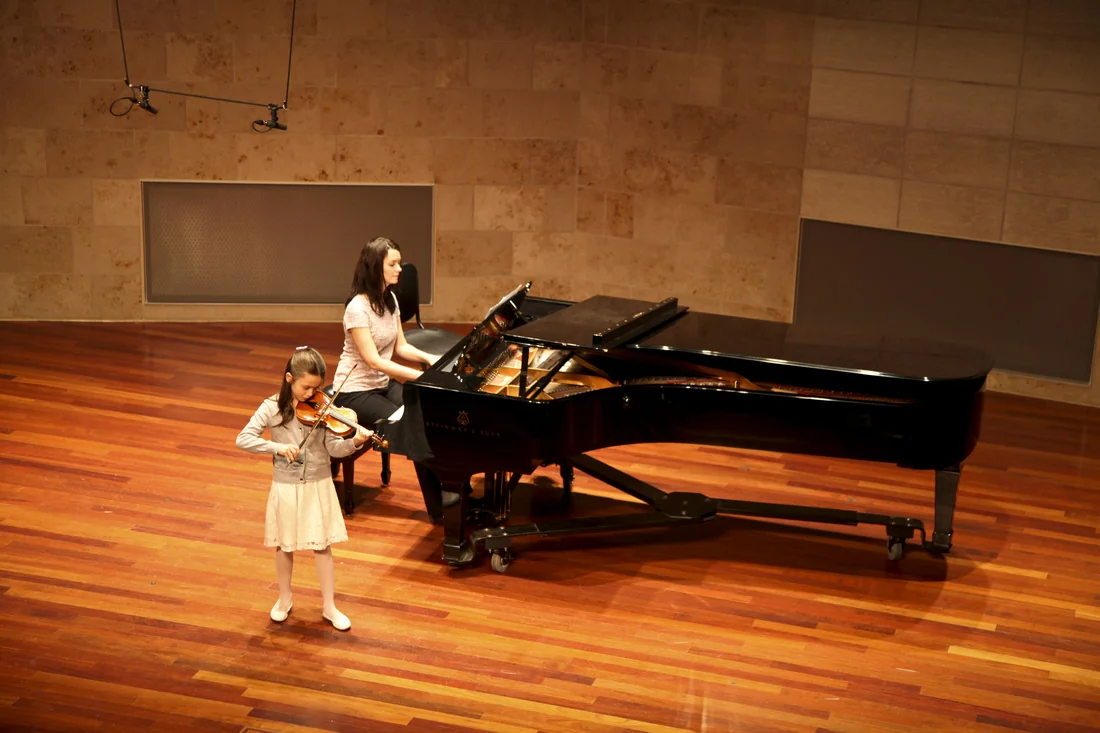
For a first recital, a short piece can be exactly right. A younger student may need a simple melody, a duet, or a piece with a dependable accompaniment. An adult may choose a favorite song that feels personally meaningful. The right piece makes consistent practice more likely, which matters far more than a grand title on a program.
Make A Practice Plan Before The Final Week
Small, specific jobs create more confidence than repeatedly playing from the beginning.
Divide the piece into sections with the teacher. A student might work on the opening, a tricky hand change, the middle section, and the final cadence separately before connecting them. This gives every practice session a purpose. Instead of saying, “Practice your recital piece,” the student can say, “I will make the left-hand jumps in the middle section reliable at a slow tempo.”
Use a few different practice modes. Slow work helps the hands understand a passage. Rhythm variations can make an uneven pattern easier to hear. Starting at a marked spot, rather than always at measure one, helps a student keep going after a small memory slip. Yamaha's practice guidance also emphasizes changing the way a difficult passage is approached, rather than drilling the same version without a plan.
Keep a short practice note. One line is enough: “The ending held together three times,” “the rhythm in the middle still rushes,” or “I can begin at the second page.” That note makes the next lesson more useful because the teacher can respond to what actually happened at home.
| Practice window | Main job | Helpful question |
|---|---|---|
| Several weeks out | Learn notes, rhythm, and finger patterns in sections. | Which small section needs the clearest work today? |
| Two weeks out | Connect sections and practice reliable starts. | Can I begin from more than one landmark? |
| Final week | Run the piece, then polish only what needs attention. | Can I keep the pulse after a small slip? |

Practice Performing, Not Just Playing
A recital feels different because the student has one chance to keep the music moving in front of listeners.
At home, students usually stop to repair a missed note. That is sensible while learning, but it is not the whole recital skill. As the event approaches, add short run-throughs where the agreement is to continue. A wrong note is not a cue to restart. The next beat, phrase, or landmark is the cue to continue.
Give the run-through a little shape. Walk to the bench, adjust the seat, place hands quietly, take a normal breath, play the piece, rest after the last note, stand, and bow. The routine does not need to be theatrical. It simply prevents the beginning and ending from feeling mysterious. Playing once for a parent, friend, sibling, or a phone recording also adds a small amount of useful pressure before the day itself.
When a student loses their place, the recovery plan matters. The teacher can help mark safe restart spots: the beginning of a phrase, a recognizable pattern, or a section change. The student does not have to prove that the whole piece is memorized perfectly in one unbroken line. They need a few dependable ways back into the music.
Give Nerves A Job
Feeling activated before a performance is normal, especially when the student cares about doing well.
Do not tell a nervous student that there is nothing to worry about. A more useful message is that nerves are a body signal, and the student already has a short routine for the moment. Notice feet on the floor, release the shoulders, take a normal breath in, and let the exhale move slowly. The American Psychological Association's breathing guidance describes a normal inhale and slower exhale as a way to lower over-arousal.
A student can also give attention to a musical job: hear the opening tempo, feel the first hand position, or think of the character of the first phrase. That is more helpful than scanning the audience for reactions. Some students respond well to changing “I am nervous” into “I am ready to share this.” The American Psychological Association reports that reframing anxious arousal as excitement may help people approach a performance more productively.
For children, keep the language simple. “Your heart is helping you wake up for something important” is often kinder and more believable than “Just calm down.” For adults, the same principle holds: the goal is not to become a person who never feels nervous. It is to have a familiar response when nerves arrive.

Use The Final Week Wisely
The last few days are for steadiness, not a sudden attempt to rebuild the whole piece.
In the final week, the student should still touch the difficult spots, but marathon practice can make the recital piece feel heavy. A teacher may assign a particular number of careful run-throughs, a slower technical review, or an easy warmup. Follow that plan rather than adding a new system at home. If a passage is not yet secure, name it early so the teacher can adjust the practice target or help the student choose a safe musical solution.
Prepare the practical details in advance. Confirm the address, arrival time, clothing, music, and whether the student needs a book, accompaniment, or a special setup. Eat a familiar meal, bring water if appropriate, and leave enough time to arrive without a frantic rush. If the student is performing from memory, keeping the score available during preparation can still be useful because it reinforces the map of the music.
Families can avoid turning every casual moment into a recital check. One supportive performance practice is more valuable than asking for the piece repeatedly all week. The student needs room to be a child, teen, or busy adult as well as a performer.
What To Do On Recital Day
A simple sequence keeps attention on the music instead of on last-minute uncertainty.
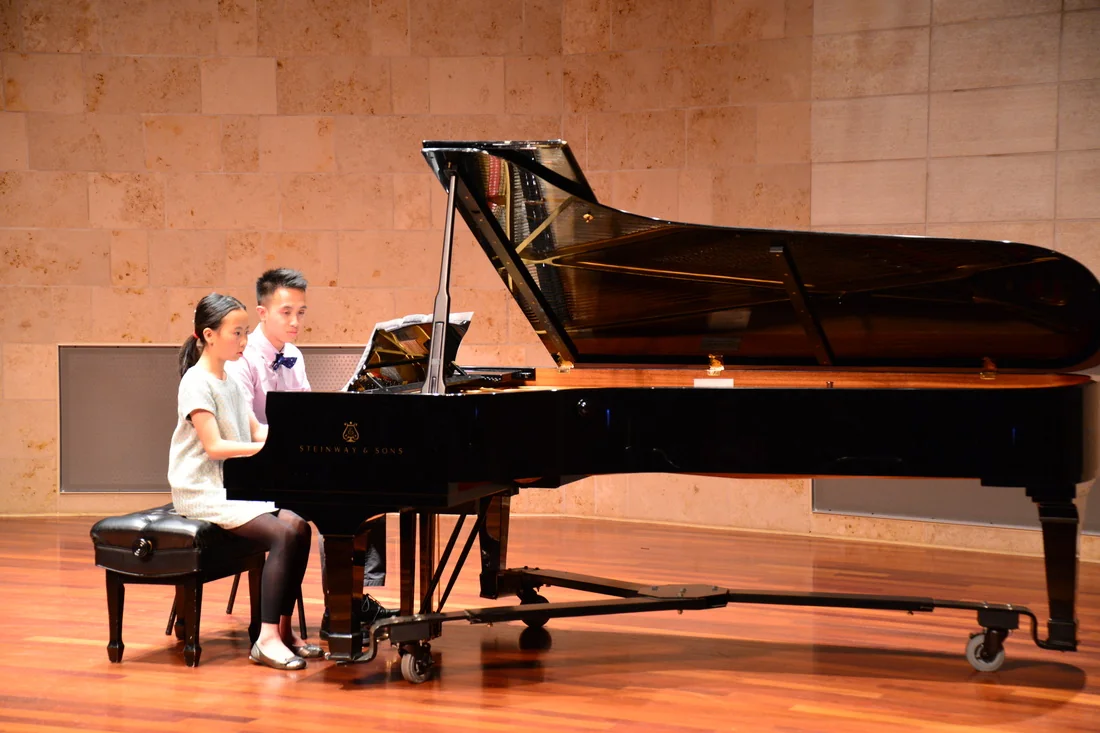
Arrive according to the school's instructions and give the student time to settle. If there is an opportunity to test the bench or instrument, use it for a few practical adjustments rather than an intense final rehearsal. Different pianos can feel different under the fingers, and that is normal. The student can notice the bench height, distance from the keys, and volume without deciding that a new piano is a problem.
Right before performing, repeat the routine practiced at home: walk calmly, sit, adjust, pause, breathe, begin. If a note goes wrong, keep the beat if possible and aim for the next landmark. Audiences remember the shape and spirit of a performance much more than they remember one unexpected note. A small recovery can become one of the most valuable things a student learns from the recital.
After the final note, pause briefly before standing. That gives the ending room to land. Then accept the applause, bow, and leave the bench with the same calm pace used to approach it. The job is complete.

How Families Can Make The Experience Better
The most helpful support is calm, specific, and focused on effort rather than perfection.
Before the recital, ask what kind of support the student wants. Some want a reminder about logistics. Others want to be left alone with their teacher's plan. After the performance, lead with something real: “I loved the way you kept going,” “your ending sounded strong,” or “you worked hard for this.” Avoid making the first conversation a replay of missed notes or a comparison with other students.
A recital can be meaningful even when a student feels nervous, uses the music, has a restart, or plays a very short piece. Performing is a skill that grows through age-appropriate chances to do it. Music Teachers National Association includes performance-anxiety resources for musicians, a useful reminder that musical wellness and performance confidence deserve attention alongside notes and technique.
If the student wants to reflect later, wait until the excitement settles. Then ask one constructive question: What felt more prepared than last time? What would you practice differently next time? That turns the recital into information for the next piece, rather than a final score.
A Simple Recital Week Checklist
Putting the small details in one place lets the student save energy for the music.
Two or three days before the event, check the school's recital message and put everything needed by the door. That may include the music book, any separate score or accompaniment, glasses, a hair tie, a jacket, water, and the clothing the student plans to wear. There is no need for a special outfit unless the school asks for one. Comfortable, familiar clothing is usually the best choice because it removes one more new sensation from the day.
Choose one short practice goal for each remaining day. A student might play the opening and ending slowly, do one no-stopping run-through, or review a restart point with the score. If the teacher has assigned a warmup, use that instead of searching online for a new routine. The final week is not the time to test a different fingering, a much faster tempo, or a new interpretation because a recording made it look easy.
On the morning of the recital, check the route and allow more time than the map suggests. Before leaving, make sure the student has eaten something familiar and has the right materials. During the drive, avoid a last-minute quiz about every section of the piece. A simple reminder such as “Your job is to share the music and keep going” is enough. The work has already been done in the lessons and the practice room.
How Amabile Helps Students Prepare
A recital works best when it grows naturally from regular lessons and a realistic plan.
At Amabile School of Music, students can work with a teacher on choosing music, building a weekly routine, solving specific trouble spots, and practicing how to recover when a performance does not go exactly as planned. Regular recital opportunities give students a meaningful milestone without requiring them to wait until they feel flawless.
Families can explore piano lessons for kids, piano lessons for adults, meet the Amabile faculty, review lesson options and tuition, or book a trial lesson. A calm, well-matched plan gives a student something much better than a perfect performance: the confidence to share music again.
Frequently Asked Questions
How early should a student prepare for a piano recital?
Preparation should begin early enough to learn the music in sections, connect it comfortably, and do several complete run-throughs. A teacher can set a timeline that fits the student's current skills and the recital date.
What should a student do after a mistake in a piano recital?
Keep the pulse when possible and move toward the next familiar musical landmark. Practicing reliable restart points before the recital makes this response much easier.
Should a piano recital piece be memorized?
That depends on the school, teacher, music, and student. Follow the teacher's expectations and make sure the student understands the structure of the piece either way.
How can parents help a child who is nervous about a recital?
Keep the message calm and specific. Help with the practical plan, let the teacher lead the musical preparation, and praise effort, recovery, and growth rather than focusing first on errors.