Quick answer
Many beginners can play a few simple piano songs within the first one to three months if they practice regularly. After six to twelve months, students often have stronger reading habits, steadier rhythm, and a small set of pieces they can play with confidence. Becoming a solid intermediate pianist usually takes several years of weekly lessons and consistent home practice. Advanced playing takes longer because it requires technique, musical control, reading fluency, listening, and performance experience to grow together.
What Does Learning Piano Actually Mean?
The timeline depends on whether you mean playing a first song, reading music independently, performing comfortably, or becoming advanced.
The phrase learn piano sounds simple, but beginners often mean very different things by it. One parent may want to know when a child can play a recital piece. An adult may want to play favorite songs for fun. Another family may be thinking about exams, auditions, or long-term classical training.
Those goals do not share one timeline. Playing a short five-finger piece is an early milestone. Reading notes fluently is a different skill. Playing with both hands, steady rhythm, expressive dynamics, and calm posture is another step. Performing in front of people adds a separate layer of preparation and confidence.
That is why a better question is not only, "How long does it take to learn piano?" It is, "What kind of piano progress are we trying to build, and what practice routine can we actually keep?" Once that is clear, the timeline becomes much less mysterious.
A Realistic Piano Learning Timeline
Progress comes in stages. The first signs of learning show up quickly, but durable skill takes repetition.
Every student moves differently, but these ranges are realistic for a beginner taking weekly lessons and practicing consistently. They are not promises. They are useful planning markers.
| Timeline | Typical progress | What matters most |
|---|---|---|
| First month | Keyboard layout, finger numbers, posture, simple rhythms, first short pieces | Comfort and routine |
| 1 to 3 months | Simple songs, basic reading patterns, short hands-together moments | Slow repetition |
| 6 to 12 months | Stronger rhythm, more independent practice, first recital-ready pieces | Consistency |
| 1 to 3 years | Late beginner to early intermediate pieces, better reading, cleaner technique | Teacher feedback |
| 3+ years | Intermediate and advanced growth depending on goals, practice, and repertoire | Depth and musicality |
Some students move faster. Some move more slowly. That is normal. The important thing is whether the student is building stable habits instead of rushing through pieces with the same mistakes every week.
What Changes the Timeline Most?
Age matters, but practice quality, teacher fit, lesson consistency, and the student's goal usually matter more.
The fastest progress usually comes from a simple combination: a good teacher, weekly lessons, clear assignments, and short practice sessions that happen often. The slowest progress usually comes from vague practice, missed lessons, music that is too hard, or expectations that are either too intense or too casual.
Practice quality is especially important. Playing a piece from the beginning to the end five times is not the same as practicing. Real practice means noticing the measure that needs work, slowing it down, repeating it correctly, and then putting it back into the full piece. That is the difference between spending time at the piano and actually improving.
Teacher fit matters too. A strong beginner teacher knows how to choose music that is challenging but not crushing. They can correct hand shape, rhythm, reading, and listening without making the student feel defeated. They also know when a child needs movement, a shorter task, or a different explanation.
The Music Teachers National Association's parent guidance encourages families to look for programs and teachers that match a child's attention span and readiness, especially for younger beginners. That is practical advice because the right format protects motivation while skills are still fragile.
How Long Before a Beginner Can Play Songs?
Simple songs can happen early. Polished, independent playing takes longer.
Most beginners can play very simple songs within weeks. That may mean short melodies, five-finger patterns, teacher duets, or familiar tunes with simplified rhythm. For children, those early songs are important because they create proof that the lessons are going somewhere.
But there is a difference between playing notes and really playing the piano. A student may learn the notes to a short piece quickly while still needing help with steady tempo, curved fingers, quiet hand movement, and musical phrasing. That is not failure. That is exactly what the early stage is for.
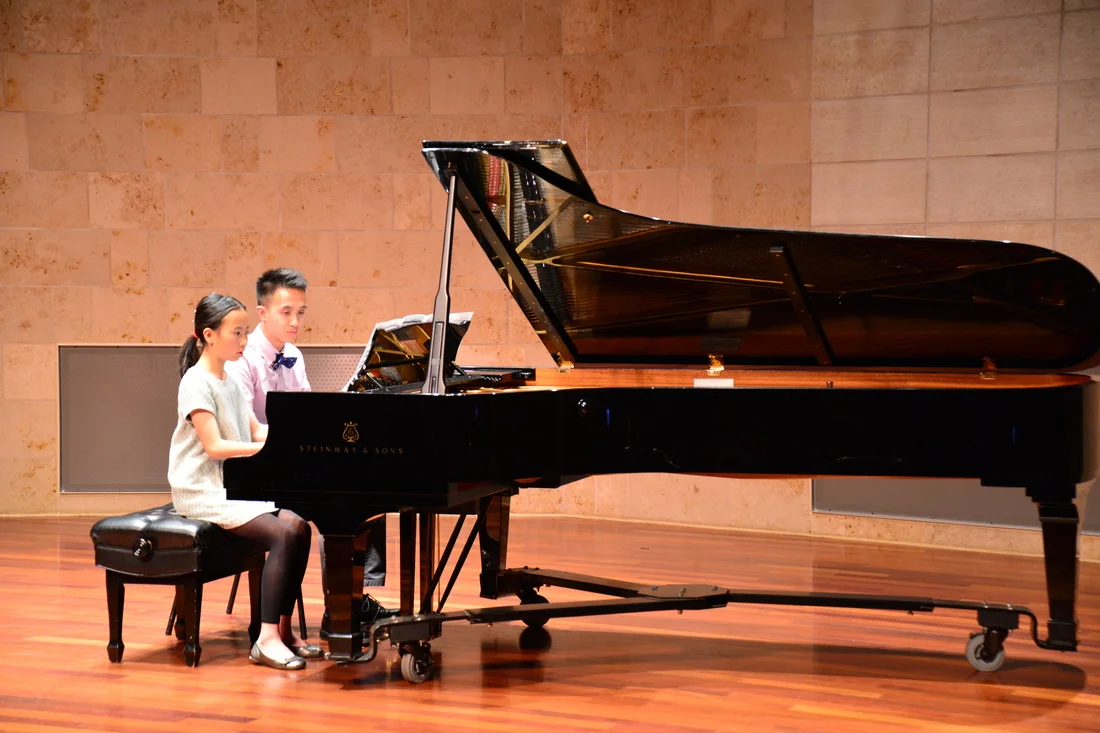
By six to twelve months, many students can prepare a short recital piece if the music is chosen well. The piece should be within reach, not a trophy piece so hard that every practice session turns into damage control. A good recital choice lets the student grow while still having a real chance to feel successful.
How Long Before Reading Music Feels Comfortable?
Reading music is a language skill. It improves through repeated exposure, not one big explanation.
Reading is often where expectations get messy. Beginners may play a song by memory, by ear, or by copying the teacher before they can read the music independently. That can be useful, but it is not the same as fluent reading.
Comfortable reading usually grows over the first several years. Students learn note direction, intervals, rhythm patterns, hand position changes, dynamics, and articulation a little at a time. If they practice only by memorizing finger motions, reading can lag behind. If they spend all their time decoding notes without musical playing, motivation can fade.
The best path usually includes both: reading work and musical pieces that feel rewarding. Students need enough structure to build literacy and enough joy to keep showing up. Good teachers balance those two instead of treating piano like a worksheet with pedals.
The Royal Conservatory Certificate Program organizes music study from preparatory levels through Level 10 and diploma work, which is a useful reminder that piano development is staged. The levels are not required for every student, but they show that serious musical growth is meant to be built step by step.
Kids, Teens, and Adults Learn on Different Timelines
The fundamentals are the same, but the pace and support should fit the student.
Young children often learn best through short tasks, repetition, movement, and parent-supported practice. They may absorb rhythm, sound, and patterns quickly, but they usually need help staying organized. A five-year-old is not supposed to manage practice like a tiny conservatory student with a planner. Please do not make that the family vibe.
Teens can often understand concepts faster and practice more independently, but they may be juggling school, sports, and social commitments. Their progress depends heavily on whether the lesson goal connects to music they actually care about.
Adults often bring stronger focus and clearer goals. They may understand explanations quickly, but they can also be harder on themselves. Adult beginners sometimes expect their hands to obey their brain immediately. They will not. Coordination takes physical repetition, even when the concept makes perfect sense.
The adult piano lessons path should feel respectful and practical, while the kids piano lessons path should include enough warmth, structure, and parent communication to keep progress steady at home.
How Much Practice Speeds Up Progress?
Short daily practice usually beats one long catch-up session before the lesson.
If you want the timeline to shorten, start with practice consistency. Beginners do not need heroic practice sessions. They need enough repetition for the week's assignment to become familiar before the next lesson.
For a young beginner, that may mean 10 to 20 focused minutes on most days. For older students and adults, 20 to 40 minutes may be more realistic depending on lesson length and goals. Advanced students often need much more, but beginners should not copy an advanced student's schedule before they have the habits to support it.
MTNA's practice resources include a simple idea that is still useful: students benefit from a weekly schedule and accountability around practice. The point is not to turn the home into a timesheet factory. The point is to make practice visible enough that everyone knows whether the plan is working.
If practice keeps falling apart, do not simply demand more discipline. Ask what is unclear. Is the assignment too long? Is the piece too hard? Is the piano buried under laundry? Is the student practicing mistakes because nobody showed them how to isolate a small section? Those details matter.
When Should Students Start Performing?
Performance can help beginners sooner than many families expect, as long as the setting is supportive.
Students do not need to be advanced before they perform. They need a piece that fits, enough preparation, and a setting that treats performance as growth rather than judgment. For beginners, a short recital can be a powerful milestone because it gives practice a real purpose.
Performance also teaches skills that do not appear in a method book: walking to the instrument, beginning calmly, recovering from a small mistake, listening to other students, and feeling proud after sharing music. Those experiences make piano feel more real.
NAfME's early childhood music guidance emphasizes play-based music experiences, listening, participation, and joyful music-making for young children. That spirit matters for older beginners too. Students usually keep going when the process includes structure and meaningful musical moments, not just correction.
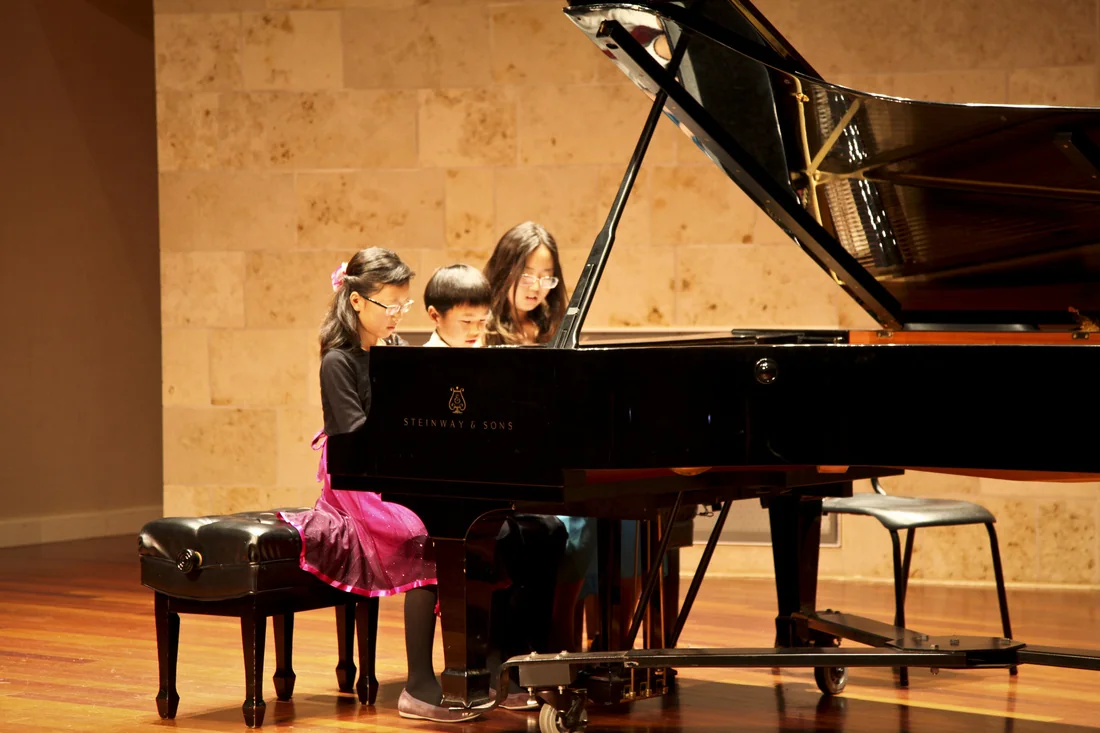
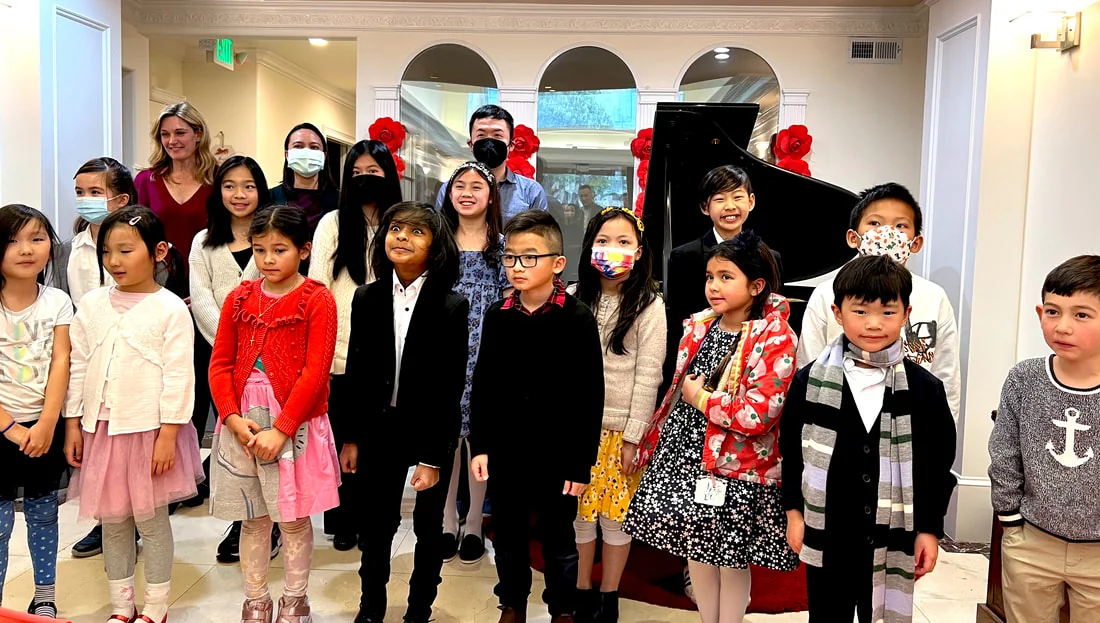
Amabile's recital and performance opportunities give students regular goals without waiting years for a first public step. For many families, that rhythm helps lessons feel connected to confidence, not just weekly assignments.
What Slows Piano Progress Down?
Most slow progress comes from unclear routines, not a lack of talent.
Beginners often blame themselves when progress feels slow. Sometimes the real problem is simpler. The assignment is too vague. The piece is too hard. Practice happens only the night before the lesson. The student is repeating the same mistake without knowing how to fix it. Or the family expected visible progress every week and became discouraged when learning moved in uneven steps.
Common progress blockers include:
- inconsistent attendance or frequent skipped practice weeks
- starting every practice run from the beginning instead of working on the hard spot
- choosing pieces that are too difficult because they sound impressive
- not having a usable instrument or regular practice space
- unclear parent support for younger beginners
- comparing one student's timeline to another student's completely different starting point
The solution is usually not panic. It is adjustment. A good teacher can simplify the assignment, change the piece, clarify the practice steps, or help the family set a more realistic home routine.
How to Know Piano Lessons Are Working
Progress is not always a new song. Sometimes it is cleaner rhythm, calmer practice, or better recovery after mistakes.
Parents often look for progress in the most obvious place: harder songs. That matters eventually, but it is not the only signal. In the first year, lessons may be working if the student sits more comfortably, starts practice with less resistance, reads simple patterns more quickly, keeps a steadier beat, listens to corrections, or plays one piece more musically than before.
For adults, progress may look like understanding rhythm that used to feel confusing, using both hands with less tension, or being able to return to the piano after a busy week without feeling lost. Those are real wins.
If you want a practical checkpoint, ask the teacher what changed over the last eight to twelve weeks. A strong teacher should be able to name specific improvements and the next few goals. If nobody can describe what is improving, the plan may need tightening.
Related guides can help here too. If practice is the issue, read how to practice piano. If you are still deciding whether beginner lessons are the right first step, read what to expect from piano lessons for beginners.
How Amabile Can Help
The best way to shorten the learning curve is to start with the right teacher, format, and practice plan.
Amabile School of Music helps Bay Area families and adult beginners start piano with realistic expectations and clear support. Students can begin with piano lessons, compare lesson lengths and tuition, review the faculty, and choose a San Francisco, Moraga, or online option that fits the schedule.
For younger children who are not quite ready for private lessons, Little Mozart offers a group path with keyboard basics, rhythm, singing, movement, and a gentle performance experience. For school-age students, teens, and adults, a trial lesson is usually the clearest way to see how the teacher communicates and what timeline makes sense.
The goal is not to rush. The goal is steady progress that lasts long enough to become real music.
Frequently Asked Questions
How long does it take to learn piano as a beginner?
Many beginners can play simple songs within one to three months, but becoming comfortable with reading, rhythm, technique, and independent practice usually takes longer. A solid beginner foundation often takes six to twelve months of weekly lessons and regular practice.
Can adults learn piano faster than kids?
Adults may understand concepts faster because they can focus and analyze more easily, but their hands still need time to build coordination. Kids often need more structure and parent support, while adults often need patience with the physical side of learning.
How long does it take to play songs on piano?
Simple songs can happen within the first few weeks. Playing songs smoothly, with steady rhythm and musical expression, takes more practice. Most beginners need several months before pieces feel comfortable rather than fragile.
How much should a beginner practice piano?
Most beginners do best with short practice sessions on most days. Young children may start with 10 to 20 focused minutes, while older students and adults may handle 20 to 40 minutes depending on lesson length, goals, and assignments.
Is piano hard to learn?
Piano is accessible at the beginning because students can make a clear sound right away, but it becomes more complex as reading, rhythm, coordination, technique, and expression develop together. The right teacher and steady practice make the learning curve much more manageable.