Quick answer
The best way to get kids to practice piano is not to find a better lecture. It is to make the next small job obvious, put it at a predictable time, and let the teacher guide the musical correction. A child who knows exactly what to do for 10 focused minutes is much more likely to return tomorrow than a child who hears only, “Go practice.”
Start By Making Practice Easier To Begin
Most practice resistance starts before a child has even played a note.
After school is full of transitions: hunger, homework, sports, screens, siblings, and simple tiredness. Piano can become one more demand unless the family removes the first few points of friction. Keep the bench clear, make sure the music is open to the right page, and agree on a practice window that fits the child's real energy. Some children do better soon after a snack. Others need a short break first, or a calm slot after dinner.
The time does not have to be identical every day, but it should be predictable enough that piano feels like part of the household rhythm. A child who is told at 4:30 that piano happens after their snack has less negotiating to do than one who hears a surprise reminder at 8:15. Give a transition warning, then help them start with the first tiny action: sit down, open the book, and play the warm-up. Starting is often the hardest part.
Keep expectations age-appropriate. A five-year-old may need a parent nearby for the first minutes, while an older child may only need the assignment page and a timer. The aim is steady ownership, not instant independence. The National Association for Music Education encourages adults to notice, invite, and model joyful music-making for young children. That is a better home posture than treating every session as a test.
Replace “Practice Piano” With One Clear Job
A vague assignment can make a capable child freeze or drift.
Children need to learn how to practice, not just be told to do it. Before the lesson ends, ask the teacher to make the week's work concrete: which piece, which line, which hand, which rhythm, and what counts as a good first attempt. At home, repeat that language. “Let's do the left hand in the middle four measures slowly three times” is much easier to begin than “Play your song again.”
Clear jobs also make praise more useful. Instead of saying “Good job,” name what the child did: “You kept the pulse through that tricky rhythm,” or “You found the next note without my help.” Specific feedback helps a student hear progress. It also gives a parent a way to be supportive without becoming a second piano teacher.
| Instead of this | Try this | Why it helps |
|---|---|---|
| “Practice for 30 minutes.” | “Warm up, fix the two marked measures, then play your favorite piece.” | The child can see a finish line. |
| “That wasn't right, do it again.” | “Try that hand shift slowly once, then connect it to the next measure.” | It directs attention to one solvable problem. |
| “You need to work harder.” | “What did your teacher say to work on first today?” | It returns the plan to the lesson. |
Build A Short Routine Before You Build More Time
Consistency gives a beginner the repetitions that make lessons feel connected from week to week.
Long sessions sound ambitious, but they can turn practice into a chore, especially for a new or young student. A shorter routine that happens often is usually the stronger first goal. Let the teacher set the target, then divide it into a familiar order: settle at the bench, play an easy review, work on one assignment, and finish with something musical.
For some children, a visible checklist is more helpful than a timer. The list might read: 1. posture and hand shape, 2. rhythm card or warm-up, 3. hard spot, 4. piece from the beginning, 5. choose one thing to tell the teacher. The checklist keeps the parent from having to hover, and it makes the session feel finite. Once the habit is stable, the teacher can add time or more detailed work.
Break up intense repetition. NAfME's health guidance for music education recommends appropriate warm-ups, rest periods during intensive repetitive practice, and attention to posture. A child should never push through pain. If they report soreness, persistent discomfort, or frustration that is out of proportion to the task, pause and tell the teacher.
Use A Ten-Minute Reset On Hard Days
A difficult day calls for a smaller plan, not an all-or-nothing decision.
There will be days when homework ran late, the family is traveling, a sibling is sick, or a child is simply worn out. Missing one session does not undo a week of learning. What matters is avoiding the feeling that practice must be perfect or it does not count. A ten-minute reset keeps the connection to the instrument without asking a tired child to perform a full routine.
Start with one easy piece the child already knows. Then choose just one teacher-marked spot, slow it down, and finish with a musical play-through of anything that feels satisfying. If the child is too upset to play, listening to the assigned piece, clapping the rhythm, or setting out the books for tomorrow can be enough for that day. The point is to preserve a calm return path.
Use the next lesson to tell the teacher what happened. A pattern of hard days may reveal that the schedule needs adjusting. One isolated hard day usually just means the child needs rest and a fresh start. Keeping the response proportionate helps piano remain a place where effort is safe, even when the week is busy.
Let The Parent Be The Routine Keeper, Not The Teacher
A calm parent role protects the child's relationship with both music and the teacher.
Parents do not need to read music to help a child practice well. Their most valuable work is logistical: protect a small window, make the instrument available, listen when invited, and help the child remember the teacher's plan. If the child asks a musical question you cannot answer, write it down for the next lesson rather than guessing or turning the moment into a correction session.
It is also okay to set a boundary. Practice is a commitment, but it should not become a nightly argument where everyone loses. If a child is upset, make the next step smaller. Ask them to play one line, clap one rhythm, or listen to the recording once. If resistance keeps repeating over several weeks, bring that information to the teacher. It may point to an assignment that needs simplifying, a song the child does not connect with, an uncomfortable practice time, or a learning challenge that needs a different approach.
One useful question at the end is, “What felt easier today?” It shifts the conversation from whether the child was compliant to whether they noticed growth. That is the habit that eventually helps students take ownership of their work.
Make Music Feel Like Something Worth Returning To
Children practice more willingly when they can connect the small work at home to a sound, song, or moment they care about.
Ask the teacher how the current exercise connects to the student's piece. A scale may prepare a hand pattern, a rhythm drill may unlock a favorite song, and a short review piece may show the child how far they have already come. Listening to music together, attending a student recital, or letting a child play a finished song for a grandparent can all make the work feel social and real.
Be careful with rewards. A sticker chart or a simple streak can be useful when it celebrates showing up, especially for a young beginner. It should not become a payment for every note. The more durable goal is to help the child notice, “I can do something today that I could not do last week.” Make room for choice when the teacher allows it: which review piece comes first, whether to practice before or after dinner, or which family member gets to hear a finished song.
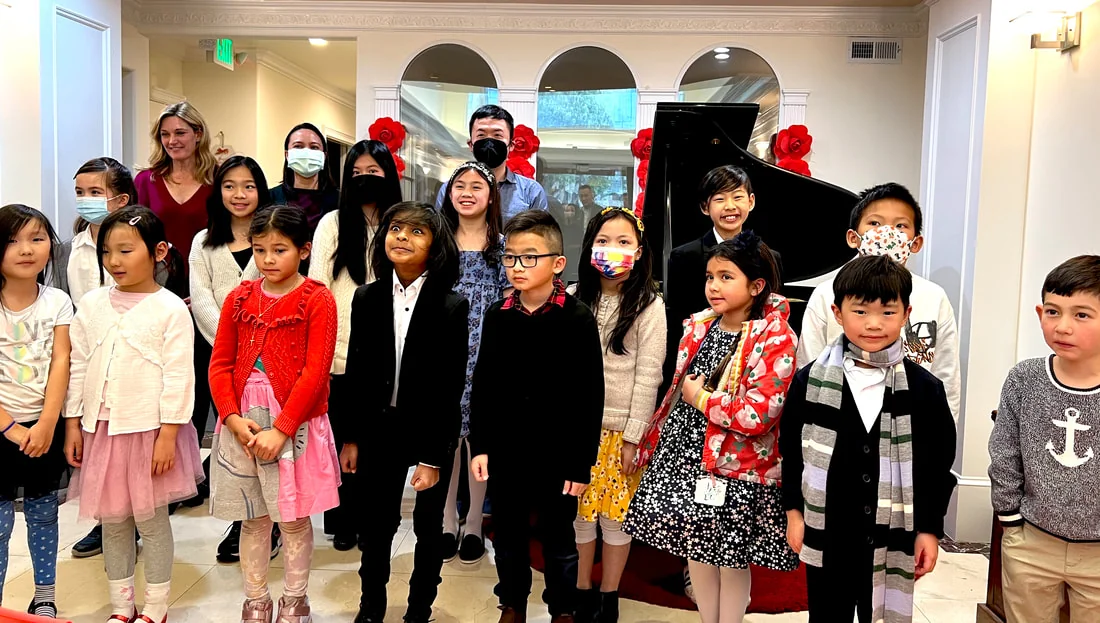
Performance opportunities can also give practice a clear purpose. Amabile's student recitals let students share their progress in a supportive setting. The point is not flawless playing. It is learning to prepare, recover, and enjoy the feeling of making music for other people.
Know When The Plan Needs To Change
A difficult week does not mean a child is lazy or not musical.
Look for patterns rather than judging one rough day. Does practice always fail at the same time? Does the child resist one particular piece? Are they playing through without understanding the assignment? Is the instrument hard to access, uncomfortable to sit at, or often out of tune? These are practical problems, and practical problems deserve practical solutions.
Talk with the teacher early. A good teacher can clarify the assignment, choose an easier entry point, suggest a practice format, or explain what level of parent help is useful. Families starting from scratch can use a first piano lesson to ask exactly how home practice will be introduced. Families already in lessons may find the school's realistic piano practice guide useful for turning a broad routine into a more focused session.
If the child repeatedly says they want to quit, treat the conversation with care. Ask what they dislike before deciding the answer. A change of repertoire, pace, schedule, lesson format, or teacher communication may be enough. Sometimes a pause or a different activity is the honest fit. Music learning should build resilience, but it should also leave room for the child's voice.
How Amabile Helps Families Build A Healthy Practice Habit
A strong home routine starts with lessons that make the next step clear.
At Amabile School of Music, piano teachers can help families choose a manageable practice target, break assignments into clear steps, and adjust the plan as a student grows. Regular lessons give children direct feedback on posture, rhythm, reading, technique, and the musical details that are hard to diagnose alone at home.
Families can explore piano lessons for kids, meet the school's faculty, review lesson options and tuition, or book a trial lesson. The right first plan makes it easier for a child to experience progress, and that progress is what turns piano from another reminder into something they can feel proud of.
Frequently Asked Questions
How long should a child practice piano each day?
The right amount depends on the child's age, assignment, attention span, and lesson plan. Many beginners start with short, focused sessions on several days each week. Ask the teacher for a target that matches the child's current work, then build consistency before adding more time.
What if my child refuses to practice piano?
First, make the next step smaller and clearer. Check the practice time, the assignment, and whether the child knows how to begin. If the resistance continues, share the pattern with the teacher so the plan can be adjusted instead of turning every session into a conflict.
Should parents sit with kids during piano practice?
Young beginners may need a parent nearby to help them start and follow a simple routine. As a child grows, the parent's role can shift toward protecting the practice time and listening when invited. The teacher should remain the person giving musical corrections.
Are rewards a good way to motivate piano practice?
A simple chart can help a young child build a showing-up habit, but it works best when it recognizes effort and routine rather than buying perfect results. Over time, help the child notice their own progress and choose music they enjoy sharing.