
Quick answer
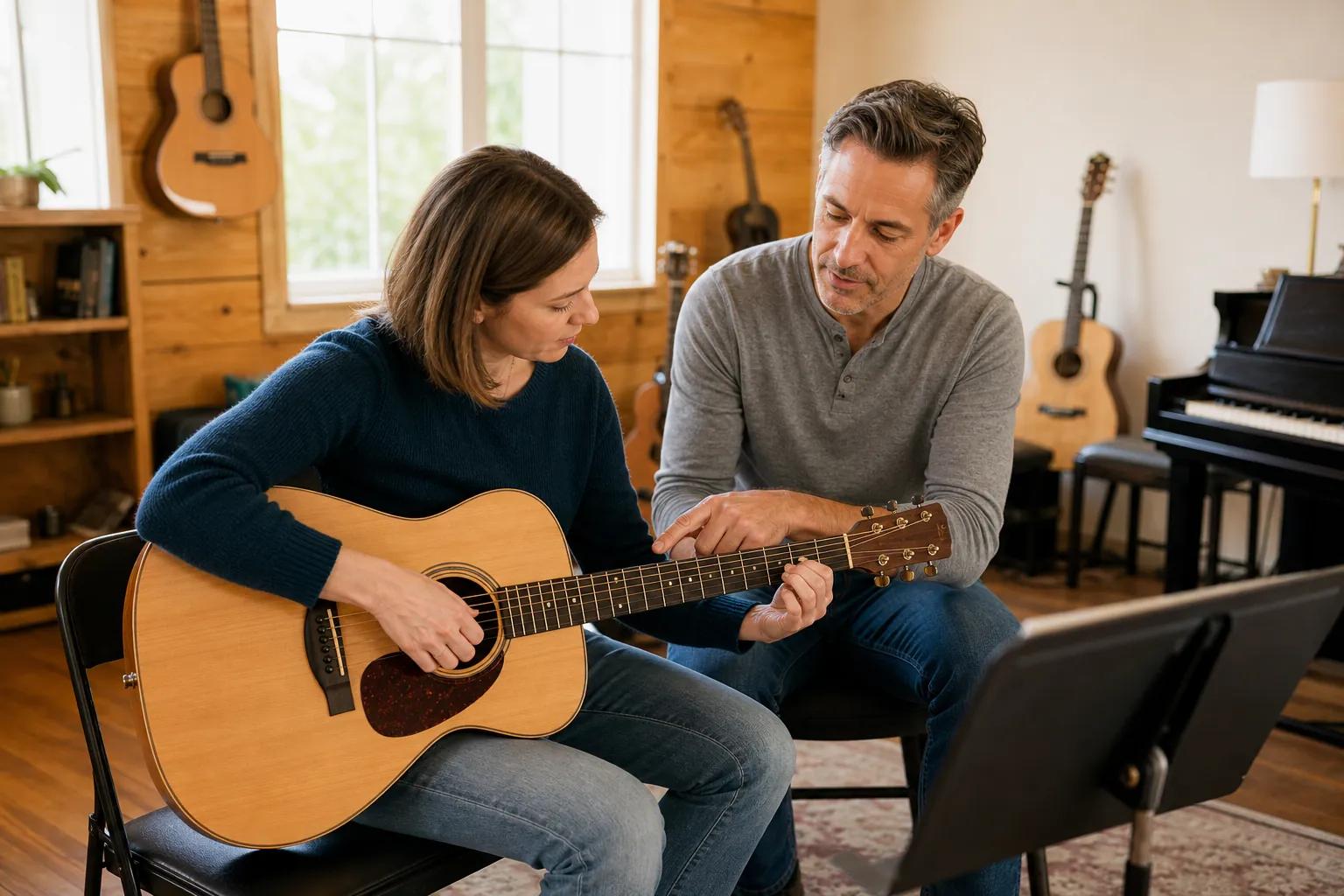
Most beginners can play simple songs with a few chords in about three months of regular lessons and practice. Six to 12 months often brings smoother chord changes, steadier rhythm, and a growing song list. Confident, independent playing builds over years, one small improvement at a time.
What Does It Mean to Learn Guitar?
A first chord, a full song, and an expressive performance are all real achievements. They are simply different milestones.
People ask how long it takes to learn guitar because they want to know whether the goal will fit real life. That is a sensible question. Guitar gives beginners an inviting first sound, but it also asks both hands to learn new jobs: one hand shapes chords or melodies while the other keeps a beat and produces a clean sound.
Those early skills build in layers. A new student may first learn how to hold the guitar comfortably, tune with help, and make a steady strum on open strings. Soon after, they may be working on two or three chord shapes, a short melody, or the rhythm to a familiar song. A child might feel proud of getting through one verse. An adult may be excited to play a favorite progression without looking at every finger.
Learning guitar also means different things for different people. Some students want a creative after-school activity. Some want to accompany themselves while singing. Others are returning to an instrument they put down years ago. The timeline changes with the goal, but the foundations stay the same: comfortable setup, rhythm, listening, chord changes, reading or chord charts, and regular practice.
A Realistic Guitar Timeline for Beginners
These ranges are planning markers, not promises. A small routine repeated over time matters more than racing toward the next song.
Every student brings a different schedule, hand size, musical background, and amount of practice time. Still, regular lessons and short home sessions often make these milestones possible.
| Timeline | What may start to feel possible | What helps most |
|---|---|---|
| First month | Comfortable holding, basic tuning habits, simple strums, a few single notes, and one or two chord shapes. | Short, calm sessions that make setup familiar. |
| 1 to 3 months | Short songs or riffs, clearer chord changes, basic chord-chart reading, and steadier rhythm. | Slow repetition of the hardest transition. |
| 6 to 12 months | A growing song list, more confident strumming patterns, simple scales, basic picking, and early recital preparation. | Weekly feedback and assignments with one clear purpose. |
| 1 to 3 years | More dependable rhythm, smoother chord changes, longer songs, stronger reading, and growing musical independence. | Patience through plateaus and steady fundamentals. |
A student does not need to wait years to make music worth sharing. A familiar chorus, a small melody, a duet, or a simple accompaniment pattern can become part of the journey early on. What takes longer is making those skills reliable enough to use in a new song without beginning from zero each time.
Some weeks will bring visible leaps. A chord that felt impossible can suddenly ring clearly, or a student may realize they got through a full song without stopping. Other weeks are quieter: the hands repeat a small motion until it starts to feel natural. Both kinds of weeks matter. Real guitar progress is often built from ordinary practice that gets slightly easier over time.
The First Three Months Build Useful Habits
The beginning is less about playing fast and more about making the instrument feel understandable and repeatable.
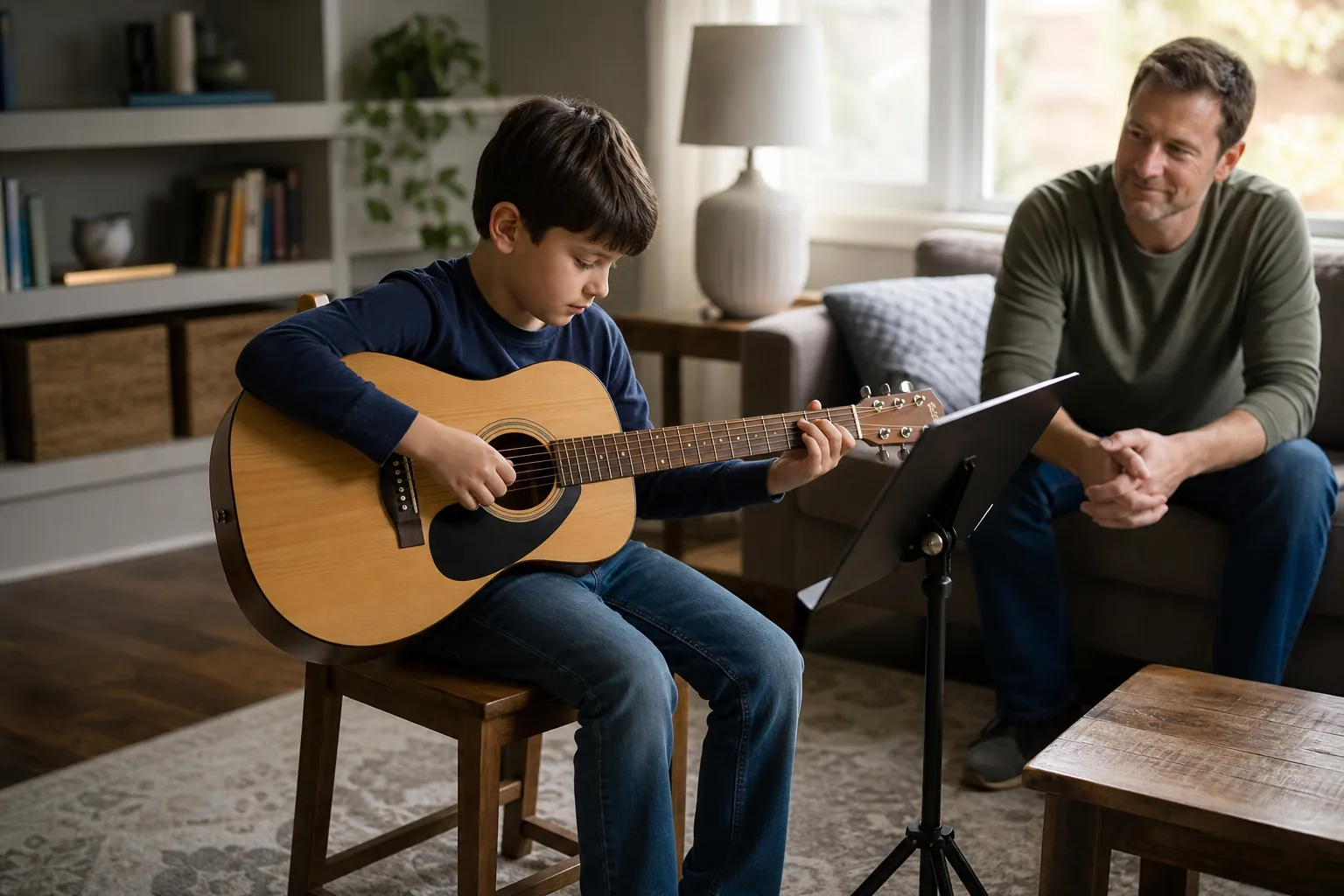
In the first lessons, a teacher often works on details that may not sound impressive yet. How does the guitar sit so the shoulders stay relaxed? How can the thumb support the fretting hand without squeezing? How should a student hold a pick, or use fingertips, so the strings speak clearly? These are not side tasks. They make later music easier to play.
Chord changes are a good example. A student may know where each finger belongs but still need time to move the whole hand between shapes. The helpful approach is not to force a fast song. It is to identify the one change that needs attention, place the fingers slowly, and repeat it with an even rhythm. Each comfortable repetition makes the next one less mysterious.
For younger children, the first months should include short pieces, games, and clear assignments that can be finished. Parents do not need to become the guitar teacher at home. It is more helpful to protect a small practice time, ask what the lesson assignment was, and notice effort: “That chord sounded cleaner,” or “You kept the beat through that section.” Adults can use the same approach by choosing one small goal for each session instead of judging the whole practice by a finished song.
Five Things That Change the Timeline
The pace of progress is not a verdict on talent. It usually reflects fit, repetition, and what the student is trying to do.
- Practice frequency. Ten focused minutes on several days can teach the hands more reliably than one long, distracted session at the end of the week.
- Instrument fit. A guitar that is comfortable to hold and properly set up makes learning far less frustrating. For younger children, the right size matters because a full-size guitar can make good posture and chord shapes harder than they need to be.
- Clear assignments. “Practice guitar” is vague. “Switch between these two chords four times, then strum this four-beat pattern slowly” gives the student a place to begin.
- Listening and feedback. A teacher can spot a tense wrist, a chord that is not ringing, or a rushed beat before a beginner knows how to name the problem. Helpful feedback keeps a small habit from becoming a stubborn one.
- The student's goal. Playing favorite songs, preparing for a recital, joining a school group, and learning fingerstyle are different paths. Good teaching adjusts the path without making a student feel behind.
It is tempting to compare guitar progress with piano, violin, or another student's performance. That comparison rarely helps. Guitar can offer quick first wins, but every instrument has its own challenges. The better measure is whether this week's work is a little more settled, more musical, or more independent than last week's.
Plateaus are normal too. When a student adds a new chord, a more complex strum, or a longer piece, the sound can temporarily feel less tidy. That does not mean progress has stopped. It usually means the next layer of coordination needs time. A good lesson identifies the one change that matters most, so practice stays encouraging instead of becoming a long list of corrections.
Choose a First Goal That Feels Reachable
A clear first goal gives practice a direction and makes the early weeks more rewarding.
The right first goal is specific enough to picture but small enough to reach. A young beginner might aim to play a four-beat rhythm and one short melody. A teen may want to learn the intro to a favorite song, while an adult may want to switch between three open chords and sing along with a simple chorus. None of these goals is too modest. They create an early reason to pick up the instrument again tomorrow.
A teacher can then turn that goal into the next few lessons: which chord shapes to learn first, when to introduce a pick or fingerpicking, which rhythm keeps the song recognizable, and how much practice fits the student's week. A good first goal is not a shortcut around fundamentals. It makes those fundamentals feel connected to music the student actually wants to play.
A Simple Practice Routine That Supports Progress
Practice works best when it is short enough to repeat and specific enough to make the next attempt better.
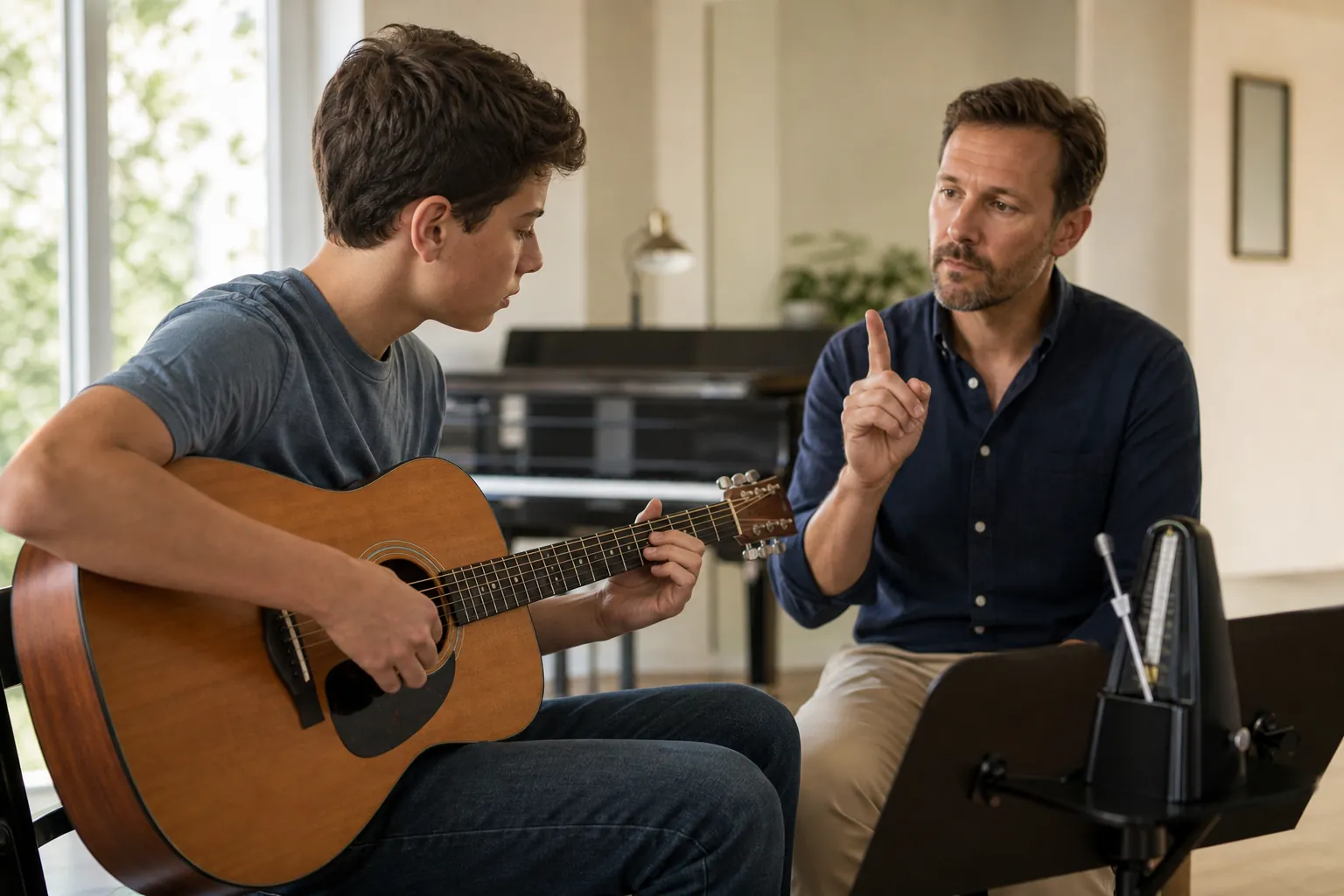
Beginners do not need to sit with the guitar for an hour to make progress. They need a routine that takes them from opening the case to one useful improvement before attention runs out. A 15-minute starting point can look like this:
| Minutes | What to do | What it builds |
|---|---|---|
| 2 | Set up the guitar, pick or music stand without rushing. | A calm starting habit |
| 3 | Play open strings, a warmup, or a teacher's short rhythm pattern. | Hand coordination and listening |
| 5 | Repeat one chord change or short section slowly, fixing one detail at a time. | Problem solving |
| 3 | Play a familiar song or riff for enjoyment. | Confidence and musical connection |
| 2 | Write down the one question to bring to the next lesson. | Useful teacher feedback |
Young students may need shorter blocks, with a parent helping the routine feel ordinary rather than urgent. Teens and adults can extend the routine with scales, sight reading, or a longer song, but the principle stays the same: solve a small musical problem, then let the student hear the improvement.
On a busy day, a two-minute reset is still useful. Take out the guitar, play one comfortable chord or rhythm, and put it away with care. That tiny session protects the habit and makes it easier to return tomorrow. The goal is not to win every practice day. It is to give the student enough calm repetitions that the guitar begins to feel familiar.
Milestones Worth Celebrating
The best motivation comes from noticing real changes, not waiting for a perfect performance.
Guitar students often overlook their own progress because each new song introduces a new challenge. A student who once needed help picking up the instrument may now set it up independently. A child who stopped after every chord may begin to keep a four-beat pattern going. An adult who avoided playing for anyone may be ready to share a short song with a friend.
Useful milestones include making a chord ring clearly, moving between two shapes with less searching, keeping a steady beat through a full verse, reading a short chord chart, learning the introduction to a favorite song, or recovering after a missed note. Those are the skills that make later songs possible.
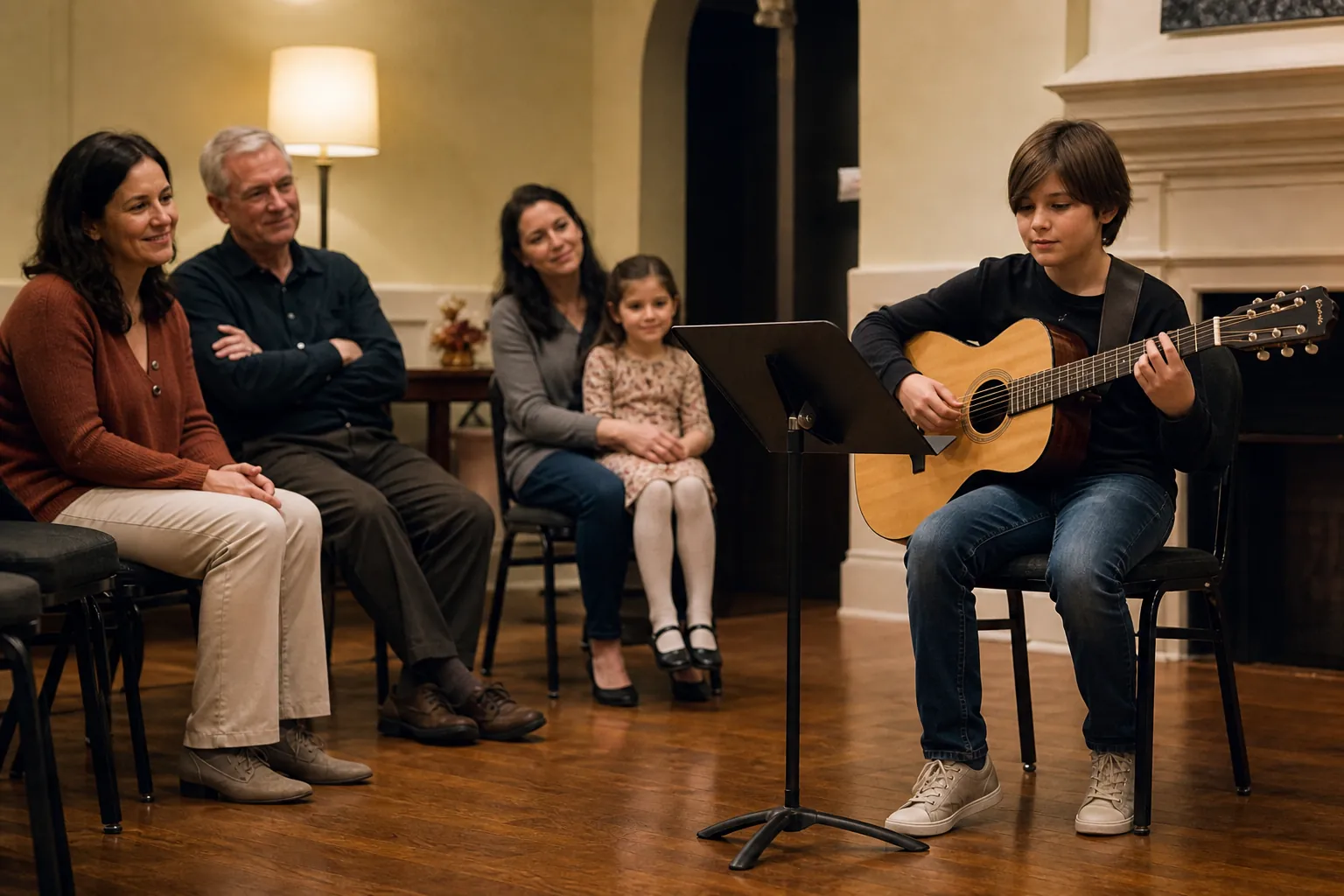
Performance can be a meaningful milestone too, but it should not be the only reason to learn. Amabile's recital opportunities give students who want a goal something concrete to work toward. The point is not to prove that a student is finished. It is to let them share what regular practice has made possible.
How Amabile Helps Guitar Students Progress
A good guitar path connects patient instruction, realistic practice, and meaningful goals.
At Amabile School of Music, beginner guitar students can work with a teacher who meets them at their current level and turns a large goal into clear weekly steps. That might mean helping a child build a cheerful practice routine, guiding a teen toward a favorite song or recital confidence, or helping an adult return to guitar without feeling embarrassed about where they are starting.
Families can explore guitar lessons for kids, while adults can see how adult guitar lessons support beginners and returning players. Students in the Bay Area can also review guitar lessons in San Francisco, school locations, online music lessons, lesson options and tuition, and the wider music program options.
Frequently Asked Questions
Can I learn guitar in three months?
Many beginners can play simple songs, make a few chord changes, and follow basic rhythms in three months with regular lessons and practice. Feeling fluent takes longer, but three months is enough time for meaningful early progress.
How long does it take to play a full song on guitar?
A beginner may be able to play part of a familiar song within the first few weeks. Playing a full song with clean chord changes and a steady beat often takes a few months of regular practice.
Is guitar harder to learn as an adult?
Adults can learn guitar very successfully. They often bring focus, musical taste, and clear goals. The best pace is one that fits a real schedule, with small assignments that make each practice session feel achievable.
How often should a beginner practice guitar?
Short sessions on several days each week are a strong place to start. A teacher can recommend a routine that fits the student's age, goals, instrument, and available time.
Related Posts
More practical guidance for families and adult beginners building a steady music-learning routine.
How Long Does It Take to Learn Piano?
A realistic look at beginner milestones, practice habits, and long-term progress.
How Long Does It Take to Learn Violin?
A practical timeline for early violin progress, practice, and confidence.
How to Practice Piano
A practical routine for turning a weekly lesson into steady improvement.