
Quick answer
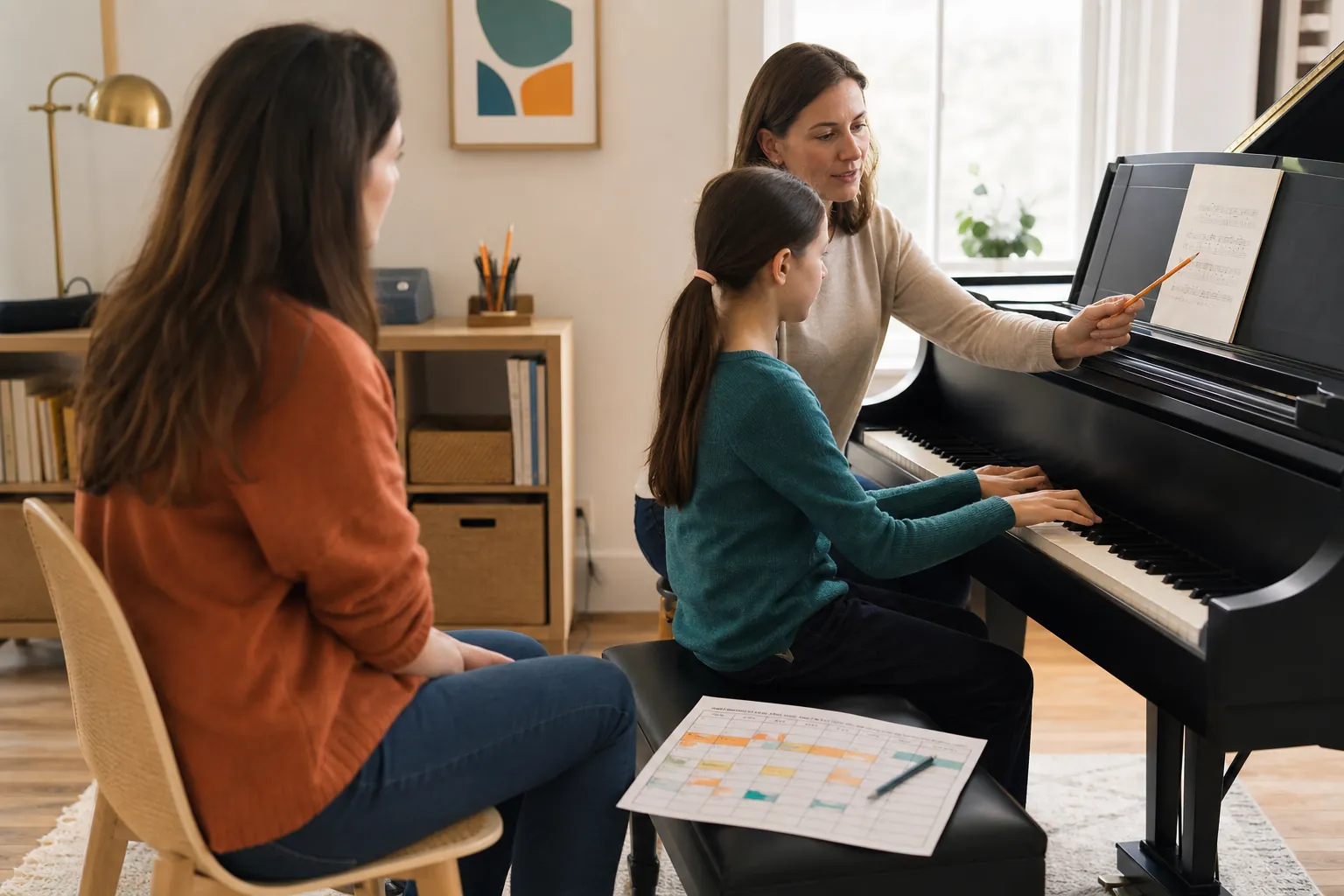
Most beginners should take piano lessons once a week. That rhythm gives the teacher enough time to introduce new skills, hear what happened during home practice, correct problems before they become habits, and keep momentum without overwhelming the family schedule. More frequent lessons can help advanced students, audition preparation, or children who need extra structure. Less frequent lessons can work for some adults or summer schedules, but it usually demands stronger independent practice.
Why Weekly Lessons Work for Most Beginners
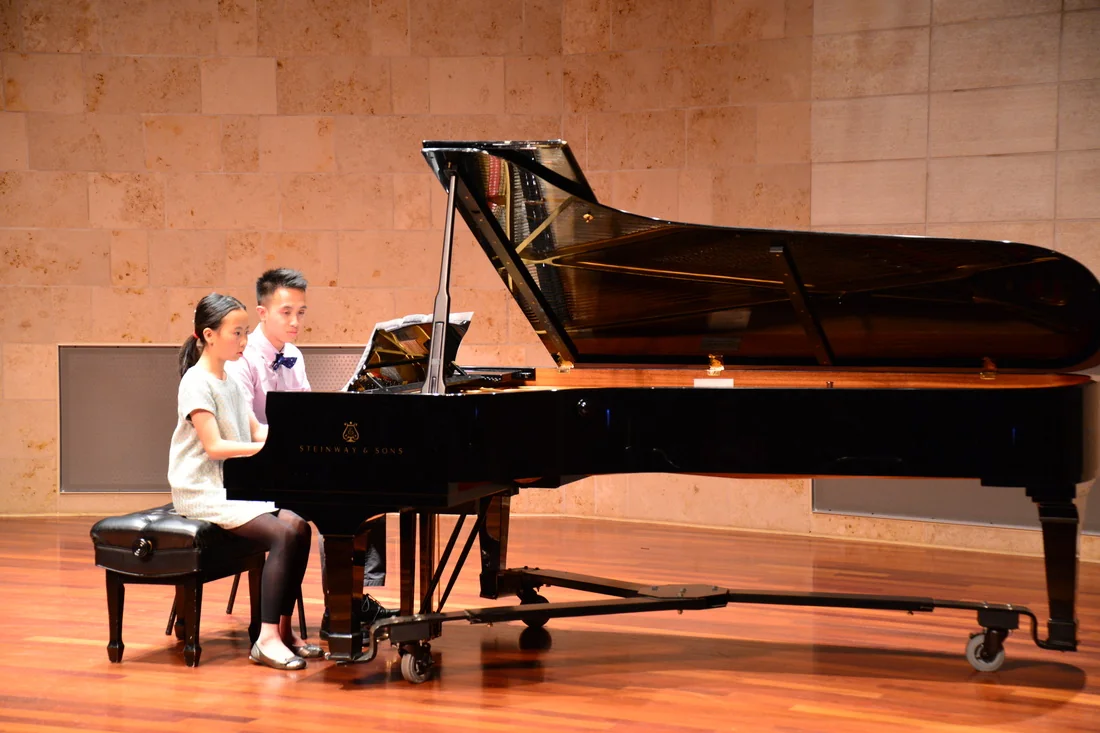
Piano progress needs repetition, feedback, and enough time between lessons for the student to try.
A weekly lesson is not magic. It simply creates a useful loop: the teacher gives clear assignments, the student practices at home, and the next lesson fixes what got fuzzy. That loop is boring in the same way brushing teeth is boring. It works because it repeats.
Beginners need that rhythm because piano learning is built from many small habits: finger shape, steady beat, reading direction, listening, hand coordination, and confidence trying again after mistakes. If lessons are too far apart, the teacher spends too much time rebuilding what slipped. If lessons are too frequent before the student has practiced, each lesson can become a supervised repeat instead of a step forward.
The Music Teachers National Association points parents toward active support at home: listening to the child play, protecting practice time, and celebrating progress. That advice matters because the lesson is only one part of the week. The habit between lessons is where the skill starts to settle.
A Simple Frequency Guide by Student Type
Start with weekly lessons, then adjust based on age, goals, and practice habits.
| Student situation | Typical lesson rhythm | Why it fits |
|---|---|---|
| Young beginner | Once a week | Enough consistency without turning music into a second school day. |
| Four-year-old or readiness student | Weekly group class or readiness lesson | Shorter, playful structure often fits better than formal private work. |
| Motivated school-age student | Weekly private lesson, sometimes longer | More individual feedback helps when practice is steady. |
| Audition, exam, or recital push | Weekly plus occasional extra coaching | Short-term goals may need faster correction and more accountability. |
| Adult beginner | Weekly or every other week | Adults with strong independent practice can sometimes hold momentum longer. |
How Age Changes the Answer
The younger the child, the more the lesson format matters.
For preschool and early elementary students, the question is not only "how often should you take piano lessons?" It is also "what kind of lesson can this child actually absorb?" A very young child may benefit from a weekly group class that includes singing, rhythm, movement, and keyboard games before a traditional private lesson makes sense.
The National Association for Music Education supports young children having access to structured and unstructured play-based music experiences, including group music-making and adult modeling. That is a good reminder for parents: early music learning should build readiness, not force a tiny child to behave like a tiny college applicant.
Around age five and older, many children can handle weekly private piano lessons if they can follow one-on-one instruction and repeat short practice tasks at home. Some need 30 minutes. Some older beginners do better with 45 minutes because the teacher has time for technique, reading, rhythm, repertoire, and a proper wrap-up. Amabile explains those options on the pricing page so families can compare lesson lengths without guessing.
Practice Matters More Than Extra Lessons
Two lessons a week cannot rescue a student who never touches the piano between lessons.
Parents sometimes ask whether adding another weekly piano lesson will make a child progress faster. Sometimes it will. Often, the better first move is improving the practice routine. If a student comes back each week without trying the assignment, a second lesson mostly gives the teacher another chance to remind them what they already heard.
For young beginners, short practice usually beats heroic practice. Ten focused minutes several days a week can do more than one dramatic 45-minute negotiation on Sunday night. The goal is not to create a perfect practice child. That child exists mainly in parent fantasies and music teacher mythology. The goal is a repeatable habit: open the book, find the assignment, try the hard measure, play slowly, stop before everyone hates the piano.
MTNA's practice resources emphasize practical systems such as schedules and assignment tracking. Amabile families can also use the school's student resources and the article on how to practice piano when the issue is not lesson frequency but follow-through.
Before adding extra lessons, check
Practice consistency
Is the student touching the piano several days a week, even briefly?
Assignment clarity
Does the family know exactly what to practice before the next lesson?
Lesson length
Would a longer weekly lesson solve the problem better than a second day?
Student goal
Is there a recital, audition, exam, or personal milestone that justifies more support?
When More Than Once a Week Makes Sense
Extra lessons are useful when there is a specific reason, not vague anxiety.
More frequent piano lessons can make sense when a student is preparing for a performance, returning after a long break, trying to correct a technical habit, or working toward a specific audition or exam. In those moments, extra teacher feedback can prevent wasted practice and reduce the amount of "I think this is right?" work happening at home.
Extra lessons can also help a student who loves piano and wants a faster pace. Some students are ready for more material, more repertoire, and more accountability. The key is that the student is practicing enough between meetings to make the extra instruction useful.
For most families, though, the first upgrade is not automatically two lessons per week. It may be moving from 30 minutes to 45 minutes, switching from group readiness to private lessons, choosing a better teacher fit, or tightening the practice routine. Amabile's faculty page, programs page, and piano lessons page help families compare those paths.
When Less Frequent Lessons Can Work
Less than weekly is possible, but it shifts more responsibility onto the student.
Every-other-week piano lessons can work for some adult learners, highly independent older students, or short seasonal stretches when travel makes weekly lessons unrealistic. The tradeoff is simple: there is more time for confusion to harden into habit. The student needs to understand assignments, practice consistently, and bring specific questions back to the teacher.
For most children, less frequent lessons are harder. Kids forget details, lose the thread, and often need a teacher to refresh posture, rhythm, reading, and practice strategy before moving on. If the family schedule is overloaded, it may be better to choose a manageable weekly lesson length than to stretch lessons so far apart that each one becomes a reset.
Summer is the exception families ask about most. If a weekly summer schedule is impossible, a lighter plan can still protect progress as long as the student keeps a small practice habit. A full pause is what usually causes the biggest backslide.
Lesson Length vs Lesson Frequency
Sometimes the real fix is not another day. It is enough time in the lesson you already have.
If a weekly 30-minute lesson feels rushed, families often assume the answer is a second weekly lesson. For some students, that may be right. For many, a longer lesson is cleaner. A 45-minute lesson can give the teacher time to hear the assignment, isolate the problem spot, introduce new material, talk through practice strategy, and still end with the student knowing what to do at home.
This matters most as students get older or move beyond the first beginner pieces. Reading, technique, rhythm, ear training, repertoire, and performance preparation all compete for lesson time. If the teacher is constantly choosing between fixing last week's rhythm and introducing this week's piece, the lesson length may be the bottleneck.
A longer lesson is not automatically better for a young child. Some beginners lose focus after 30 minutes, and a clean short lesson can beat a long lesson that limps through the final stretch. The better question is whether the student leaves with clarity, motivation, and an assignment that fits the week ahead.
How to Tell if Your Schedule Is Working
The right rhythm shows up in behavior, not just in the calendar.
After the first month or two, look for simple signs. Does your child remember what the teacher assigned? Can they sit down and begin without a full family summit? Are they improving on one or two specific skills, even if progress is not dramatic? Do they still feel willing to try after mistakes?
If the answer is yes, weekly lessons are probably doing their job. If your child is overwhelmed, dreading practice, or forgetting everything between lessons, the problem may be lesson format, practice expectations, age readiness, teacher fit, or schedule overload. Adding more lessons without naming the real issue can make the problem more expensive without making it better.
The most useful conversation with a teacher is specific: "What should improve by next month?" "How many days should we practice?" "Would a longer lesson help?" "Is my child ready for private lessons, or would a group class fit better?" Those questions give the teacher something practical to answer.
How Amabile Helps Families Choose the Right Rhythm
The best schedule is the one a student can sustain and grow from.
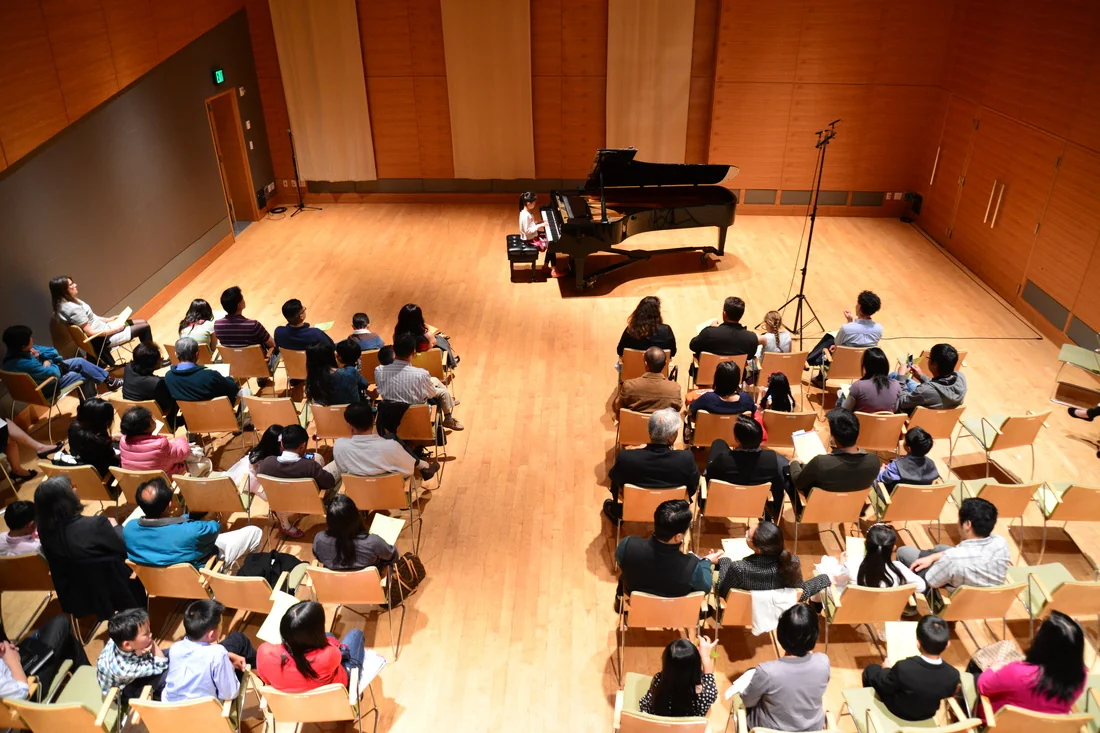
Amabile teaches piano students across San Francisco, Moraga, and online, including young beginners, school-age children, teens, and adults. The school offers weekly private lessons in different lengths, group options for young learners, recital opportunities, and teacher guidance that helps families decide what kind of structure makes sense.
If your child is new, start by comparing kids piano lessons, Little Mozart, locations, and common enrollment questions. If you are an adult beginner or returning student, the adult piano lessons page is the better fit.
A trial lesson is useful because it turns a general internet answer into a real recommendation. The teacher can see attention span, coordination, listening, confidence, and practice readiness. That is more useful than choosing a schedule based only on what another child needed.
Need help choosing weekly, longer, or readiness lessons?
Tell Amabile your child's age, experience, schedule, and goals. The right rhythm should build progress without making music feel like another chore.
Frequently Asked Questions
Short answers for families comparing piano lesson frequency.
Is one piano lesson a week enough?
Yes, one piano lesson a week is enough for most beginners when the student practices between lessons. Weekly instruction gives the teacher a steady chance to introduce new skills, correct problems, and keep progress moving.
Should my child take piano lessons twice a week?
Twice-a-week lessons can help for auditions, recitals, advanced goals, or students who practice enough to use the extra feedback. For most beginners, a better first step is weekly lessons plus a consistent home practice routine.
Can piano lessons be every other week?
Every-other-week lessons can work for some adults or independent older students, but they are usually harder for children. Younger beginners often need weekly feedback so posture, rhythm, reading, and practice habits do not drift too far between lessons.
How long should beginner piano lessons be?
Many young beginners start with 30-minute lessons. Older beginners, teens, and adults often do better with 45 minutes because there is more time for technique, reading, repertoire, and questions without rushing.
What matters more: lesson frequency or practice?
Practice usually matters more once the weekly lesson rhythm is in place. Lessons give direction and correction, but steady progress comes from repeating the right work at home between teacher check-ins.