Young beginners
A musical start that feels encouraging
Private lessons begin at age five, with careful attention to listening, rhythm, coordination, and the small wins that help a child feel capable.
Serving Lafayette Families From Moraga
Private music lessons at Amabile’s nearby Moraga campus give children, teens, and adults a thoughtful place to begin, return, and keep making music.
Nearby Campus
Moraga
Private Lessons
Age 5+
Faculty
30+ Teachers
Lesson Options
In Person + Online
Lafayette families often want more than an activity to fill an afternoon. They want a teacher who can help a student stay interested long enough for real musicianship to take hold. That means lessons should have structure, but they should also leave room for personality, questions, favorite songs, and the satisfaction of working through something difficult.
At Amabile’s Moraga campus, students receive one-on-one attention with a plan built around their age, experience, instrument, and reasons for learning. A young beginner may need a calm introduction to rhythm and sound. A school-age musician may need help turning practice into a routine. A teen or adult may be ready for a more personal challenge. The next step is not the same for everyone, and private teaching makes that difference matter.
A trial lesson gives your family a low-pressure way to meet a teacher, see how the setting feels, and talk through the right lesson length before beginning a weekly schedule.
Young beginners
Private lessons begin at age five, with careful attention to listening, rhythm, coordination, and the small wins that help a child feel capable.
School-age students
Teachers balance technique, reading, repertoire, and a practice plan that gives students a clear way forward between weekly lessons.
Teens
A teen can build stronger foundations, prepare for school music, work toward a performance, or explore the music that keeps them engaged.
Adults
Adult beginners and returning musicians receive a realistic lesson plan that respects a full schedule and makes progress feel attainable.
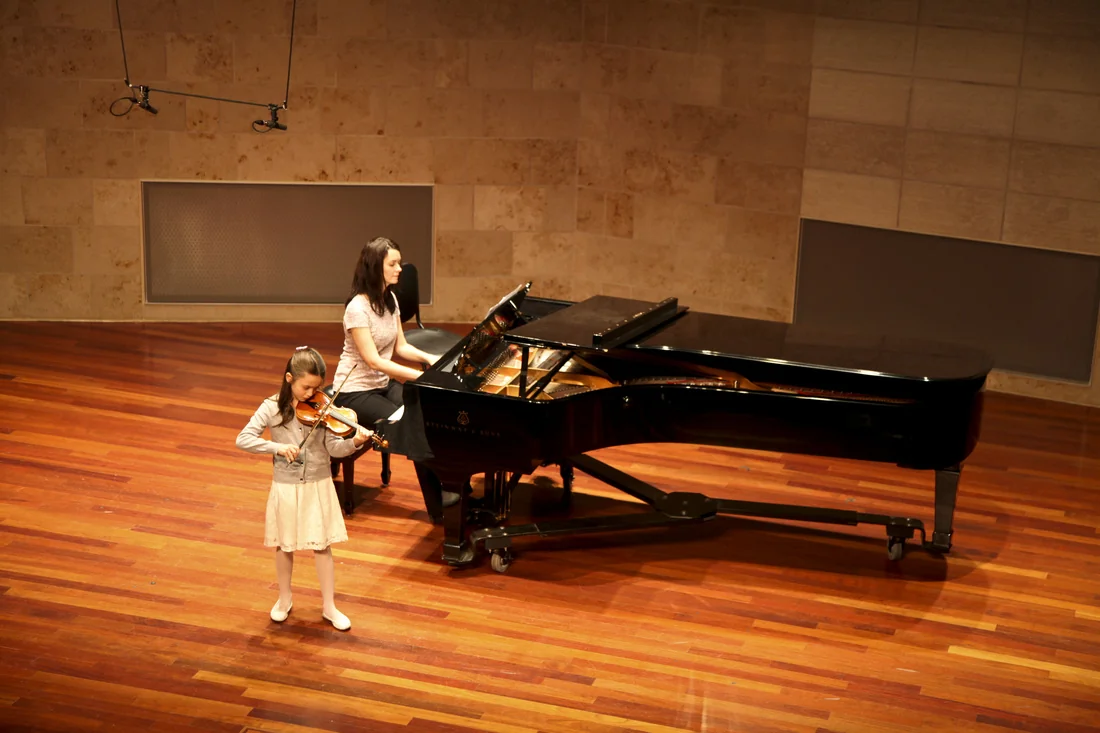
A strong start is not about finding the “perfect” instrument on the first try. It is about finding a musical path a student can connect with, then giving them enough guidance to feel progress.
Piano, voice, violin, guitar, and more
Students can study piano, voice, violin, guitar, bass guitar, ukulele, French horn, or drums. Adult students may also explore cello or clarinet, depending on teacher availability.
A teacher who turns goals into next steps
Good teaching connects a student’s interests with clear fundamentals, whether that means reading music, building technique, preparing an audition, or learning a song that matters to them.
A trial lesson before the weekly commitment
The first lesson is a chance to ask practical questions, meet a teacher, and find an instrument and format that feel sensible for the student in front of you.
A Lasting Musical Foundation
Music grows through small, repeated moments: finding the beat again after losing it, shaping a phrase more carefully, noticing that a formerly hard measure now feels natural. Those moments are easy to overlook, but they are where students become more independent. A teacher helps a student understand what to try next, while the student learns that progress is something they can take part in creating.
For children, the early years are often about learning how to listen, coordinate, follow a musical pattern, and keep going when the answer is not immediate. Those habits support the notes and rhythms they are learning, but they also help make music feel like a skill that belongs to them. A student who can work through a small obstacle is more likely to stay with an instrument long enough to discover what it can become.
For teens, lessons can make room for school ensembles, changing interests, auditions, recitals, and favorite music. For adults, a lesson can protect a part of the week for focused, creative work. No matter the starting point, the aim is not to rush through a fixed checklist. It is to give each student a useful balance of challenge, confidence, and musical ownership.
A dependable music routine does not require a perfect schedule. It needs a clear next step, a teacher who can adjust when a student gets stuck, and enough regular contact that the work begins to feel familiar. A young beginner may practice in short bursts. A teen may need to plan around school commitments. An adult may need a realistic way to return after a busy week. The right plan makes room for real life instead of competing with it.
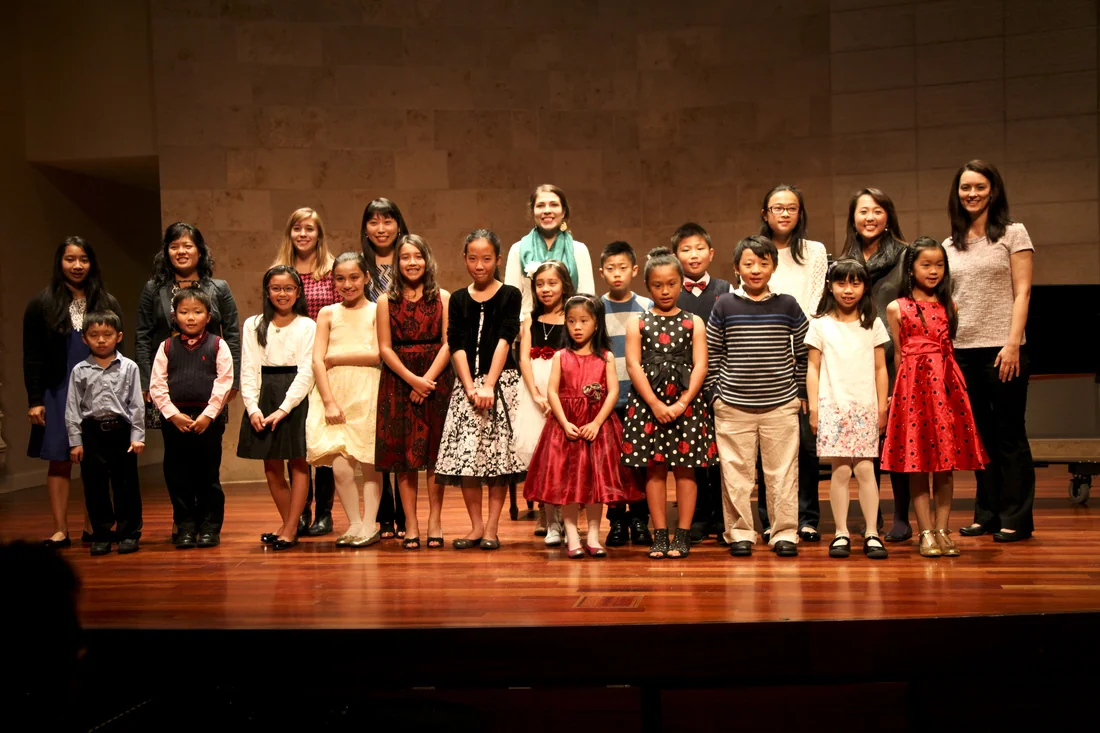
Amabile also offers recital opportunities for students who want a meaningful goal to work toward, without making performance a requirement. Some musicians enjoy preparing a piece to share. Others are happiest building a private relationship with their instrument. Both paths deserve thoughtful teaching.
Families can review lesson options and published tuition before booking. The point of the first conversation is to give you the information you need to choose a teacher and weekly format with confidence.
A weekly lesson can become a place where a student learns to listen closely, stay with a hard passage, and take pride in a skill that is genuinely their own.
That kind of growth reaches beyond the lesson room, into the patience to try again, the focus to return to a goal, and the pleasure of making something new. It gives musical progress a durable place in a student’s life.
Patient Progress
Teachers meet students where they are and make the next step clear enough to attempt.
Meaningful Milestones
Recital opportunities can give students a reason to polish a piece and recognize their growth.
Frequently Asked Questions
Book a trial lesson and tell us about the student’s age, experience, musical interests, and schedule. We will help you find a sensible next step.
Book A Trial LessonLafayette students can take in-person lessons at Amabile’s Moraga campus, at 1001 Country Club Drive, Suites D and A. Online lessons are also available when that is the better fit for a family’s routine.
Amabile offers private lessons in piano, voice, violin, guitar, bass guitar, ukulele, French horn, and drums. Cello and clarinet are also available for adult learners. Teacher availability and the best starting instrument can be discussed at a trial lesson.
Private lessons begin at age five. Four-year-old beginners can explore rhythm, singing, movement, and keyboard readiness through Amabile’s Little Mozart program.
Yes. Adults are welcome whether they are starting from the beginning, returning after a long break, or working toward a specific musical goal.
A trial lesson is the best place to talk through age, experience, instrument, goals, schedule, and teacher fit. Amabile can then recommend a practical next step.