A Comfortable First Sound
Beginner Friendly
Build posture, breathing, embouchure, valve patterns, rhythm, and reading in a sequence that feels manageable.
French Horn Lessons In The Bay Area
Build a dependable sound, a clear musical foundation, and the confidence to play on your own or with others through one-on-one lessons in San Francisco, Moraga, or online.
A thoughtful start matters
The French horn rewards patient listening. A teacher helps each student understand how the instrument feels, sounds, and fits together before small frustrations turn into habits.
Lessons can build comfortable posture, relaxed breathing, embouchure, hand position, valve technique, rhythm, reading, and the musical awareness that helps horn parts make sense in an ensemble.
Whether you are choosing a first instrument, returning after school band, or preparing for a more demanding musical role, there is a clear next step from where you are now.
Since
2008
Faculty
30+ Teachers
Formats
In Person + Online
Recommended Minimum
45 Minutes
For many students, the French horn begins with a sound they recognize from an orchestra, concert band, movie score, or school ensemble. It is an expressive instrument, but it can also feel mysterious at first. The early work is less about forcing progress and more about learning the small physical and listening habits that make a centered, reliable sound possible.
At Amabile, private lessons start with the student in front of the teacher. A beginning child, an involved middle-school band player, a high-school student preparing for an audition, and an adult returning to music all need a different kind of first conversation and a different plan for the week ahead.
You do not need prior horn experience, a polished audition piece, or the right musical vocabulary before booking. A good lesson gives you a comfortable place to begin, direct feedback when something feels difficult, and music that makes the effort feel worthwhile.
A Comfortable First Sound
Build posture, breathing, embouchure, valve patterns, rhythm, and reading in a sequence that feels manageable.
High Standards Without Pressure
Receive precise, encouraging feedback without a rigid approach that ignores why you want to play.
Tone, Ear, And Ensemble Skills
Technique supports real music, from a steadier entrance to phrasing, transposition, blending, and repertoire you care about.
San Francisco, Moraga, Or Online
Choose the location and lesson format that makes a consistent weekly musical practice more realistic.
The right lesson plan depends on age and goals, but meaningful progress connects healthy fundamentals with music a student is excited to play.
Breath, embouchure, and centered tone
A stable setup and deliberate listening help students find notes more reliably and make the horn feel less unpredictable.
Rhythm, reading, and musical direction
Lessons connect what students see on the page with what they hear and count, so entrances, rests, and phrasing become part of the music.
Valves, hand position, and articulation
Small physical details become easier when a teacher can spot tension, clarify a fingering pattern, and solve the obstacle before it becomes a habit.
Practice that supports the next rehearsal
A focused weekly assignment gives students a plan for home practice and helps school-band or ensemble music feel less overwhelming.
If you are brand new: lessons can begin with how to assemble and hold the instrument, create a first comfortable sound, read simple rhythms, and build the habits that make later music feel more natural.
If school music feels challenging: a teacher can help with tone, reading, rhythmic accuracy, tricky entrances, and the short sections that need more attention before the next rehearsal.
If you played years ago: lessons can reconnect you with breath, finger patterns, reading, and musical confidence without making you feel like you need to start over in the wrong way.
If you want to play with others: lessons can prepare the skills that make an ensemble, a community group, or sharing a piece with family feel more approachable.
A first lesson is a chance to meet the teacher, talk about what draws the student to French horn, and find a comfortable starting point. A parent is welcome to share useful context for a younger student. There is no need to prepare a piece or prove that anything from school is remembered.
The teacher may listen to how the student makes a sound, check the way the instrument fits in their hands, explore how they hear and count rhythm, and ask what kind of musical life they hope to build. That could mean a first melody, a return to classical repertoire, a stronger place in an ensemble, or a creative practice that fits a busy week.
Students leave with a clearer sense of what to practice and why. The plan should fit the time they can actually protect between lessons.
French horn rewards careful, regular attention. The instrument asks the ear, breath, embouchure, hand position, valves, and rhythm to work together, which is why a clear routine matters more than trying to do everything at once.
The teacher helps turn broad goals into work students can repeat between meetings. That may include a short warm-up, long tones or lip slurs, a focused valve or rhythm exercise, a passage from school music, and a piece that gives the student something musical to share. The balance changes as the player grows, but the routine stays manageable.
Young students benefit when families can see what a successful practice session looks like. Band students benefit from knowing how to isolate the passage that keeps getting stuck. Adults benefit when practice has a clear place in an already full week. In every case, the goal is to make the next session easier to start and more satisfying to finish.
Set up a balanced start
Use a short warm-up to reconnect breath, embouchure, hand position, and listening before moving into more demanding work.
Build one dependable skill
Repeat one assigned pattern with enough attention to notice what changes, rather than running through the whole piece on autopilot.
Finish with music
End with a short phrase, melody, or ensemble section that reminds the student why they picked up the French horn.
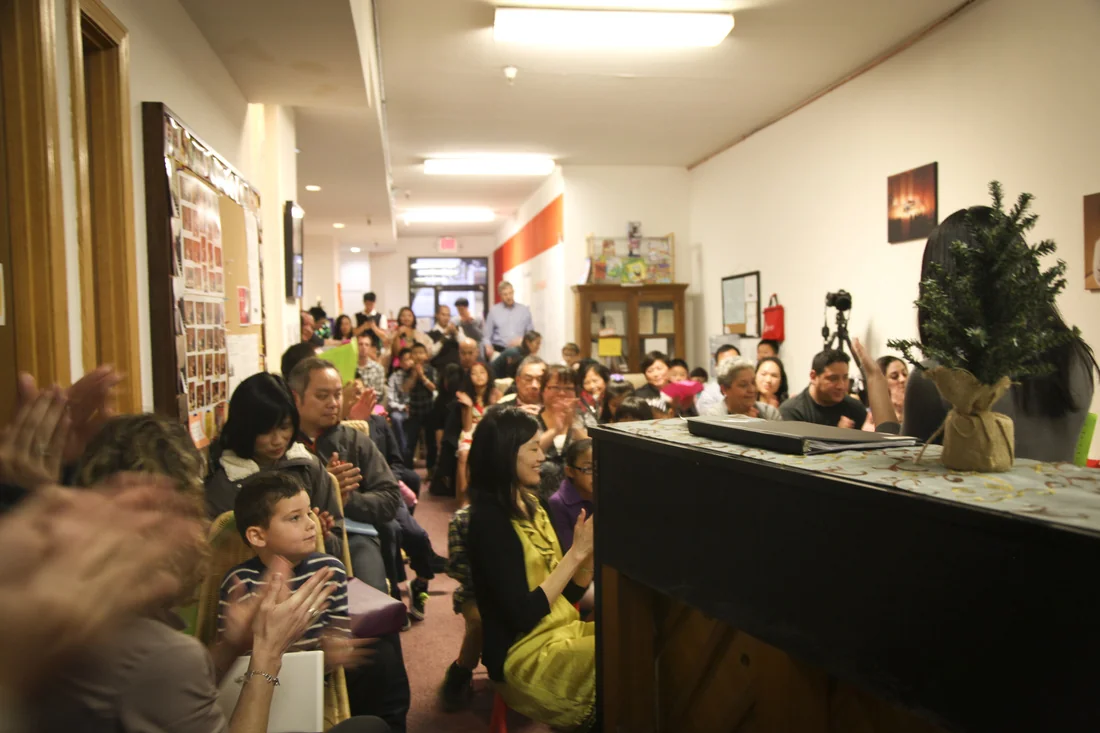
Some students take French horn lessons entirely for personal enjoyment. Others like having a concrete date or piece to work toward. Amabile offers recital and performance opportunities for students who want that next step, without making participation a requirement.
Low Pressure
Build confidence gradually in a supportive environment and choose when you are ready to share.
Real Milestones
Turn a practice goal into a date and a piece that gives your weekly work a satisfying purpose.
Consistency is easier when your music school fits your week. Amabile offers two Bay Area campuses and online lessons so you can choose a practical starting point.
Sunset Parkside District
1213 Vicente Street, San Francisco, CA 94116
In-person and online lessons are available seven days a week.
(415) 682-7738Serving Lamorinda
1001 Country Club Drive, Suites D & A, Moraga, CA 94556
In-person lessons are available Monday through Saturday, with online options seven days a week.
(925) 376-6328Yes. Beginner lessons can begin with comfortable posture, embouchure, breath, first notes, rhythm, reading, and simple music in a sequence that feels clear and manageable. No prior training is required.
Yes. Private lessons give students focused support with tone, rhythm, reading, entrances, challenging passages, auditions, and the practice habits that carry into band and orchestra rehearsals.
Yes. French horn lessons are available online as well as in person at the San Francisco and Moraga campuses.
Lessons are available in 30, 45, and 60 minute formats. For teens and adults, 45 minutes is the recommended minimum, with 60 minutes a strong fit for deeper work or advanced goals.
Yes. Students can take part in recital and performance opportunities if they want a meaningful milestone to work toward, though participation is encouraged rather than required.
Book a trial lesson and tell us your preferred campus, whether you prefer online or in-person lessons, and what you hope to work toward.