Quick answer
The best sensory activities for infants are simple, safe, and easy to repeat. Good options include tummy time, mirror play, textured fabric play, songs and lap games, reaching toys on a play mat, touch-and-feel books, outdoor walks, and supervised water play for older babies. The goal is not more stimulation. The goal is meaningful sensory experience that matches your baby’s stage.
Infants learn through their senses before they can explain anything with words. They look, listen, reach, kick, mouth, turn toward voices, and gradually connect what their bodies do with what happens next. The CDC’s guidance for parents of infants emphasizes that the way adults hold, cuddle, and play with a baby helps shape early development and relationships. Head Start’s infant development framework also describes how babies use sensory information and movement together as they learn to explore materials, body positions, and the world around them.
That is why sensory play for infants is usually much simpler than parents expect. A crinkly cloth, a baby-safe mirror, a song with hand motions, or a few minutes on a mat can be enough. The point is not to create a big setup. The point is to offer a baby safe chances to notice, repeat, and connect sensory information with movement and interaction.
It also helps to think about infant sensory activities as part of the day instead of a special event. Tummy time after a diaper change, a mirror during floor play, a song before a nap routine, or a touch-and-feel book after feeding often works better than waiting for one long play session. Babies usually benefit more from short, repeated experiences than from a single big activity.
What Makes Sensory Activities Work For Infants
The strongest infant sensory activities are calm, safe, and matched to what a baby can actually notice and do at that stage.
A good sensory activity for an infant usually has one simple focus. Look at the mirror. Reach toward the toy. Listen to the song. Feel the cloth. Kick under the play gym. Babies do not need complicated directions or a lot of choices. They need enough clarity and repetition to notice what happens when they move, hear, touch, or look.
This is one reason the best infant activities often seem almost too basic to count. They count because babies are working hard on very early skills such as visual tracking, turning toward sound, grasping, kicking, rolling, and tolerating new body positions. HealthyChildren notes that active play for babies can be very simple and still support important milestones, including reaching, grabbing, and tummy time with supervision.
- choose one sensory focus instead of offering too much at once
- keep materials baby-safe and simple enough for close supervision
- watch your baby’s cues and stop before they become overwhelmed
- use your voice because interaction matters as much as the object
- repeat familiar activities often so your baby can build recognition
Tummy Time Is One Of The Best Sensory Activities For Infants
For many babies, tummy time is where sensory play and motor development meet most clearly.
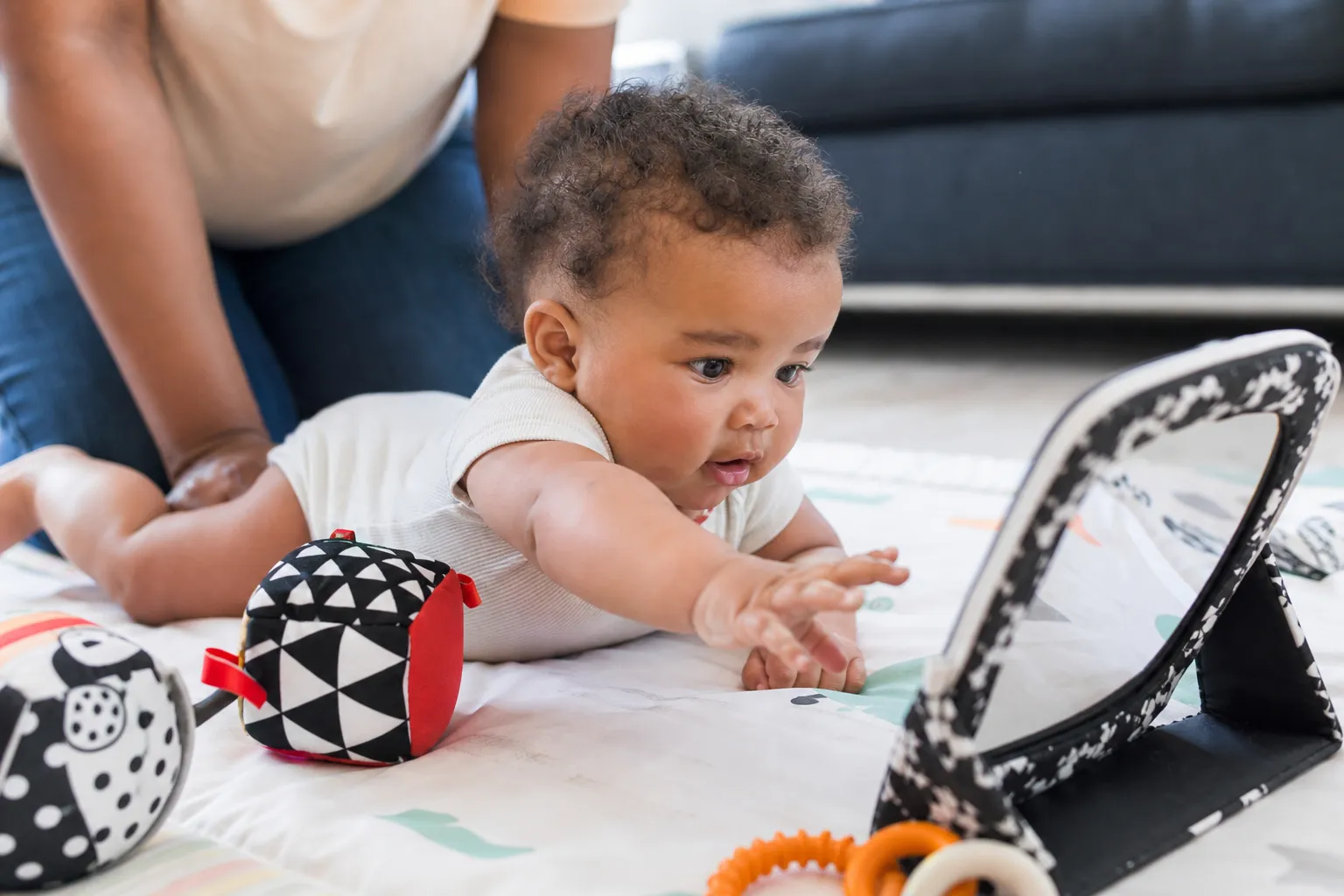
Tummy time is often discussed as exercise, but it is also one of the best sensory activities for infants. A baby on their tummy feels weight shift through the body, lifts the head to see more, presses through the arms, and learns how movement changes what they can notice and reach. HealthyChildren recommends supervised tummy time and other active play because babies need real opportunities to move, kick, reach, and strengthen their bodies.
You can make tummy time more sensory without making it complicated. Put a baby-safe mirror just ahead of your baby. Place one high-contrast toy within reach. Lie down face to face and talk or sing. Move a soft toy slowly from one side to the other so your baby can track it. Change surfaces when appropriate, such as moving from a mat to a firm blanket outdoors, so the sensory information feels a little different.
The goal is not forcing long stretches. A few good minutes count. Many infants do better with short tummy-time sessions repeated throughout the day rather than one long effort that ends in frustration.
Texture Play Works Best When It Stays Gentle And Safe
Infants explore texture with their hands, feet, cheeks, and often their mouths, so simple materials usually work best.
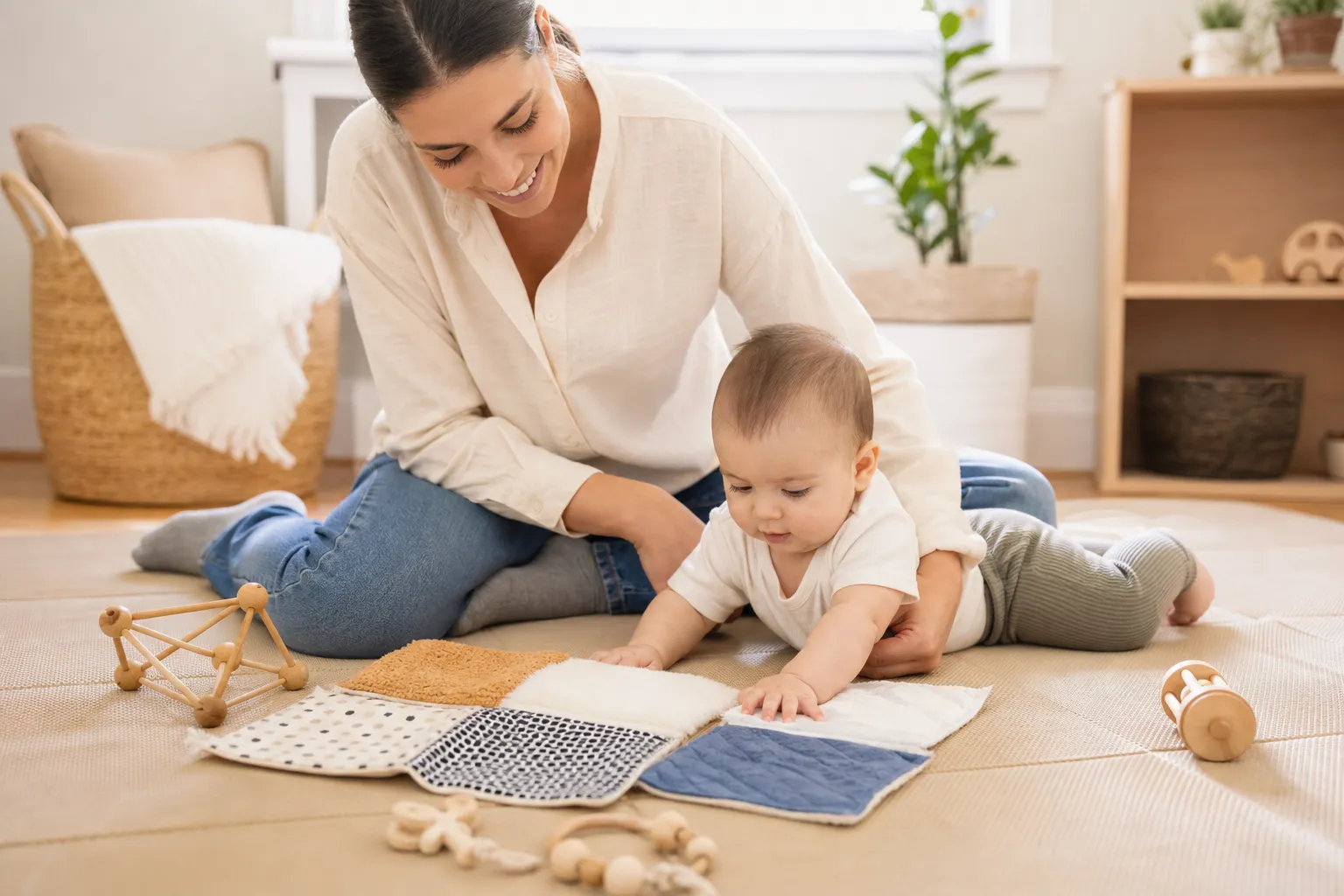
When parents think of sensory play, they often picture big bins and messy materials. For infants, texture play is usually much gentler. Think soft washcloths, crinkle fabric, ribbed socks, smooth silicone teethers, fleece, muslin, and baby-safe textured books. For safe, simple texture play, the key is choosing baby-safe materials, staying close, and keeping the experience calm enough that your baby can explore without becoming overwhelmed.
One easy way to start is with a small texture basket that you use together. Sit with your baby and offer one item at a time. Let them pat it, grasp it, mouth it if appropriate, and hear your words while they explore. Soft. Bumpy. Crinkly. Smooth. Cool. Warm. Sensory play becomes richer when the adult pairs touch with calm language and face-to-face attention.
If your baby seems unsure, that is normal. Sensory play for infants should invite, not force. Some babies love crinkly sounds right away. Others need a few slower introductions before a new texture feels comfortable.
Mirror Play And Visual Tracking Build Early Attention
Infants are drawn to faces, contrast, and motion, which makes mirror play and visual tracking especially useful.
A baby-safe mirror is one of the simplest sensory tools you can use. Babies are naturally interested in faces, and a mirror gives them another reason to look longer, lift the head, shift the body, and notice visual change. You do not need to teach anything formal here. Just place the mirror where your baby can see it during floor play and stay nearby to talk and respond.
Visual tracking is equally helpful. Slowly move a toy, scarf, or your own face from left to right, closer and farther, or slightly above eye level. That encourages the baby to watch carefully and sometimes turn the head or body. The experience is sensory, but it also supports the early attention skills that make later learning easier.
This is where infant sensory play stays refreshingly practical. The best materials are often already in your home. A mirror, a clean scarf, a high-contrast soft toy, your voice, and a few quiet minutes on the floor can do a lot.
Songs, Rhythm, And Movement Make Excellent Sensory Activities
Sound is one of the most powerful sensory pathways for infants because it combines listening, bonding, repetition, and body movement.
Music is one of the easiest ways to build sensory play into everyday routines. Babies respond to rhythm, repeated melody, changes in pace, and the familiar sound of a parent’s voice. A simple song with bouncing, swaying, patting, or hand motions gives babies sound, movement, touch, and social connection at the same time.
This is also one of the clearest bridges between infant sensory play and early music readiness. A baby who kicks during songs, quiets when hearing a familiar tune, watches your mouth while you sing, or anticipates a repeated lap-game pattern is already learning through sound and timing. Those are early musical experiences, even before a child is ready for structured music classes.
Try a few reliable music-based sensory activities:
- Lap songs: gentle bouncing songs with repeated phrases and predictable movement.
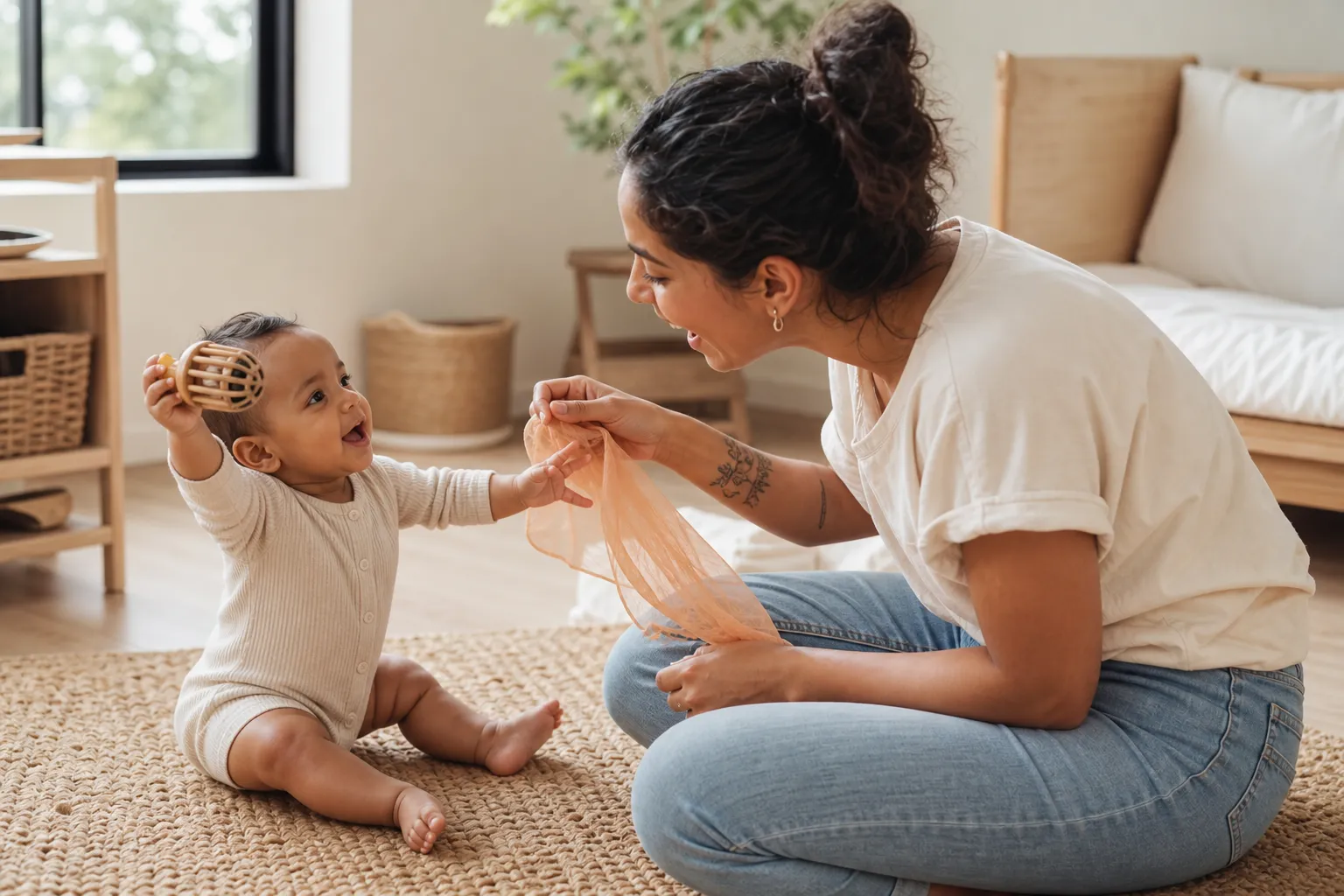
- Scarf play: lift and lower a scarf while singing slowly so your baby can watch and reach.
- Shaker listening: use one soft baby-safe shaker and pause so your baby can notice sound and silence.
- Clap patterns: clap a steady beat while making eye contact and smiling.
- Body songs: songs that include toes, hands, cheeks, or knees to connect touch with language.
If your child keeps responding strongly to songs, beat, and listening play as they grow, that interest often becomes easier to build on in toddlerhood and beyond. Families who want a gentle next step later on can explore Amabile’s Little Mozart class, which gives age-4 beginners a structured introduction through singing, movement, keyboard basics, musical games, and a mini-recital.
Books, Outdoor Walks, And Water Play Count Too
Some of the best sensory activities for infants feel like ordinary caregiving moments with a little more attention built into them.
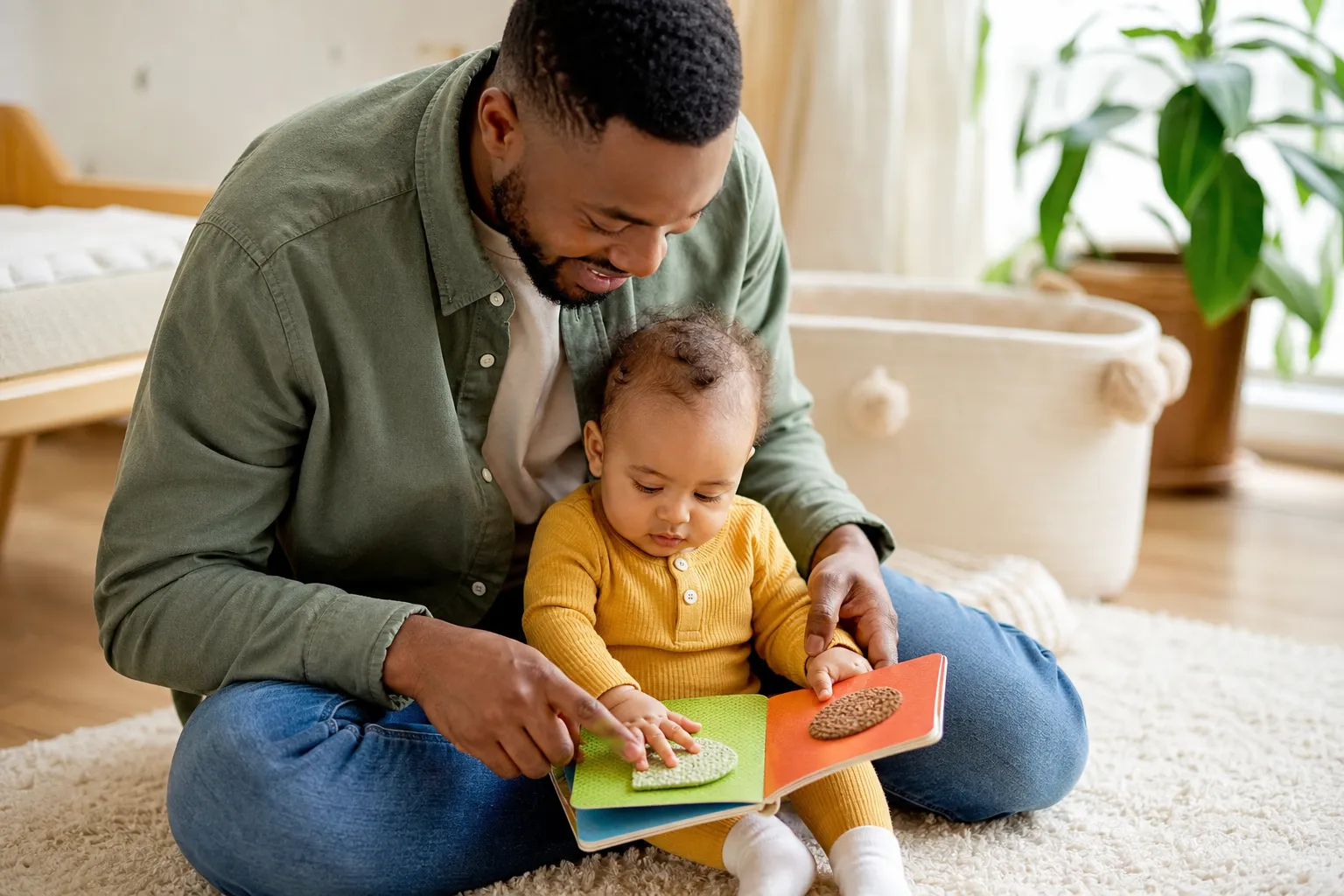
Touch-and-feel books are a strong example. A board book with simple textures gives a baby something to look at, pat, mouth safely if age-appropriate, and hear words about while sitting close to you. That pairing of sensation, language, and connection is what makes the activity so useful.
Outdoor walks can also be sensory play. Light through leaves, a small breeze, birds, neighborhood sounds, changing shadows, and different positions in the stroller or carrier all give infants rich but manageable sensory information. Not every sensory activity has to happen on the floor.
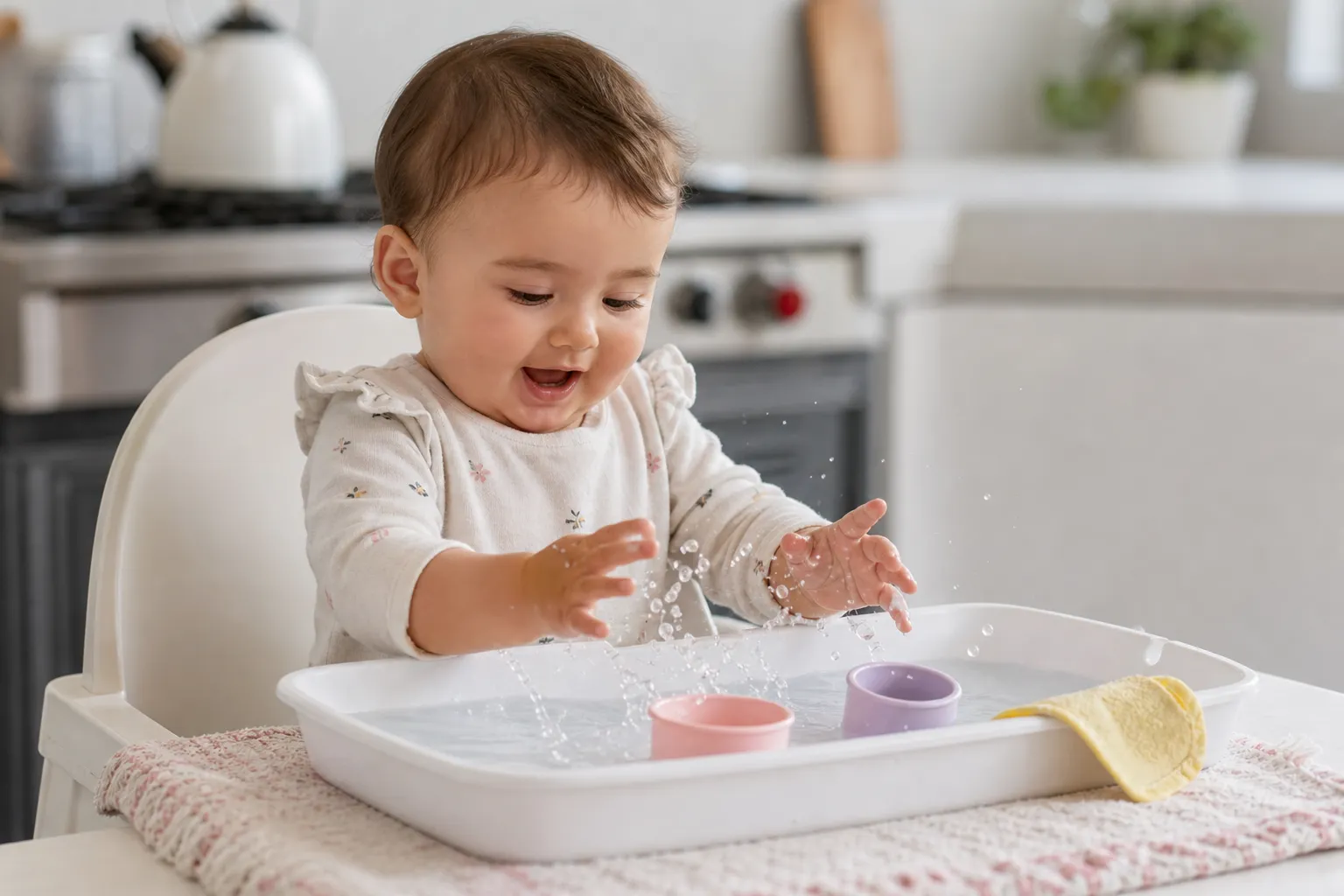
For older infants, supervised water play can work beautifully too. HealthyChildren recommends active play that gives babies chances to move, reach, and explore, and simple water play can fit that pattern well for older babies when it is brief and closely supervised. At home, this can be as simple as a shallow tray, a washcloth, and a cup while you stay right there. Keep it calm, short, and fully supervised.
How To Keep Infant Sensory Play Safe And Useful
Safety matters more than novelty, especially because babies explore with their whole bodies and often with their mouths.
The biggest mistake parents make with sensory activities for infants is assuming that more stimulation is better. Usually the opposite is true. Infants often do best with calmer setups, one or two materials at a time, and a responsive adult nearby. If your baby looks away, stiffens, fusses, or starts to seem flooded, it is okay to stop. Sensory play is supposed to feel engaging, not overwhelming.
Safety basics matter too:
- stay within arm’s reach during sensory play
- choose baby-safe materials with no loose choking hazards
- expect mouthing and plan for it with clean, appropriate items
- avoid strong scents or overstimulating setups
- ask about allergies before trying food-based or strongly scented materials
- keep water play shallow and fully supervised
The safest sensory play often looks ordinary from the outside. That is a good sign. Babies do not need internet-style setups to learn well. They need secure routines, safe materials, and steady interaction.
A Simple Weekly Rhythm For Sensory Activities For Infants
Most parents need a repeatable rhythm more than a giant list of new ideas.
A simple week might look like this:
- One tummy-time focus each day: mirror, toy tracking, face-to-face singing, or reaching practice.
- One texture moment: soft cloths, crinkle book, baby-safe teether, or touch-and-feel pages.
- One music routine: lap songs, scarf play, gentle bouncing, or a shaker with pauses.
- One outside sensory moment: a stroller walk, carrier walk, or a few minutes on a blanket outdoors.
- One older-baby water moment when appropriate: bath splashing, washcloth play, or a shallow tray with close supervision.
That kind of rhythm keeps things simple. It also helps parents notice which kinds of sensory input their baby enjoys most instead of constantly searching for new ideas.
Useful Resources And Related Reading
These sources can help parents ground infant sensory play in child development instead of internet trends alone.
The CDC’s infant parenting guidance is a useful place to start for everyday development and responsive play. HealthyChildren’s activity guidance for babies offers practical ideas around active play, tummy time, and movement. HealthyChildren’s tummy time guidance is also useful for short, repeatable floor-play routines, while Head Start’s infant development framework helps explain how sensory information and movement work together in early learning. You can also browse the full Amabile blog, return to the Sensory Play category, or compare this topic with our guides to sensory activities for toddlers, sensory activities for preschoolers, toddler activities at home, and fine motor activities for toddlers.
When Early Sensory Play Starts Looking Like Music Readiness
Amabile School of Music helps Bay Area families build on early curiosity with warm teaching and confidence-building musical experiences.
Parents often notice musical interest long before a child is ready for formal lessons. A baby quiets when hearing a familiar song, kicks during a lap game, watches closely when you clap a beat, or lights up when movement and sound happen together. Those early responses matter because they show attention, enjoyment, and comfort with repetition.
Amabile School of Music helps Bay Area families build on that kind of interest with warm, high-quality teaching, a welcoming first experience, and performance opportunities that help children grow in confidence over time. Families can explore the school’s two locations, learn how recitals and performances support growth, and review tuition information before deciding on next steps.
For younger children, the next step is rarely about rushing. It is about giving early interest a patient, age-appropriate place to grow. If your child stays drawn to songs, rhythm, movement, and musical games as they get older, a trial lesson or beginner program can be a gentle way to see what happens when that curiosity gets expert guidance.
Frequently Asked Questions
What are the best sensory activities for infants?
The best sensory activities for infants are simple, safe, and matched to a baby’s stage. Good examples include tummy time, mirror play, textured fabric play, gentle music and movement, board books, outdoor walks, and supervised water or bath play for older infants.
Are sensory activities good for infant development?
Yes. Sensory activities can support motor development, attention, early language, bonding, and body awareness when they are safe, supervised, and built into ordinary daily routines.
How long should sensory play last for a baby?
Infant sensory play usually works best in short stretches. A few minutes at a time is often enough, especially for young babies. You can repeat simple activities throughout the day instead of aiming for one long session.
What sensory activities are safe for infants who still mouth everything?
For infants who still mouth everything, choose baby-safe materials and stay within arm’s reach. Good options include soft textured cloths, crinkle toys, baby-safe mirrors, songs, reaching toys, water play with close supervision, and touch-and-feel books made for babies.
How does sensory play connect to early music learning?
Sensory play connects naturally to early music learning because babies respond strongly to rhythm, repetition, voice, movement, and sound. Songs, lap games, gentle beat play, and listening routines help build attention, imitation, and comfort with musical patterns.