
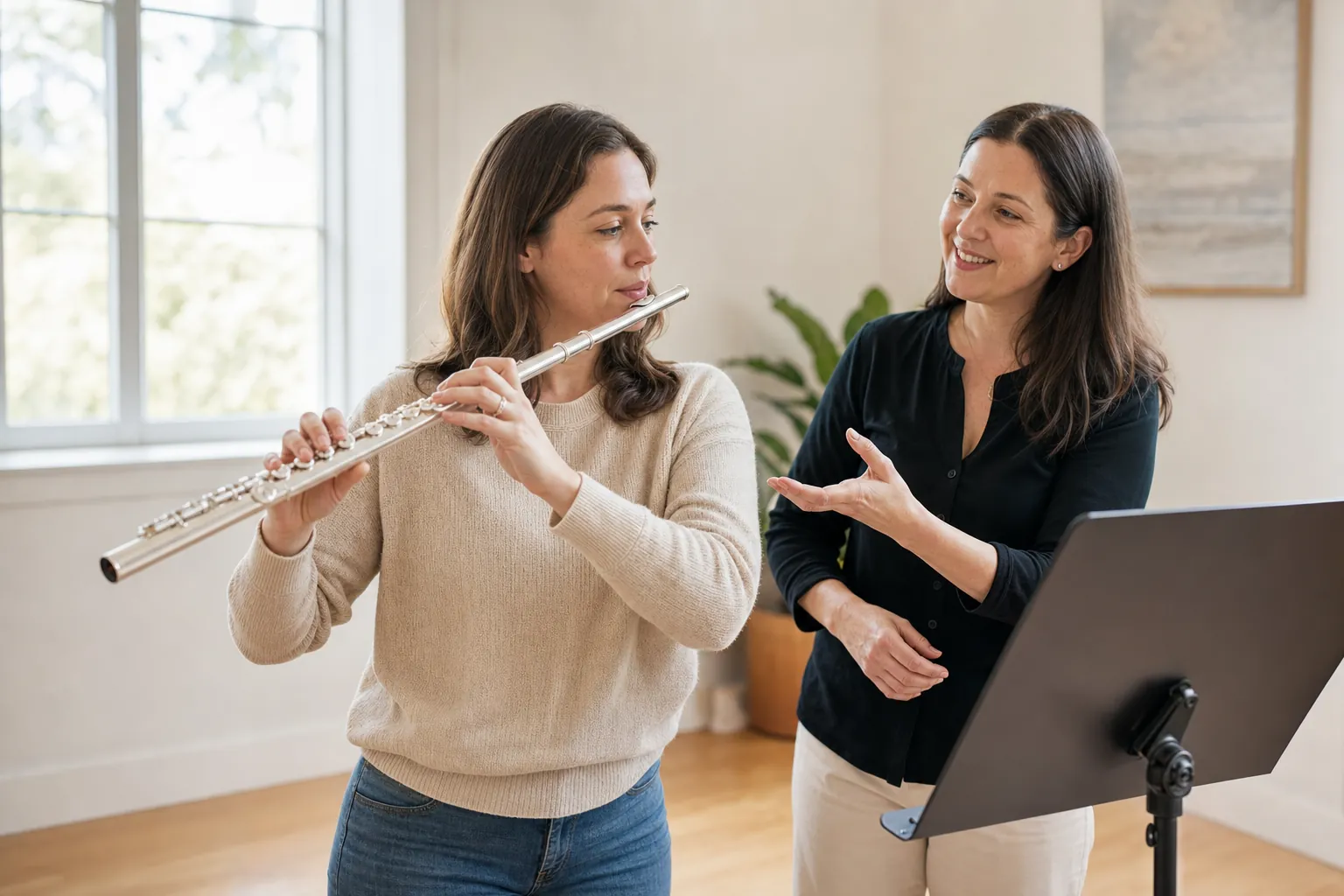
Quick answer
Many beginners can make a recognizable sound and play short patterns in the first few weeks. Playing simple songs with a steady tone, comfortable breathing, and reliable finger movement often takes a few months. Feeling at home across new music takes longer. The useful measure is not a finish line, it is whether the flute feels a little more comfortable and musical this month than last month.
What Does It Mean to Learn Flute?
A first clear note, a complete song, and confident ensemble playing are all meaningful goals. They simply take different kinds of time.
People ask how long it takes to learn flute because they want to know whether the instrument can fit their life. That is a sensible question. A flute can sound graceful and effortless when someone experienced plays it, but the beginning asks a student to combine several new skills: hold the instrument comfortably, direct air across the embouchure hole, hear the sound they are making, move the fingers, read rhythms, and keep the beat.
At first, learning may mean making one centered note, then stopping and starting it without a burst of air. Soon it can mean changing between a few notes, counting a short rhythm, or playing a familiar melody one phrase at a time. A child may be proud of keeping the flute balanced and playing a short tune for a parent. An adult may be delighted when a note that used to sound airy begins to settle into a clear tone.
The desired outcome changes the timeline too. Some students want an after-school activity that develops focus. Some want to join a school band, return after years away, or prepare a piece for a recital. The foundations are similar in each case: posture, steady air, embouchure, listening, rhythm, note reading, and repeatable practice.
A Realistic Flute Learning Timeline
These ranges are planning markers, not promises. Consistent, patient work matters more than trying to advance before a skill feels settled.
Age, hand size, prior musical experience, instrument condition, lesson frequency, and practice all affect the pace. With regular instruction and manageable home practice, many beginners see milestones like these.
| Timeline | What may start to feel possible | What helps most |
|---|---|---|
| First month | Comfortable setup, first notes, simple finger patterns, counting, and short listening games. | A calm setup and short sessions that make the sound feel familiar. |
| 1 to 3 months | A more dependable tone, simple melodies, basic rhythm reading, and clearer starts and stops. | Slow repetition with one specific sound or rhythm goal. |
| 6 to 12 months | More notes, longer pieces, stronger breath planning, a growing reading vocabulary, and early recital or school-band preparation. | Weekly feedback and assignments that connect technique to music. |
| 1 to 3 years | Greater comfort across the instrument, more flexible tone, wider musical styles, and greater independence with new pieces. | Steady fundamentals, patient problem solving, and goals worth practicing for. |
A student does not need to wait years to make music worth sharing. A short melody, a duet, or a first studio performance can be a real early milestone. What takes longer is making tone, fingers, rhythm, and reading dependable enough that a new piece feels like a next step rather than a complete restart.

The First Three Months Build the Sound
The earliest work is less about playing fast and more about helping the flute respond reliably.
Flute beginners often discover that the first challenge is not finding the notes. It is finding the sound. The mouth position, direction of the air, shape of the lips, and balance of the headjoint all affect whether a note speaks clearly. A good first lesson breaks that large mystery into small experiments: try a gentler breath, adjust the angle slightly, listen for the cleanest sound, then repeat what worked.
That is why a new flutist can have a surprisingly successful first month without playing a lot of songs. The student is learning to notice cause and effect. A relaxed breath makes a calmer entrance. A balanced hand position makes a finger change easier. Counting before playing makes the next rhythm less uncertain. Flute teachers approach tone as a combination of listening, air, and repeatable habits, not as a trick that appears all at once.
For children, the beginning should include clear wins. A teacher may use short echo patterns, familiar songs, or rhythm games so the student can hear progress right away. Parents do not need to coach embouchure at home. It is more helpful to protect a small practice window, ask what the assignment was, and notice effort: “That note started more smoothly,” or “You kept the count going.” Adults can use the same approach by choosing one improvement for each session instead of judging the whole day by a perfect song.
Five Things That Change the Timeline
Progress is not a verdict on talent. It usually reflects fit, repetition, feedback, and the music a student wants to make.
- Practice frequency. Ten focused minutes on several days can teach breath, fingers, and rhythm more reliably than one rushed session at the end of the week.
- Instrument fit and condition. A flute that is assembled carefully and working properly gives the student a fair chance to hear what their effort is doing. For younger children, a teacher can help decide whether a curved headjoint or another adjusted setup makes sense.
- Clear assignments. “Practice flute” is vague. “Play three comfortable long tones, then repeat this four-note pattern slowly” gives a beginner a place to begin.
- Listening and feedback. A teacher can hear an airy start, a rushed rhythm, or a tense hand position before a beginner knows how to name it. Early feedback keeps a small habit from becoming frustrating.
- The student's goal. A first school-band part, a favorite melody, a recital, and an adult return to music all call for different repertoire and pacing. Good lessons adjust the path without making anyone feel behind.
Plateaus are normal. A student may feel steady until new finger combinations, a longer phrase, or a larger range asks for more coordination. That does not mean progress has stopped. It usually means the next layer needs repeated, low-pressure attention. The best question is often, “What is one small part I can make easier today?”

A Simple Flute Practice Routine
Practice works best when it is short enough to repeat and specific enough to make the next attempt better.
Beginners do not need an hour-long routine. They need a plan that gets them from opening the case to one useful improvement before attention runs out. A 15-minute starting routine can look like this:
| Minutes | What to do | What it builds |
|---|---|---|
| 2 | Assemble the flute carefully, check posture, and take a calm breath before playing. | A settled beginning |
| 3 | Play a few comfortable long tones or a teacher-assigned warmup. | Tone and listening |
| 5 | Repeat one short rhythm, finger pattern, or difficult measure slowly. | Problem solving |
| 3 | Play a familiar phrase or piece for enjoyment. | Confidence and musical connection |
| 2 | Put the flute away safely and write down one question for the next lesson. | Useful teacher feedback |
Younger children may need even shorter sessions, and that is fine. Teens and adults can add longer reading, scales, or repertoire work as goals grow. On a busy day, one careful long tone and a familiar phrase still protect the habit. The point is not to win every practice day. It is to give the body and ear enough calm repetitions that the flute begins to feel familiar.
Milestones Worth Celebrating
The best motivation comes from noticing real changes, not waiting for a flawless performance.
Flute students can overlook their own progress because every new note introduces another job. A beginner who once needed help putting the instrument together may start preparing independently. A child who struggled to make the first note speak may begin an entire phrase with a clear sound. An adult who avoided playing in front of anyone may decide to share a short melody with a friend.
Useful milestones include assembling the flute with care, making an even tone, reading a short rhythm, recovering after a missed note, playing with a recording, finishing a first piece, or preparing something small to share. Those changes make later scales, ensembles, phrasing, and repertoire possible.
Performance can be a meaningful goal too, but it does not need to wait until a student feels finished. Amabile's recital opportunities give students who want a clear milestone a welcoming reason to practice. The point is not perfection. It is to let a student share what regular effort has made possible.

How Amabile Helps Flute Students Progress
A good flute path combines patient instruction, realistic practice, and musical goals that make students want to keep going.
At Amabile School of Music, new flute students can work with a teacher who turns a large goal into clear weekly steps. That may mean helping a child build an encouraging practice routine, supporting a school-band student with reading and confidence, or helping an adult return to music without feeling judged for where they are starting.
Families and students can explore flute lessons in San Francisco. Adults who are starting fresh or returning after years away can also see how adult flute lessons are shaped around individual goals. For the practical next steps, review lesson options and tuition, the school's San Francisco and Moraga locations, or online music lessons when a flexible format is useful.
Frequently Asked Questions
Can I learn flute in three months?
Many beginners can make a more consistent sound, read simple rhythms, play short melodies, and build a useful practice routine in three months. Feeling comfortable across unfamiliar pieces takes longer, but three months can create a real foundation.
Is flute hard to learn for adults?
Adults can learn flute very successfully. They often bring focus, musical taste, and clear reasons for learning. Breath, embouchure, and fingers still need repeated practice, but a teacher can keep the early work organized and manageable.
How often should a beginner practice flute?
Short, focused sessions on several days each week are a strong place to begin. Many beginners do well with 10 to 20 minutes at first, adjusted for age, energy, goals, and the teacher's assignment.
What age can a child start flute lessons?
Readiness matters more than one exact birthday. A teacher can look at a child's interest, attention, comfort holding the instrument, hand size, and ability to follow short directions, then recommend the best starting approach.
Do I need my own flute before starting lessons?
Not always. A trial lesson is a useful time to discuss instrument options, fit, and the kind of setup that makes sense for the student's age and goals.
Related Posts
More practical guidance for families and adult beginners building a steady music-learning routine.
How Long Does It Take to Learn Violin?
A realistic guide to early violin progress, practice routines, and meaningful milestones.
How Long Does It Take to Learn Guitar?
A practical look at beginner guitar milestones, practice habits, and long-term progress.
How to Read Sheet Music for Beginners
Build a clearer picture of written notes, rhythm, and calm reading practice.