Quick answer
The best math activities for preschoolers use real objects and short playful routines to build early number sense, one-to-one counting, shape recognition, sorting, patterning, and comparison. Good examples include counting snacks into cups, sorting buttons by color, building shape pictures with blocks, making simple patterns, and using movement games to count steps, claps, or jumps.
That approach lines up with what early childhood experts recommend. The U.S. Department of Education’s What Works Clearinghouse says young children benefit from opportunities to practice accurate one-to-one counting, compare quantities, recognize and combine shapes, extend patterns, and use measurement language in everyday routines. NAEYC also emphasizes that preschool math can grow naturally through daily play, materials, and interactions rather than feeling like formal seatwork.
For families, that is good news. It means you do not need a special curriculum to start. A bowl of snacks, a stack of blocks, a few toy animals, or a basket of leaves can become strong preschool math practice when you use them with intention.
What Preschool Math Actually Includes
Preschool math is broader than counting to ten. It includes the early ideas that help children make sense of number, space, order, and comparison.
When parents hear math activities for preschoolers, they often picture number tracing or counting out loud. Counting is part of it, but early math is wider than that. Preschoolers are also learning to match one object to one count word, notice more and less, sort items into groups, spot patterns, name shapes, compare sizes, and talk about where things are in space.
Those are not side skills. They are the foundation. The federal Teaching Math to Young Children guidance highlights counting, shape work, patterning, measurement language, and using math in ordinary classroom routines. NAEYC makes a similar point in its family guidance on how preschoolers naturally explore math.
- counting and one-to-one correspondence
- comparing more, less, bigger, and smaller
- sorting by color, size, shape, or type
- recognizing, naming, and building shapes
- copying, extending, and creating patterns
- using measurement words such as long, short, heavy, and light
Once you see preschool math that way, it becomes much easier to notice good activity ideas hiding inside normal family life.
Why Hands-On Math Works Better Than Abstract Practice
Most preschoolers understand early math ideas more easily when they can move and manipulate real objects.
A child can say number words in order and still struggle to count objects accurately. That is common. The difference is usually one-to-one correspondence: touching or moving one item for each number said. The IES toolkit on teaching math to young children points out that young children often need help coordinating count words with actual objects rather than waving over a group and guessing.
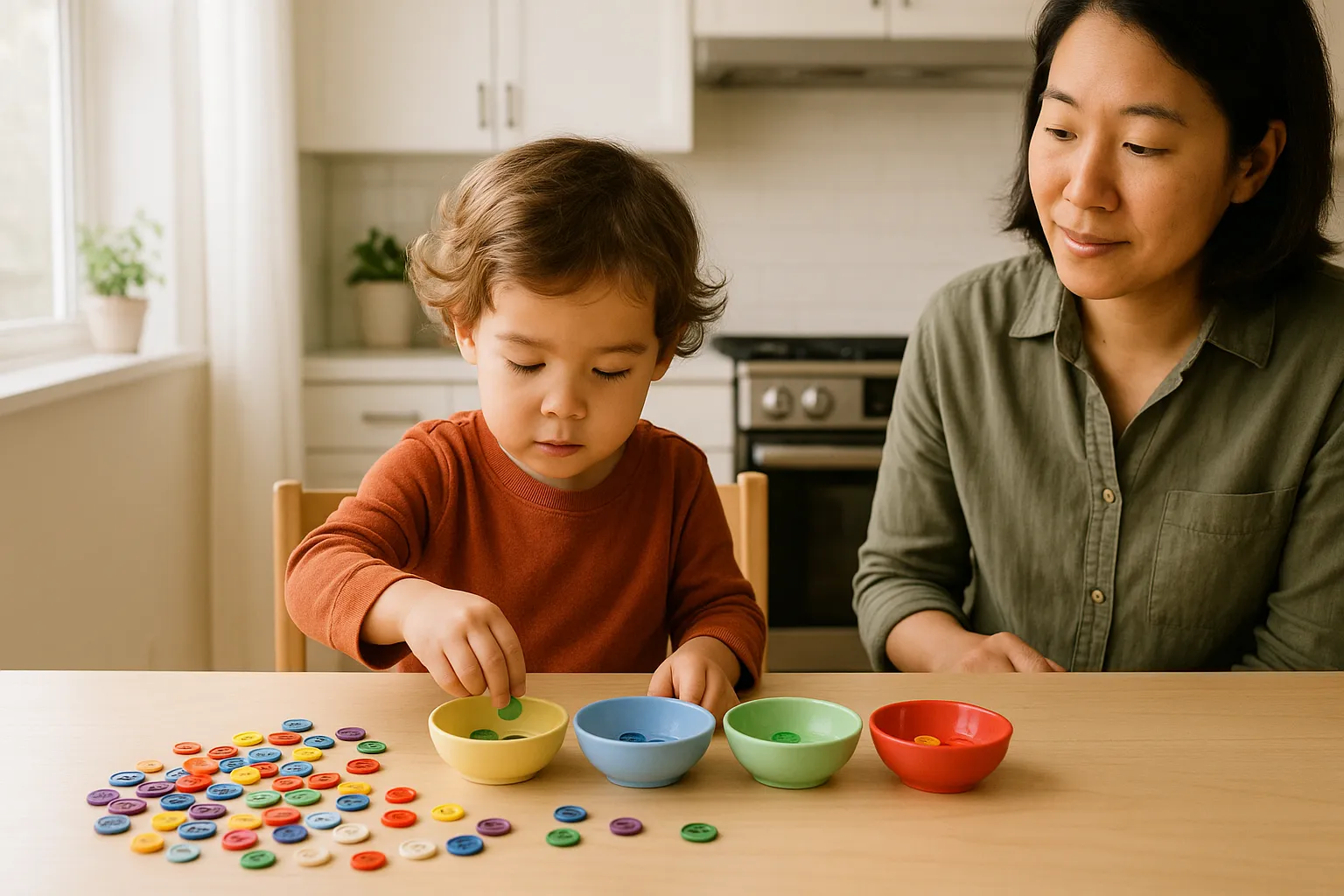
That is why concrete materials matter. When a child moves one pom-pom into one cup, parks one toy animal on one number card, or puts one cracker on each napkin, the math becomes visible. The activity slows the thinking down enough for the concept to make sense.
Hands-on math also tends to feel calmer than paper practice. It fits shorter attention spans, gives children something to do with their bodies, and creates easy chances for conversation. You can say, You put one button in each bowl, or This row has more than that row, and the child can immediately see what you mean.
Easy Counting Activities for Preschoolers
Counting activities work best when the child can see, touch, and move each object one at a time.
If you only keep a few preschool math activities in rotation, make some of them counting activities. Counting shows up in almost everything else, so it is worth revisiting often. The trick is to avoid making it too abstract too soon.
Here are easy counting activities for preschoolers that usually work well at home:
- Snack cup counting: count crackers, berries, or cereal pieces into small cups.
- Toy parking: park one car in each taped parking space while counting aloud.
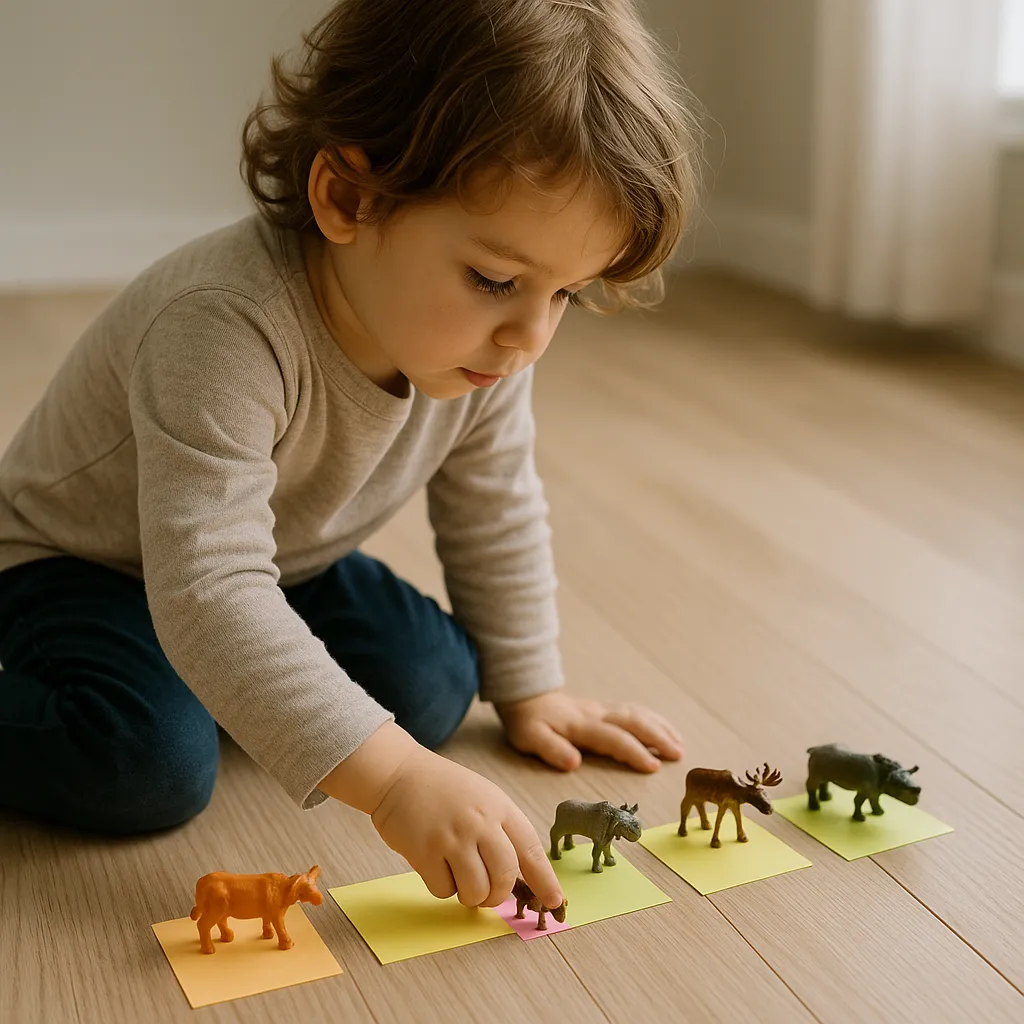
- Animal line-up: place one toy animal on each number card or sticky note.
- Stair counting: count steps as you go up or down together.
- Clap and count: clap, stomp, jump, or tap a drum a certain number of times.
- Muffin tin counting: place a given number of pom-poms, buttons, or blocks into each space.
NAEYC’s family resource on supporting math with materials in your home includes simple counting and one-to-one correspondence ideas built from ordinary household supplies. That is a strong model because it keeps the setup realistic for parents.
If your child likes movement-heavy play, pairing counting with rhythm can help. Our guides on preschool nursery activities and indoor activities for kids show how songs, claps, and motion can make learning feel more natural.
Sorting and Matching Build Early Number Sense Too
Many parents think sorting is separate from math, but it is one of the clearest early math habits a preschooler can practice.
Sorting teaches children to notice attributes and make decisions about categories. That may sound simple, but it is a big deal. A child who can sort buttons by color, bears by size, or leaves by shape is practicing comparison, classification, and attention to detail.
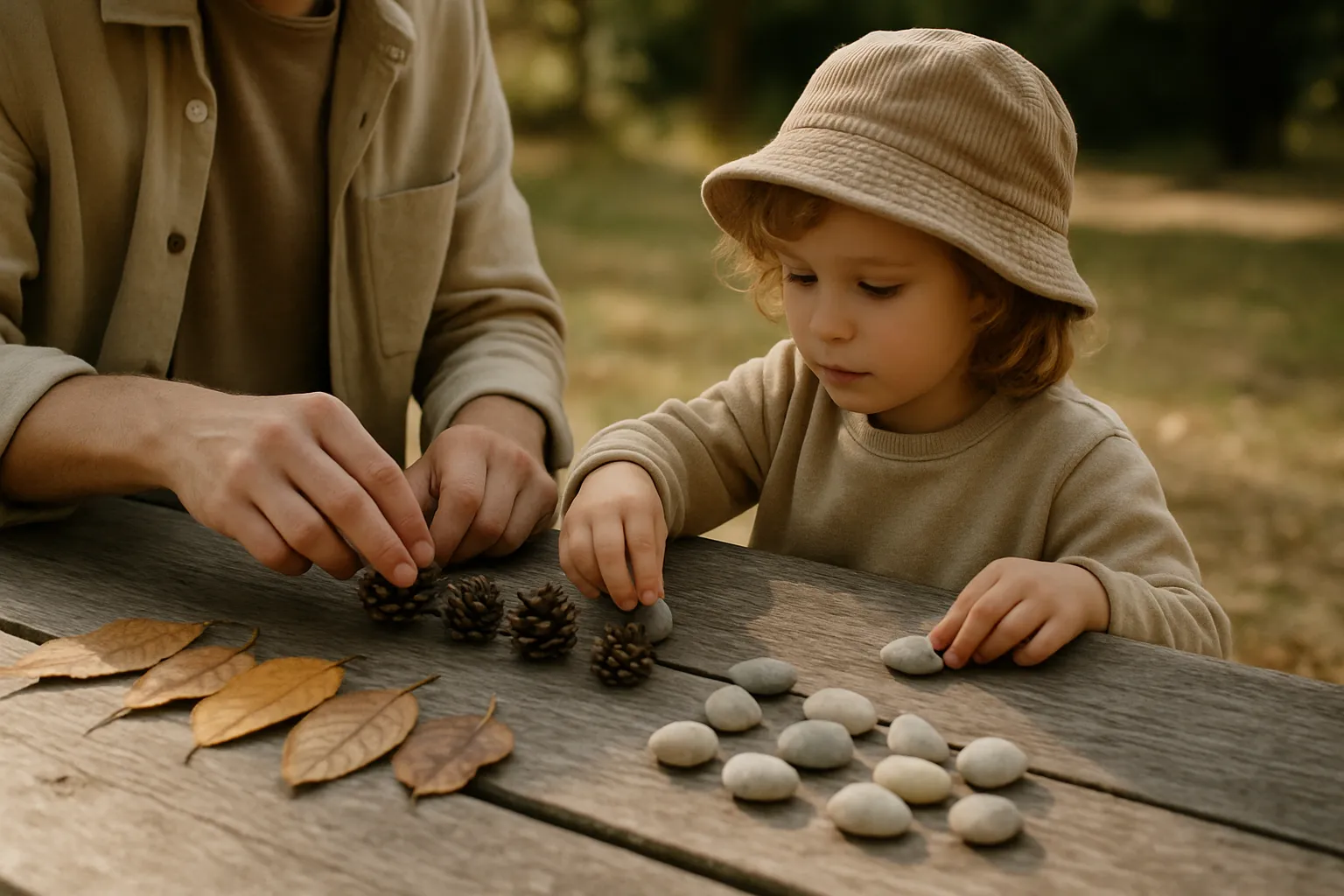
Try sorting with objects that already interest your child: toy animals, socks, forks and spoons, leaves, stones, crayons, bottle caps, or blocks. Start with one attribute, such as color. Later, switch to size or shape. Then ask simple questions such as Which group has more? Which pile is smaller? Can we put the long ones here and the short ones there?
This is also a useful point to bring in matching. One spoon for each bowl. One sock for each foot. One plate for each person. That kind of everyday pairing strengthens the same one-to-one thinking children need for accurate counting later on.
Shape Activities Help Preschoolers Notice Space and Structure
Shape work becomes stronger when children build, combine, and talk about shapes instead of only naming them on a page.
Shape activities for preschoolers are most useful when they move past a single flashcard version of circle, square, and triangle. NAEYC’s guidance on discovering shapes and space in preschool encourages helping children recognize, compare, make, and combine shapes in different sizes and orientations.
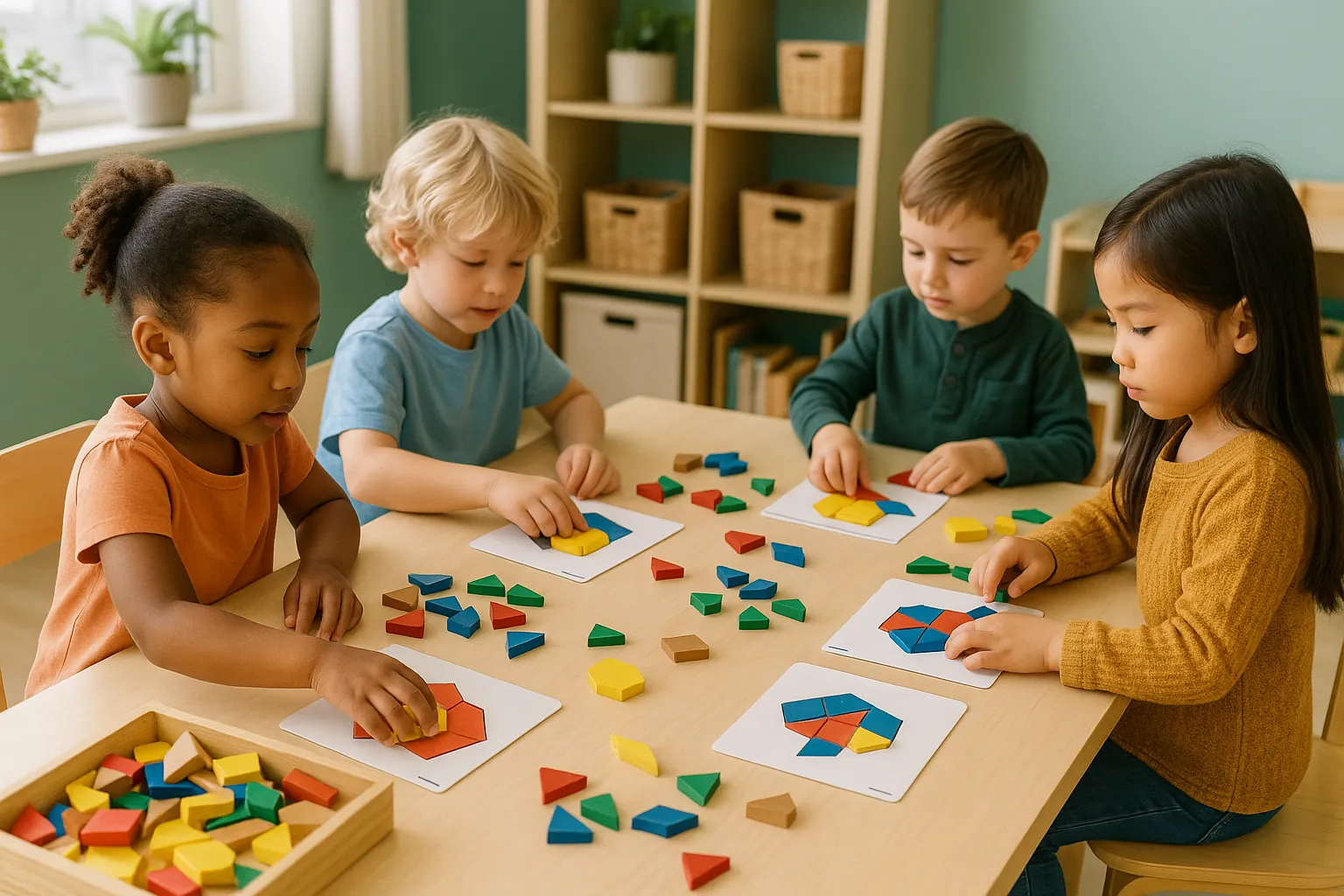
That means shape learning can look like building a house from rectangles and triangles, using painter’s tape to outline shapes on the floor, finding circles and rectangles around the room, or making shape pictures with paper cutouts. Pattern blocks are especially useful because children can rotate, combine, and compare pieces while they work.
Simple shape activities to try:
- shape hunt around the kitchen or living room
- build a picture from two or three paper shapes
- trace blocks or lids to compare circles, squares, and rectangles
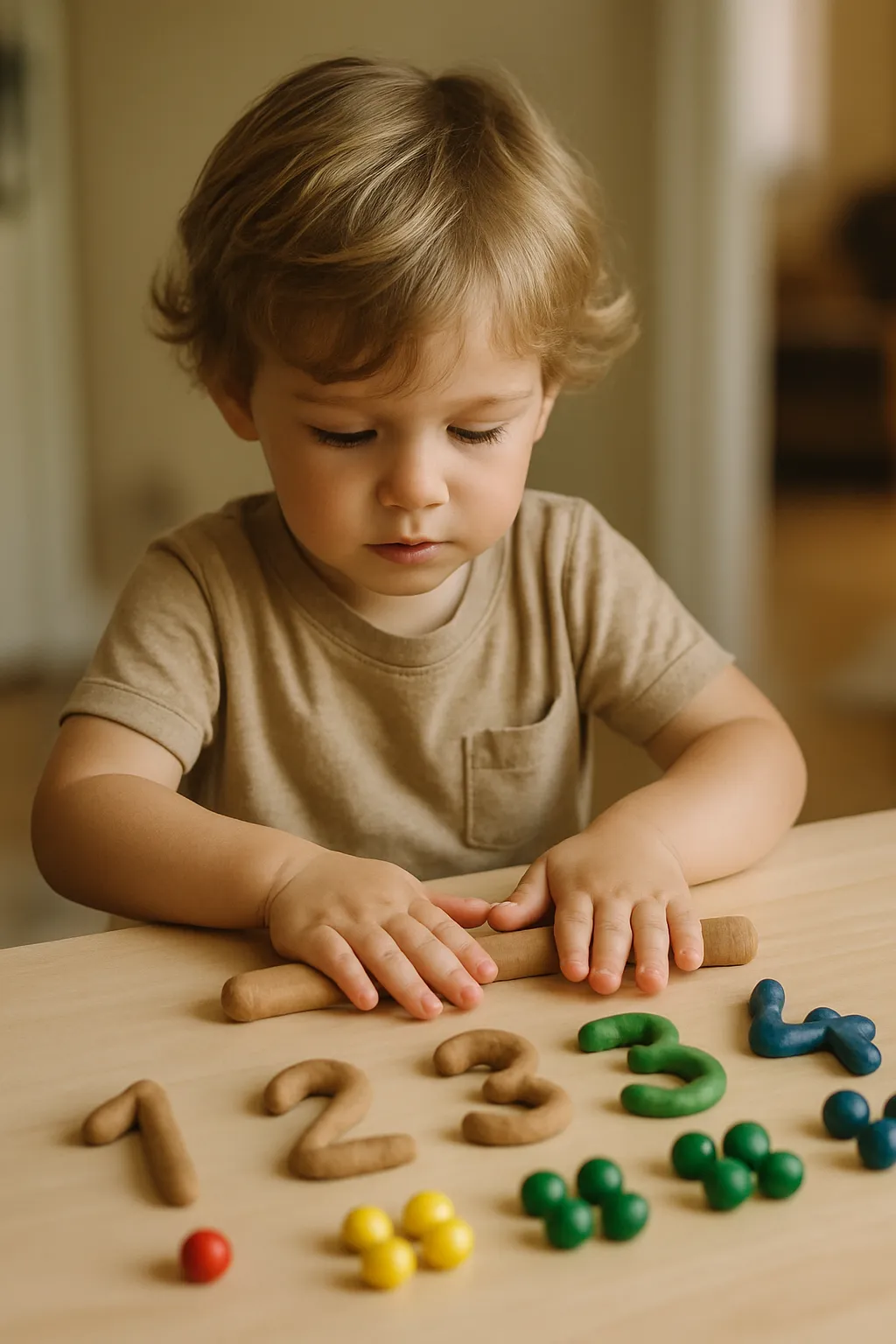
- make shapes with craft sticks, straws, or play dough
A simple prompt that works well
Instead of asking only What shape is this, try questions such as How do you know, What else looks like this, or Can you make one with these pieces. Those prompts keep the child thinking instead of just naming.
Pattern Activities Prepare Children for Bigger Math Later
Patterns are one of the easiest ways to make preschool math feel playful while still building real thinking skills.
Patterns help children notice order, repetition, and what comes next. Those ideas eventually connect to algebraic thinking, but for preschoolers they can stay very simple. The IES family resource on teaching math to young children notes that patterns in everyday activities and environments help lay that foundation.
Good first patterns are usually visual or physical: red blue red blue, clap stomp clap stomp, big block small block big block small block. Once a child can copy a pattern, ask them to continue it or invent one for you.
Easy pattern activities include:
- bead or cereal patterns on a string
- block patterns in a row
- movement patterns such as jump clap jump clap
- leaf and stone patterns outdoors
- drum or rhythm patterns with a tambourine or table taps
That music connection can be especially helpful for children who respond quickly to sound and repetition. Rhythm naturally supports counting, sequencing, and anticipation. If your child lights up during clap patterns, echo games, or beat-based movement, that is often worth paying attention to.
Measurement and Comparison Belong in Preschool Math Too
Preschoolers do not need rulers to begin thinking mathematically about size, length, weight, and amount.
Measurement at this age is mostly about language and comparison. Which tower is taller? Which stick is longer? Which pumpkin feels heavier? Which cup holds more water? These questions teach children to notice differences and describe them clearly.
You can build comparison into ordinary routines. Compare shoe sizes at the door. Line up stuffed animals from shortest to tallest. See which spoon is longer. Fill two containers in the bath and talk about full, empty, more, and less.
The What Works Clearinghouse also recommends helping young children use measurement vocabulary such as long and short or big and small. That kind of language does not need a formal lesson. It just needs repetition in a real context.
A Simple Weekly Preschool Math Rhythm That Parents Can Actually Keep Up
Most families need repeatable structure more than they need endless new activity ideas.
If planning is the hard part, use a small weekly rhythm instead of trying to invent something new every day:
- One counting day: cups, snacks, toys, stairs, or pom-poms.
- One sorting day: buttons, socks, leaves, crayons, or blocks.
- One shape day: shape hunt, pattern blocks, or paper cutout pictures.
- One pattern day: beads, rhythms, block rows, or movement patterns.
- One comparison day: tall and short, heavy and light, full and empty.
Each activity only needs 5 to 15 minutes. Short, successful repetition usually works better than stretching the lesson until everyone is done with it. That is especially true for preschoolers who are still building attention, tolerance for direction, and confidence.
If you want nearby ideas that support the same age group in a different way, you can also explore our guides to preschool art activities, toddler activities at home, and kindergarten readiness.
How to Tell When a Child Is Ready for More Structured Enrichment
At some point, playful home activities start revealing that a child may enjoy more guided learning too.
Parents often notice the signs before they name them. A child asks to repeat the same counting game. They enjoy pattern copying. They follow short multi-step directions. They stay engaged long enough to finish a simple task. They like being shown how to do something and then trying it again.
That does not mean a preschooler needs a packed schedule. It just means they may be ready for a gentle step into guided enrichment. For some children, that is a class built around movement, rhythm, and listening rather than academics on paper.
This is one reason music can fit so naturally into the preschool years. Counting beats, hearing patterns, moving in sequence, taking turns, and building confidence through repetition all overlap with the same readiness skills many parents are already seeing at home.
How Amabile Can Help
Amabile School of Music helps Bay Area families turn early curiosity, rhythm, and pattern-loving play into confident first steps in music.
Many parents who start with preschool activity ideas eventually realize their child is drawn especially to songs, beat patterns, movement games, or keyboard exploration. That is where Amabile School of Music can be a strong next step. Families choose Amabile for warm, high-quality teachers, a trusted local track record since 2008, and recital opportunities that help children build confidence over time.
For younger beginners, the school’s Little Mozart group class gives age-4 children a welcoming entry point through musical games, keyboard basics, and a mini-recital. Families can also explore all programs, learn about recital opportunities, review both locations, or visit the FAQ page before deciding.
If your preschooler already responds to rhythm, repetition, and guided play, a trial lesson or beginner class can be a simple way to see what happens when that interest gets warm, expert support.
Frequently Asked Questions
What math should preschoolers practice at home?
Preschoolers usually benefit most from playful practice with counting, sorting, shapes, patterns, comparing sizes, and simple measurement language. Short hands-on activities with real objects work better than formal worksheets for most children this age.
How long should math activities for preschoolers last?
Many math activities for preschoolers work best for about 5 to 15 minutes. The best length depends on the child’s interest, energy, and the activity itself.
Are worksheets good for preschool math?
Some children enjoy simple paper activities, but most preschoolers learn math more effectively through movement, sorting, building, counting real objects, and talking with an adult about what they notice.
What are easy counting activities for preschoolers?
Easy counting activities include putting snacks into cups, counting toy animals onto number cards, clap-and-count games, counting steps, and moving buttons or pom-poms one at a time into bowls.
How can parents tell if a preschooler is ready for more structured enrichment?
Parents often notice readiness when a child enjoys short guided activities, repeats patterns, follows simple directions, asks to do favorite learning games again, and stays engaged long enough to finish a small task with support.