Quick answer
The best preschool nursery activities are short, repeatable, and balanced across movement, hands-on exploration, music, language, and pretend play. A strong daily mix usually includes one active game, one sensory or fine-motor activity, one music-rich routine, and one calmer language activity such as books or storytelling.
That balance matters because preschoolers learn through active play, repetition, and back-and-forth interaction. The CDC says children ages 3 to 5 should be physically active throughout the day, and NAEYC notes that play helps children build attention, persistence, curiosity, and problem solving. In other words, preschool nursery activities work best when they do more than fill time. They should help a child move, think, listen, and participate in a way that feels natural.
For many families, the most useful activities are the ones that can be repeated with small variations. Preschoolers often prefer familiar structures with one new twist rather than a completely different setup every day. That is why action songs, playdough, simple sorting games, picture books, and rhythm play stay useful far longer than complicated one-time crafts.
What Makes Preschool Nursery Activities Actually Work
The strongest preschool activities are simple to start, easy to understand, and flexible enough to match the child in front of you.
When a preschool activity works, a few things usually happen. The child knows how to begin, the adult does not need to over-explain, and the activity offers enough structure to hold attention without becoming rigid. Parents often get better results by choosing a clear action such as sort, match, tap, roll, jump, sing, build, or pretend, rather than by trying to create an elaborate setup.
It also helps to think in terms of energy. If your child is restless, start with movement. If they seem flat or unfocused, start with a novelty hook such as a mystery bag or a silly voice. If they are already calm, go straight into the more detailed activity. A well-timed activity often matters more than a clever one.
- Use materials you can pull out in under five minutes.
- Choose one main goal for each activity instead of trying to teach everything at once.
- Repeat favorite activities with small changes instead of chasing endless novelty.
- Keep enough adult support nearby to help, but not so much that the child loses ownership.
Start With Movement To Help Preschoolers Focus Better
Many preschool days go more smoothly when the first activity lets children use their bodies before asking for sitting and fine focus.
This is one of the most useful shifts parents can make. If a preschooler has energy in their body, asking them to begin with a seated worksheet, long craft, or quiet task often creates friction right away. The CDC guidance for children ages 3 to 5 emphasizes active movement throughout the day, which is a good reminder that motion is part of learning at this age, not a break from it.
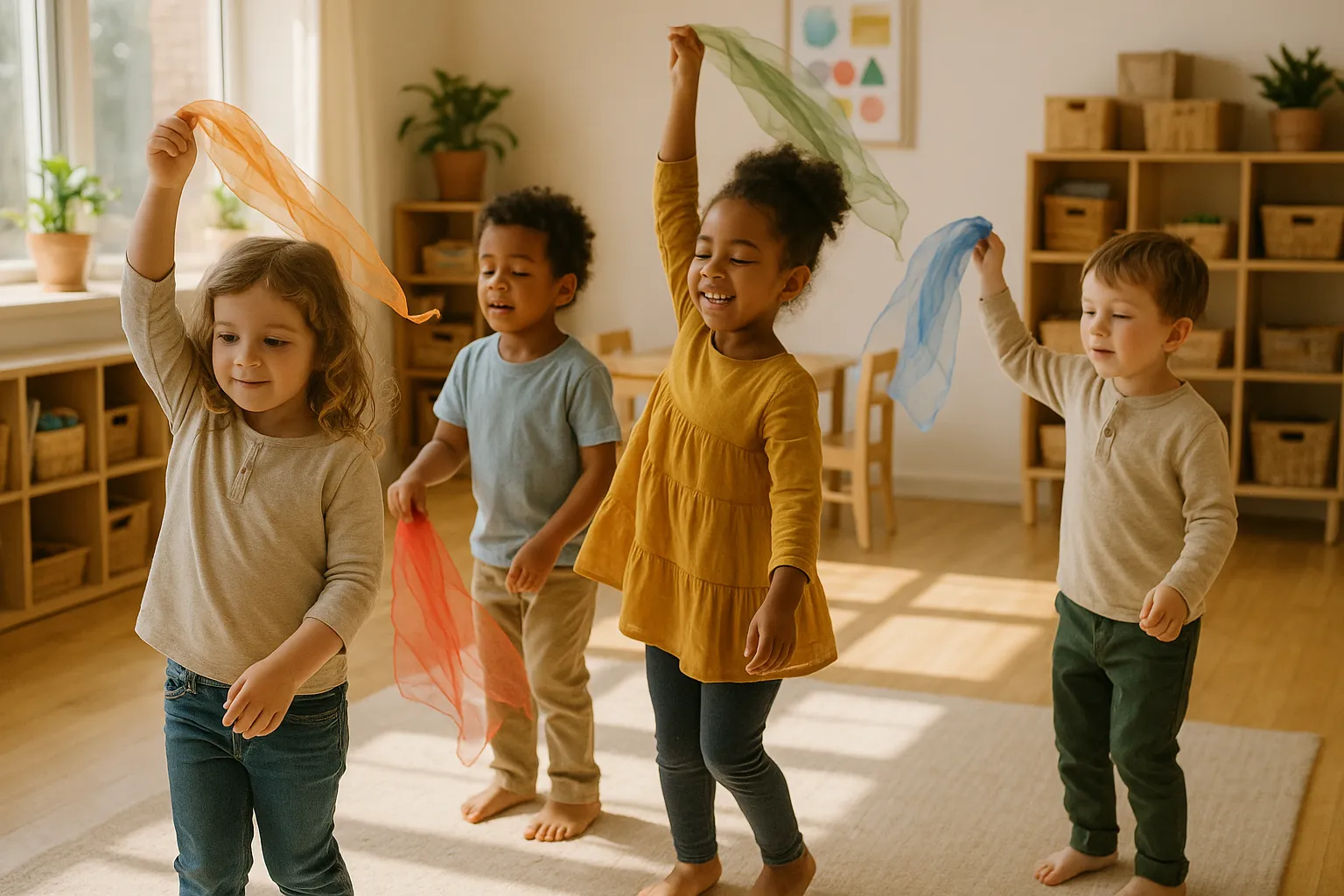
Good movement-based preschool nursery activities include scarf dancing, hopping along taped shapes, animal walks, beanbag tosses, hallway obstacle courses, and freeze games with simple directions. These work because they combine listening with movement. The child is not only burning energy. They are also practicing following directions, body control, and attention shifting.
If you need something that feels organized but playful, use a pattern such as jump, clap, turn, freeze. Once your child knows the sequence, change one part at a time. That keeps the game familiar while still building listening and memory.
Use Sensory And Fine-Motor Activities For Hands-On Learning
Preschoolers often learn best when their hands are busy and the task has one simple, satisfying action at the center.
Playdough, pouring, scooping, tearing paper, sticker scenes, sorting pom-poms, and simple cutting practice all work well because they give children a physical job to do. NAEYC highlights how play can support approaches to learning such as persistence and problem solving, and hands-on activities are where many preschoolers practice those skills most naturally.
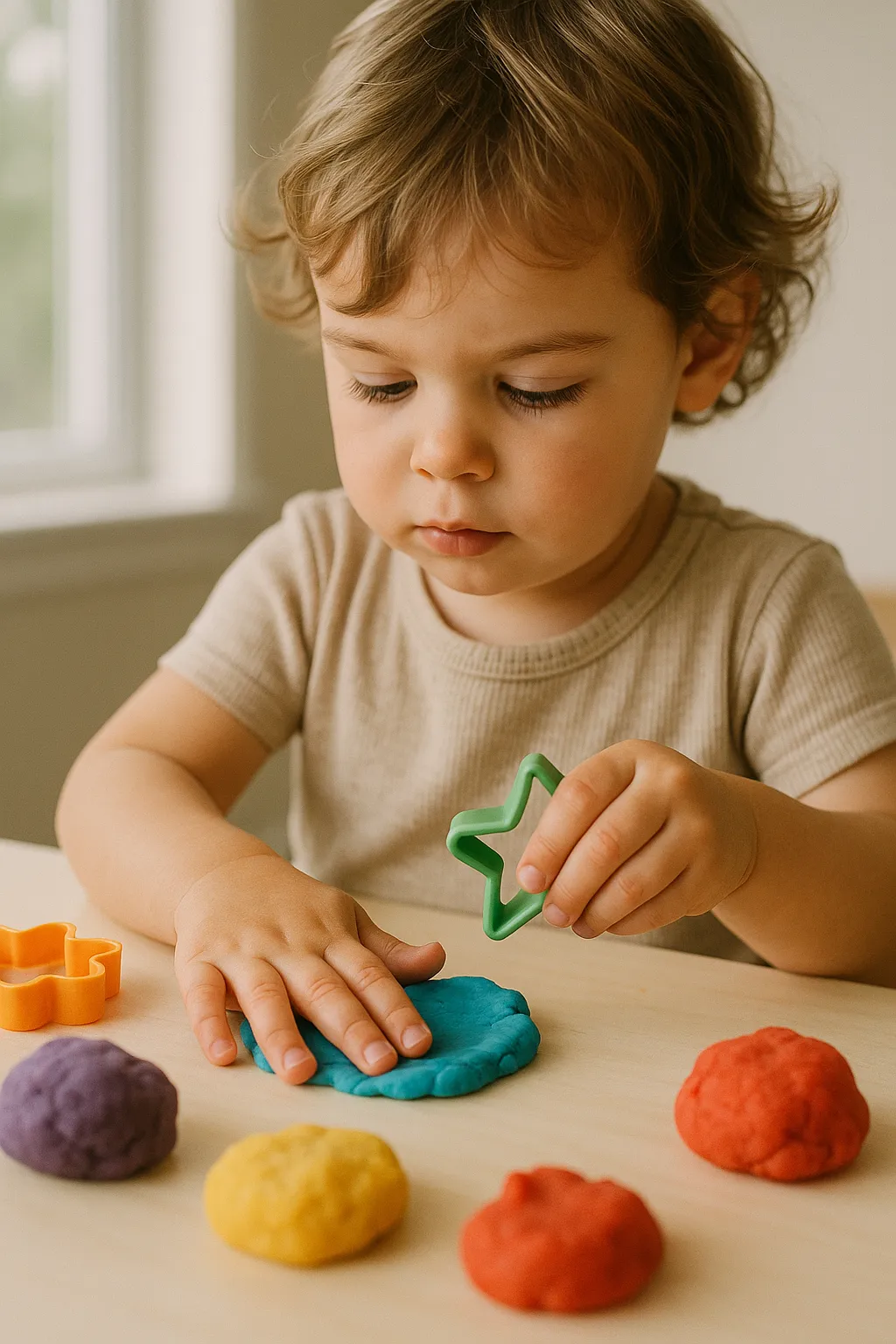
Playdough is especially useful because it can support fine-motor strength, imagination, and language all at once. NAEYC specifically points out that playdough helps children strengthen the small hand muscles they later use for writing, while also supporting social play, literacy, science, and math. That makes it one of the easiest high-value preschool nursery activities to keep in rotation.
To make a sensory activity more meaningful, add simple language. Ask questions such as which is bigger, which one is smooth, can you make three, or what happens if we press harder. You do not need a formal lesson script. A few well-placed prompts are enough.
Make Music A Core Part Of The Routine
Music is one of the easiest preschool nursery activities to repeat because it combines movement, listening, memory, and joy with very little setup.
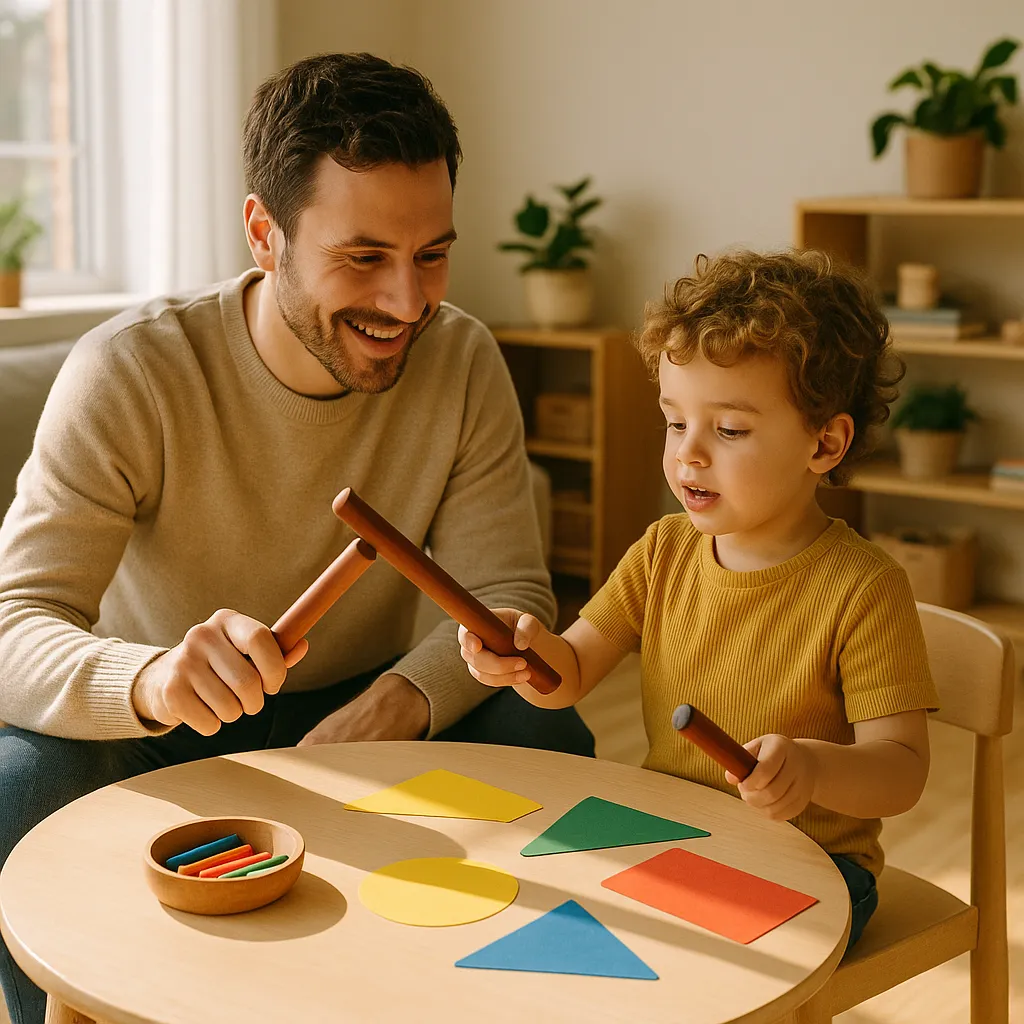
Music works unusually well for preschoolers because it can organize the room without making the child feel controlled. Action songs, clapping patterns, rhythm imitation, shaker games, call-and-response singing, and march-and-freeze activities all help children listen and respond while still feeling playful. Music also gives adults an easy way to build language, turn-taking, and confidence into ordinary play.
There is also a practical reason parents return to music-rich activities. They can be used across moods. A lively song can wake up a slow morning. A simple beat-copying game can bring focus back after a transition. A quiet goodbye song can help end the activity without a struggle. Few preschool activities are that flexible.
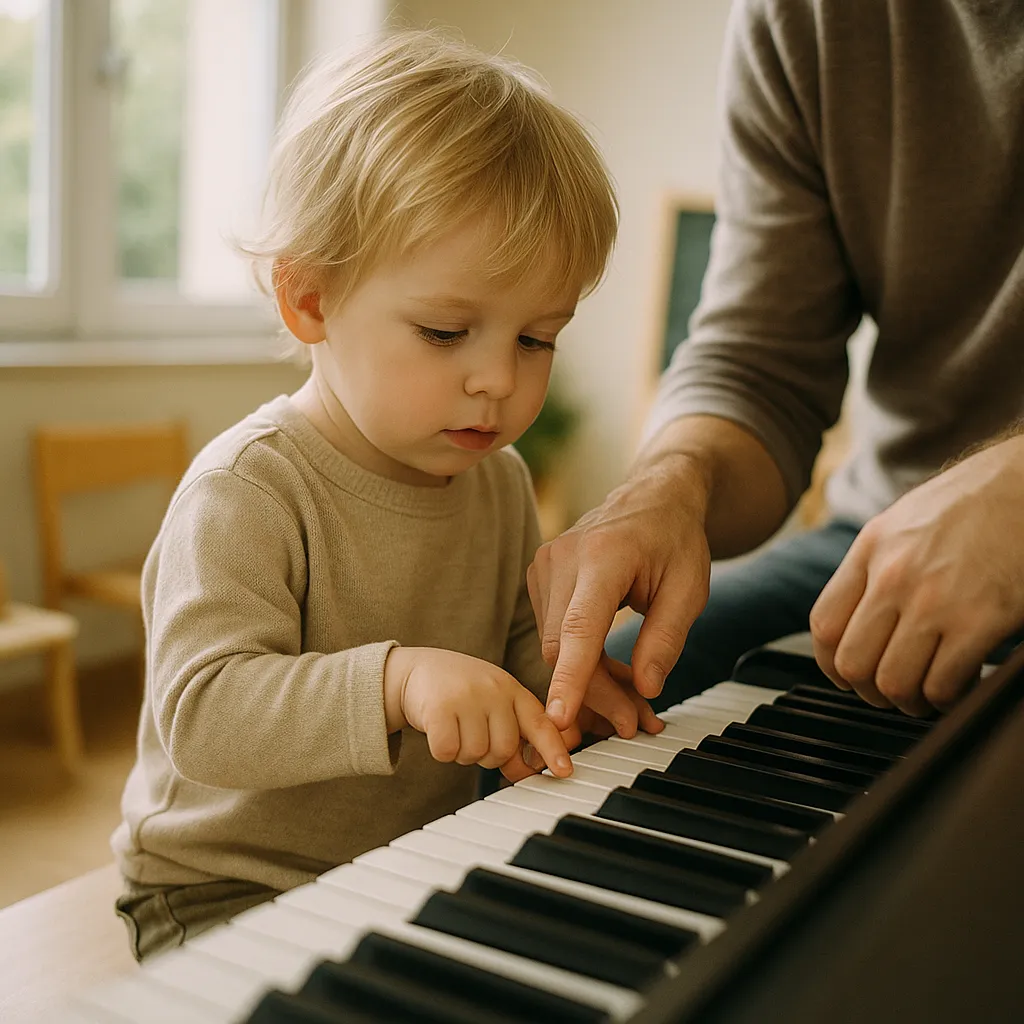
This is also where many parents start noticing genuine musical interest. A child keeps asking for the same songs, taps patterns on the table, wants to lead the actions, or drifts toward the piano whenever one is nearby. Those repeated signs are worth noticing because they often point toward a class or lesson being a good next step.
If you want related ideas beyond this article, our guides on toddler activities at home and indoor activities for kids can help you adapt the same rhythm for younger or wider-age family routines.
Use Books, Storytelling, And Pretend Play To Build Language
Preschool learning gets stronger when children hear, repeat, act out, and retell ideas instead of only sitting still and listening.
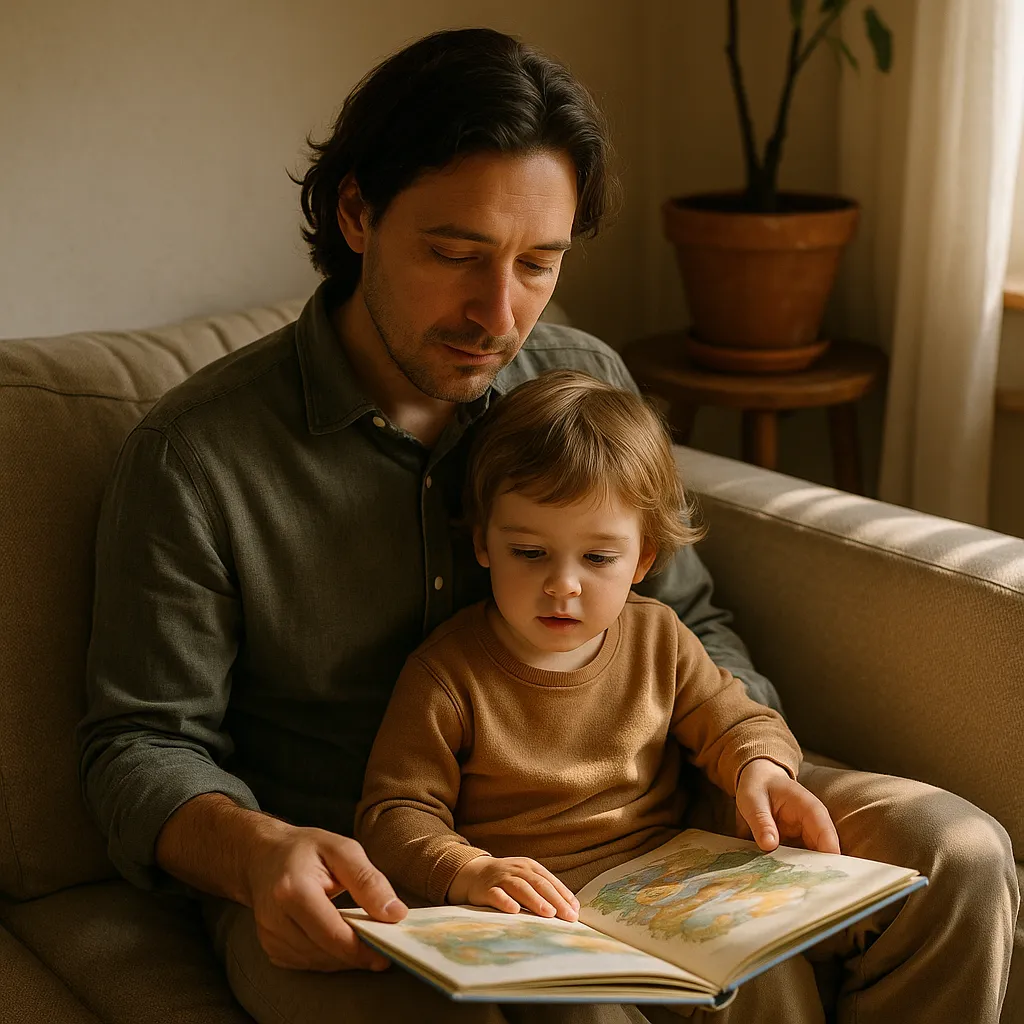
Picture books are valuable not only because they support reading readiness, but because they create a shared language routine. Read a short story, then ask the child to find a shape, copy an animal sound, retell one part, or act out a favorite moment. NAEYC’s family guidance on learning through play emphasizes that engaged play helps children develop focus, persistence, curiosity, and problem solving. Story-based play is a simple way to do that without pressure.
Pretend play matters for the same reason. Playing restaurant, music class, grocery store, doctor, or puppet show helps preschoolers practice sequencing, vocabulary, and social understanding. You do not need special props. A scarf can become a costume, a spoon can become a microphone, and stuffed animals can become the audience.
For many families, a good calm block looks like this: one short book, one retelling question, and five minutes of acting it out. That keeps the activity from becoming passive while still calming the room.
A Simple Preschool Activity Rhythm Parents Can Reuse
When you do not want to keep inventing new plans, this structure gives the day more shape without making it feel rigid.
- Start with movement: scarf dance, animal walks, taped-shape jumping, or freeze games.
- Shift to hands-on play: playdough, sorting, stickers, pouring, or cutting practice.
- Add one music moment: action song, rhythm copying, shaker game, or simple keyboard exploration.
- Slow the pace with language: picture book, retelling, puppet play, or pretend scenes.
- End with a clear finish line: one final song, a mini performance, cleanup routine, or showing what was made.
This kind of sequence works well because it reflects how preschoolers actually move through attention. They usually need a mix of active, tactile, expressive, and calm moments. A balanced rhythm is often more effective than a bigger pile of ideas.
Useful Resources And Related Reading
These sources and related articles can help parents build stronger activity routines with real developmental value behind them.
The CDC’s page on physical activity for children is a helpful reminder that preschoolers need movement throughout the day. NAEYC’s family article on supporting learning with play explains how engaged play helps children build focus, problem solving, and persistence. Their article on playdough power is also especially useful for parents looking for simple fine-motor ideas. HealthyChildren’s article on play tips for preschool-age children is another strong resource for practical home ideas.
You can also browse the full Amabile blog, return to the Preschool Activities category, or compare this topic with our article on rainy day activities for kids when you need indoor ideas that still feel active and purposeful.
When Preschool Play Starts Looking Like Real Musical Interest
Amabile School of Music helps Bay Area families turn playful curiosity into confident early progress through warm teaching and frequent performance opportunities.
Preschool nursery activities often reveal more than parents expect. A child keeps returning to rhythm games, wants to sing the same song again, turns books into performances, or lights up whenever a keyboard appears. Those patterns matter because they often show readiness before a family is thinking in terms of formal enrichment.
Amabile School of Music helps children, teens, and adults build skills in a welcoming, structured environment with caring teachers and regular recital opportunities. For younger beginners, that matters even more. Parents want the first step to feel warm and age-appropriate, but they also want real teaching quality and a path for growth. You can explore Amabile’s approach on the homepage and see how the school supports children from their first musical experiences through more confident performance.
If your preschooler keeps choosing music during everyday play, a trial lesson can be a simple, low-pressure way to see what happens when that interest gets the right support.
Frequently Asked Questions
What are the best preschool nursery activities for everyday use?
The best preschool nursery activities are simple, repeatable, and balanced across movement, sensory play, music, language, and pretend play. Good everyday choices include action songs, playdough, picture-book routines, sorting games, and mini obstacle courses.
How long should a preschool activity last?
Many preschool activities work best in blocks of about 10 to 20 minutes, though some children will stay engaged longer when the activity strongly matches their interests and energy level.
Are music activities good for preschoolers?
Yes. Music activities are especially useful for preschoolers because they combine movement, listening, rhythm, language, and turn-taking. They can support attention and confidence while still feeling playful.
How do I know if an activity is too hard or too easy?
If your child needs constant correction, becomes frustrated quickly, or wanders off immediately, the activity may be too hard or not a fit for that moment. If they stay engaged, repeat it, and show pride in doing it, the level is probably right.
When should preschool play turn into a class or lesson?
A class or lesson can make sense when a preschooler repeatedly returns to the same kind of activity, especially music, singing, rhythm, or keyboard play, and seems ready for gentle structure with encouragement from a teacher.