
Quick answer
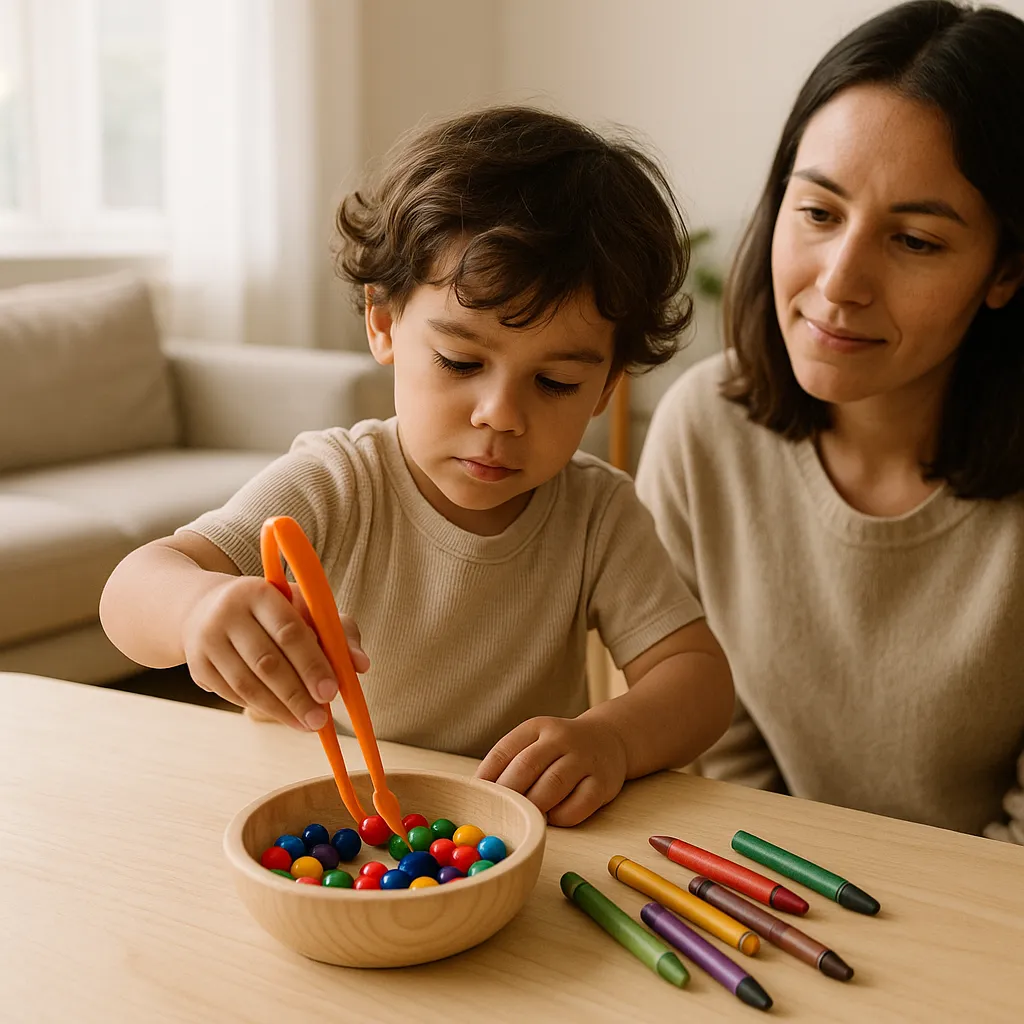
A strong fine motor skills activity is any playful task that asks children to squeeze, pinch, peel, press, snip, stack, lace, draw, or place objects with control. Good examples include playdough, stickers, beads, clothespins, tongs, peg boards, tearing and gluing paper, vertical drawing, and beginner music games that use rhythm and finger awareness.
That matters because fine motor skills show up in far more places than handwriting. Children rely on them to manage clothing fasteners, hold utensils, turn pages, use classroom tools, and begin controlling pencils and scissors. The CDC encourages families to track developmental milestones across early childhood and talk with a healthcare professional if concerns come up, while HealthyChildren from the American Academy of Pediatrics points parents toward practical hand-and-finger experiences such as clay, crayons, scissors, paint, and paper rather than treating fine motor growth as a worksheet problem alone. CDC milestones and HealthyChildren guidance on hand and finger skills are both useful starting points.
For most families, the biggest relief is realizing that a fine motor skills activity does not need to be formal. Children often build more strength and control through short, repeatable play than through long sit-down practice. The best activities feel manageable, familiar, and easy to repeat.
What A Fine Motor Skills Activity Is Really Building
Parents usually choose better activities when they understand the skill underneath the task.
Not every fine motor skills activity works on the same thing. Some activities build hand strength. Others target pincer grasp, bilateral coordination, hand-eye control, or finger isolation. That is why one child may enjoy beads but dislike drawing, while another happily squeezes playdough but struggles with scissors.
NAEYC’s family guidance is helpful here because it points parents toward simple activities such as threading beads, using tweezers, placing pegs in a peg board, drawing, and painting. Those tasks look simple, but they support the small muscles and coordinated movements children need later for writing, self-care, and tool use. NAEYC’s fine motor overview is one of the clearest parent-friendly resources on this point.
- pinching and peeling build finger strength
- squeezing and rolling build hand strength
- snipping and lacing build bilateral coordination
- drawing and painting build control and endurance
- rhythm games can add repetition, timing, and finger awareness
The Best Fine Motor Skills Activity Ideas To Start With
The strongest activities are usually the easiest ones to repeat without pressure.
Most parents do not need a giant list of clever setups. They need a short list of dependable fine motor skills activity ideas that come out again and again. These are some of the most useful options:
- Playdough: roll snakes, pinch pieces, press cookie cutters, or hide beads to dig out later.
- Stickers: peel and place on paper, shapes, simple scenes, or lines.
- Clothespins and tongs: move pom-poms, blocks, or paper pieces from one bowl to another.
- Beads and lacing cards: useful for hand-eye coordination and bilateral hand use.
- Peg boards and small blocks: good for repetition, placement, and endurance.
- Tearing and gluing paper: a strong early alternative when scissors still feel too hard.
- Vertical drawing: tape paper to a wall or easel so the child draws standing up.
The main goal is not novelty. It is repetition without dread. A child who enjoys five reliable activities is usually getting more benefit than a child who sees a brand-new setup every day and resists most of them.
Use Fine Motor Skills Activities In Everyday Routines
Some of the best hand-strength practice happens in normal family life, not only at an activity table.
A fine motor skills activity can be part of normal routines just as easily as it can be part of craft time. Opening snack containers, zipping jackets, peeling fruit, watering plants with a spray bottle, helping with clothespins, stirring batter, sorting coins, or picking up small objects with kitchen tongs all give the hands useful work to do.
This kind of practice often carries over well because the child understands the purpose. They are not doing an exercise because someone suggested it. They are using their hands to get something done. That sense of purpose can reduce resistance, especially for children who do not like sit-down tasks.
If you are trying to build a bigger home routine around this age, there is helpful overlap with our guides to toddler activities at home, indoor activities for kids, and preschool art activities.
How Fine Motor Skills Activities Support Pre Writing Readiness
Writing readiness usually grows from many small skills coming together, not from worksheets alone.
Parents often search for a fine motor skills activity because they are worried about writing. That instinct makes sense, but pre-writing readiness is broader than pencil grip alone. Children need hand strength, coordination, visual attention, posture, bilateral hand use, and enough endurance to stay with a task.
The CDC’s milestone materials and HealthyChildren both help frame this more realistically. Rather than asking whether a child can do perfect paper tasks, they point families toward the wider pattern of everyday hand use and development. If a child is avoiding not only drawing but also utensils, self-care tasks, classroom tools, or simple hands-on play, it is worth paying attention and discussing concerns with a pediatrician. The CDC milestone hub is a useful checkpoint for that bigger picture.
In practical terms, children often get better ready for writing by spending more time squeezing, pinching, snipping, placing, tearing, and painting before they are asked to trace neatly for long stretches.
A Fine Motor Skills Activity Can Also Be Music Rich
Music does not replace the full range of play children need, but it can make repetition more motivating.
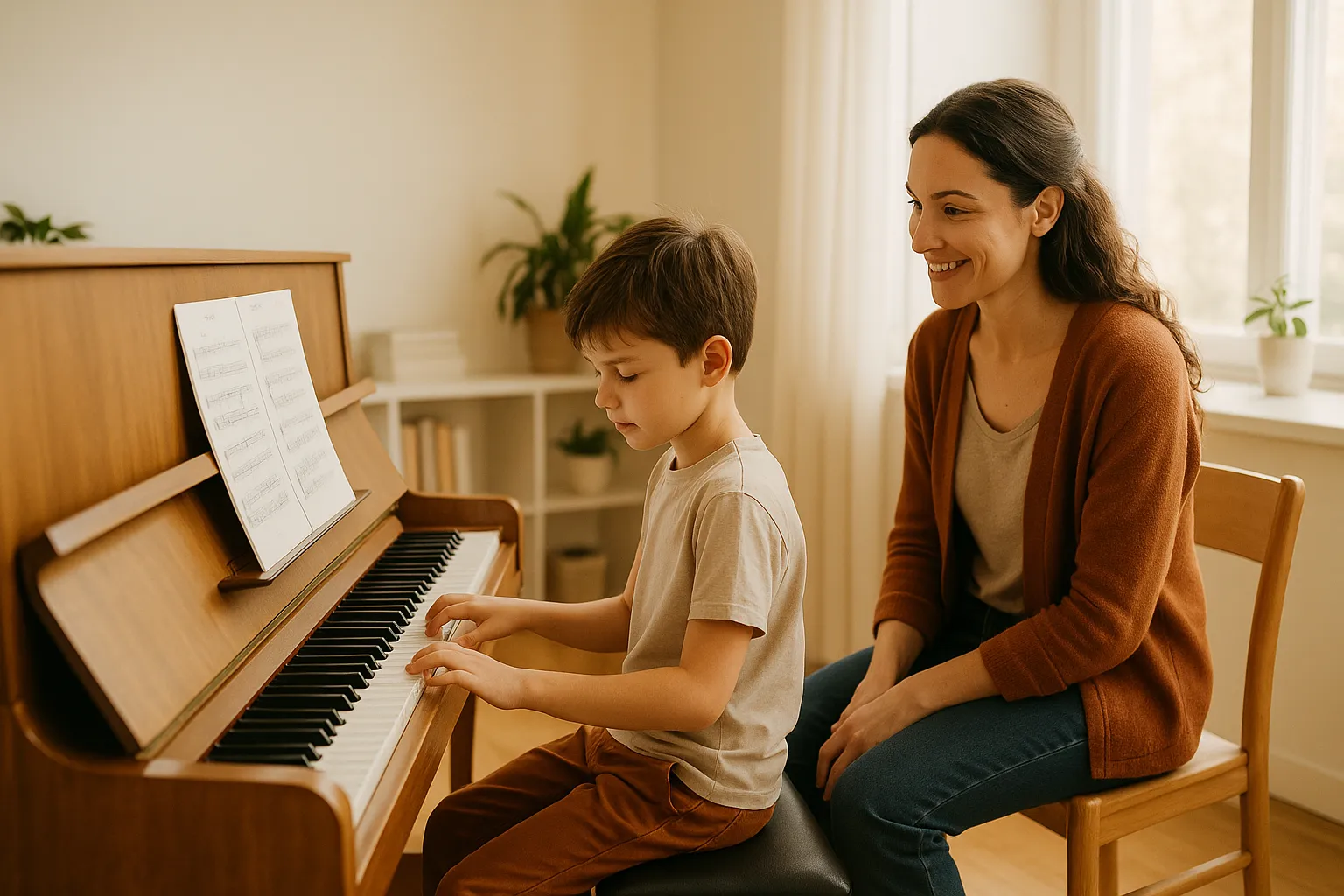
Music can support many of the same foundations that a fine motor skills activity is trying to build. Clapping games, finger plays, rhythm copying, simple percussion, and beginner keyboard exploration all involve timing, controlled movement, bilateral coordination, and repetition. For some children, music makes these movements easier to repeat because the task feels more playful and meaningful.
This is especially useful when a child resists crayons but loves tapping, singing, or experimenting with sounds. Interest matters. A child who will repeat a movement happily during music play is still building awareness and coordination through that repetition.
That connection is one reason Amabile’s Little Mozart class works well as an early starting point for age-4 beginners. It combines keyboard basics, rhythm, musical games, movement, and a mini-recital in a format that feels more age-appropriate than asking very young children to jump straight into private lessons. Families can also learn more about Amabile’s programs and frequently asked questions when comparing next steps.
A Simple Weekly Fine Motor Skills Activity Plan
Most families do better with a repeatable rhythm than with a long list of random ideas.
If you want a practical place to start, a simple weekly plan can help:
- One squeeze day: playdough, putty, or sponge squeezing.
- One pinch day: stickers, tweezers, clothespins, or bead transfer.
- One snip day: child-safe scissors with fringe, straws, or scrap paper.
- One draw or paint day: vertical paper, dot markers, or short crayons.
- One practical life day: snack prep, spray bottles, sorting, or clips.
- One music day: clapping patterns, finger plays, rhythm sticks, or simple keyboard exploration.
Each session can be short. Ten minutes is often enough. What matters most is consistency, variety, and a calm tone. The best fine motor skills activity is the one your child will do often enough to get stronger.
Useful Resources And Related Reading
These sources and related pages can help parents understand fine motor development without overcomplicating it.
The most useful external resources for this topic are the CDC milestone hub, the AAP’s HealthyChildren article on hand and finger skills, and NAEYC’s guide to helping children build fine motor skills. On Amabile’s site, parents can also keep reading in the Fine Motor Skills category, compare age-based ideas in Fine Motor Activities for Preschoolers, and browse broader home-routine ideas on the Amabile blog.
When Fine Motor Progress Starts Looking Like Readiness For Music
Amabile School of Music helps Bay Area families turn early hand skills and rhythm interest into steady confidence.
A fine motor skills activity often reveals something bigger than stronger fingers. A child starts tapping steady patterns, becomes curious about piano keys, repeats finger games, or stays focused longer when sound and movement are involved. Those patterns can be early signs that music would feel meaningful, not just new.
Amabile School of Music helps children, teens, and adults grow in a warm, structured environment with experienced teachers, broad instrument options, and recital opportunities that make progress visible. Parents can review tuition and pricing, explore both Bay Area locations, and see how Amabile introduces younger beginners through Little Mozart.
If your child already enjoys rhythm, finger play, keyboard curiosity, or hands-on musical games, a trial lesson can be a simple next step.
Frequently Asked Questions
What is a good fine motor skills activity for preschoolers?
A good fine motor skills activity for preschoolers is one that asks children to pinch, squeeze, snip, peel, place, or draw in a playful way. Good examples include playdough, stickers, clothespins, beads, tongs, tearing and gluing paper, and simple art activities.
How often should children do fine motor skills activities?
Short daily practice is usually more effective than occasional long sessions. Many children do well with 10 to 15 minutes of hands-on fine motor play most days of the week, especially when the activity feels enjoyable rather than corrective.
Do fine motor skills activities help with handwriting?
Yes. Fine motor skills activities can help build hand strength, bilateral coordination, finger control, and endurance, which all support pre-writing readiness and early handwriting. They work best when they are part of a broader pattern of play and daily hand use.
What if my child avoids fine motor tasks?
Start with lower-pressure activities that match your child’s interests and use larger tools first if needed. Keep sessions short and playful. If avoidance shows up across many daily tasks or you are concerned about milestones, talk with your pediatrician or another qualified professional.
How does music relate to fine motor development?
Music can support fine motor development through finger isolation, bilateral coordination, rhythm patterns, repetition, and controlled hand movement. Clapping games, keyboard play, percussion, and beginner lessons can all reinforce those foundations in a motivating way.