Quick answer
The best activities for preschoolers for Thanksgiving are short, low-prep, and hands-on. Good options include gratitude jars, turkey crafts, leaf sorting, sensory bins, simple baking, movement games, and story-based play. These activities work well because preschoolers learn most naturally through active participation, repetition, and warm interaction with adults.
That approach matches what early-childhood guidance recommends. NAEYC explains that preschoolers learn best through caring relationships, intentional guidance, and opportunities to explore materials, roles, and ideas in play. The CDC’s current guidance for 4-year-olds also points parents toward active play, songs, simple counting, pretend play, and movement games as part of healthy development. Thanksgiving can hold all of that without becoming a long list of crafts.
That matters because Thanksgiving week is usually busy. Parents are shopping, cooking, hosting, traveling, or trying to keep routines steady while the house feels different. A preschool activity does not need to be elaborate to be useful. It just needs to give the child a clear job, a little ownership, and enough structure to feel successful.
What Makes Thanksgiving Activities Work For Preschoolers
The strongest holiday activities are simple enough for young children to start quickly and meaningful enough to connect to the season.
When parents picture Thanksgiving activities for preschoolers, they often think of turkey handprints and coloring pages. Those can be fine, but preschoolers usually do better when the activity includes one clear action such as sort, mix, glue, carry, sing, scoop, or move. A child who can actually do something is usually more engaged than a child who is only following directions.
It also helps to keep expectations realistic. Preschoolers do not need a history lecture or a polished table decoration. They benefit more from language-rich conversation, pretend play, sensory exploration, helping with small tasks, and noticing what it feels like to give thanks in a way they can understand. NAEYC’s guidance on raising a thankful child makes a useful distinction here: real gratitude grows from meaning and modeling, not just from making a child repeat the words thank you on cue.
- keep the setup short enough that you will actually do it
- choose one simple job the child can repeat
- use real language about helping, sharing, and enjoying time together
- mix active play with calmer table activities
Start With A Gratitude Activity That Feels Real
Preschoolers usually understand gratitude better when it stays concrete, personal, and connected to people they know.
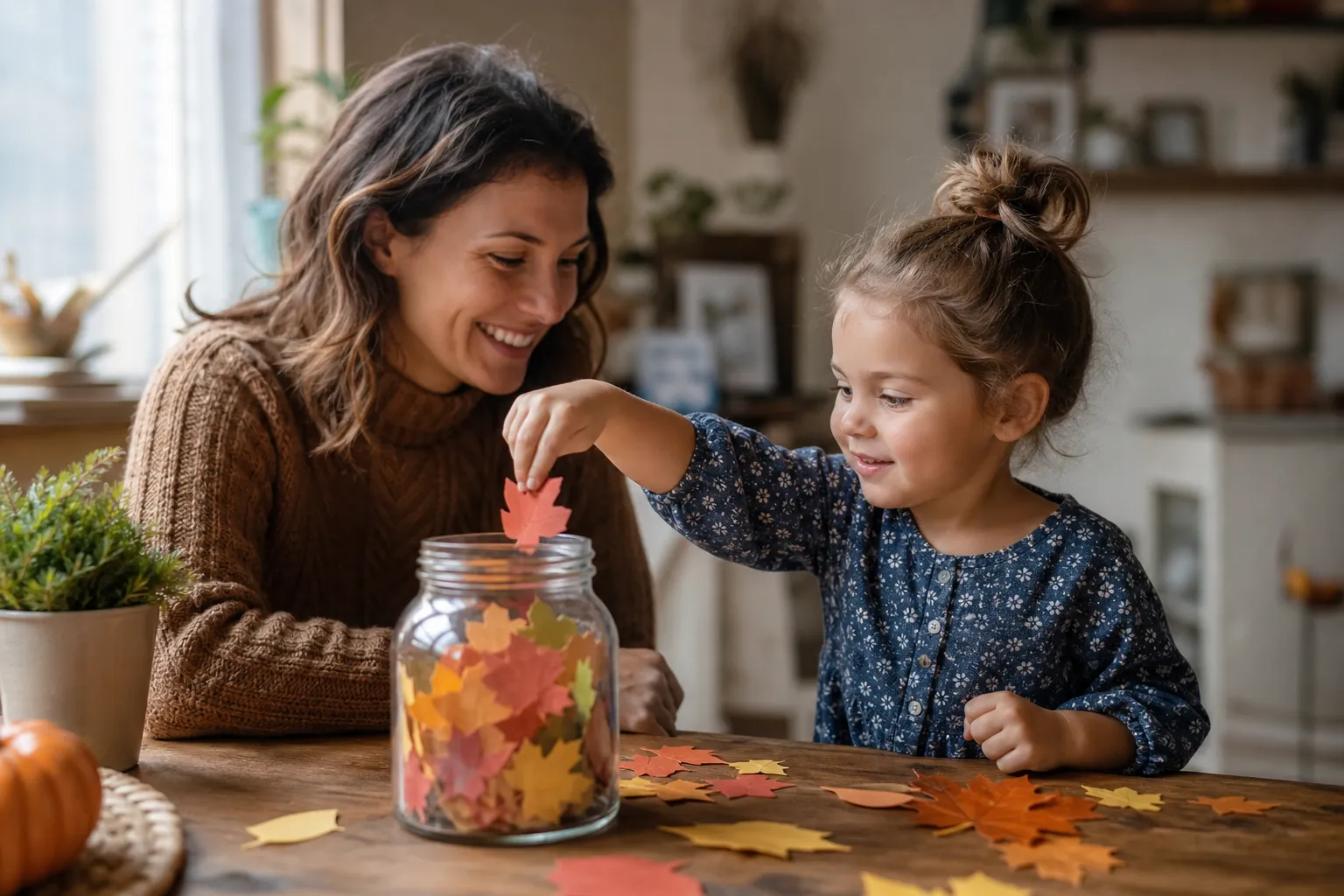
A gratitude jar is one of the best Thanksgiving activities for preschoolers because it is simple, visual, and easy to repeat. Cut paper leaves or use small cards. Ask your child what made them happy today, who helped them, or what they liked doing with the family. Write the answer for them if needed, then let them drop it into the jar.
This works best when adults model it too. HealthyChildren advises parents not to save conversations about gratitude only for Thanksgiving and suggests simple routines such as talking about what went right during the day or keeping a family gratitude jar. That kind of repetition helps children connect gratitude with real life instead of only with holiday manners.
If a jar feels like too much, use a gratitude garland, a thank-you drawing, or a mealtime turn-taking prompt. The goal is not to create perfect words. The goal is to help a preschooler notice people, routines, and moments that feel good and safe.
A simple prompt that works
Instead of asking What are you thankful for right away, try questions such as Who helped you today, What made you smile, or What do you want to do again tomorrow. Those are often easier for preschoolers to answer.
Use Turkey Crafts That Preschoolers Can Actually Finish
The best Thanksgiving crafts for preschoolers focus on doing, not perfection.
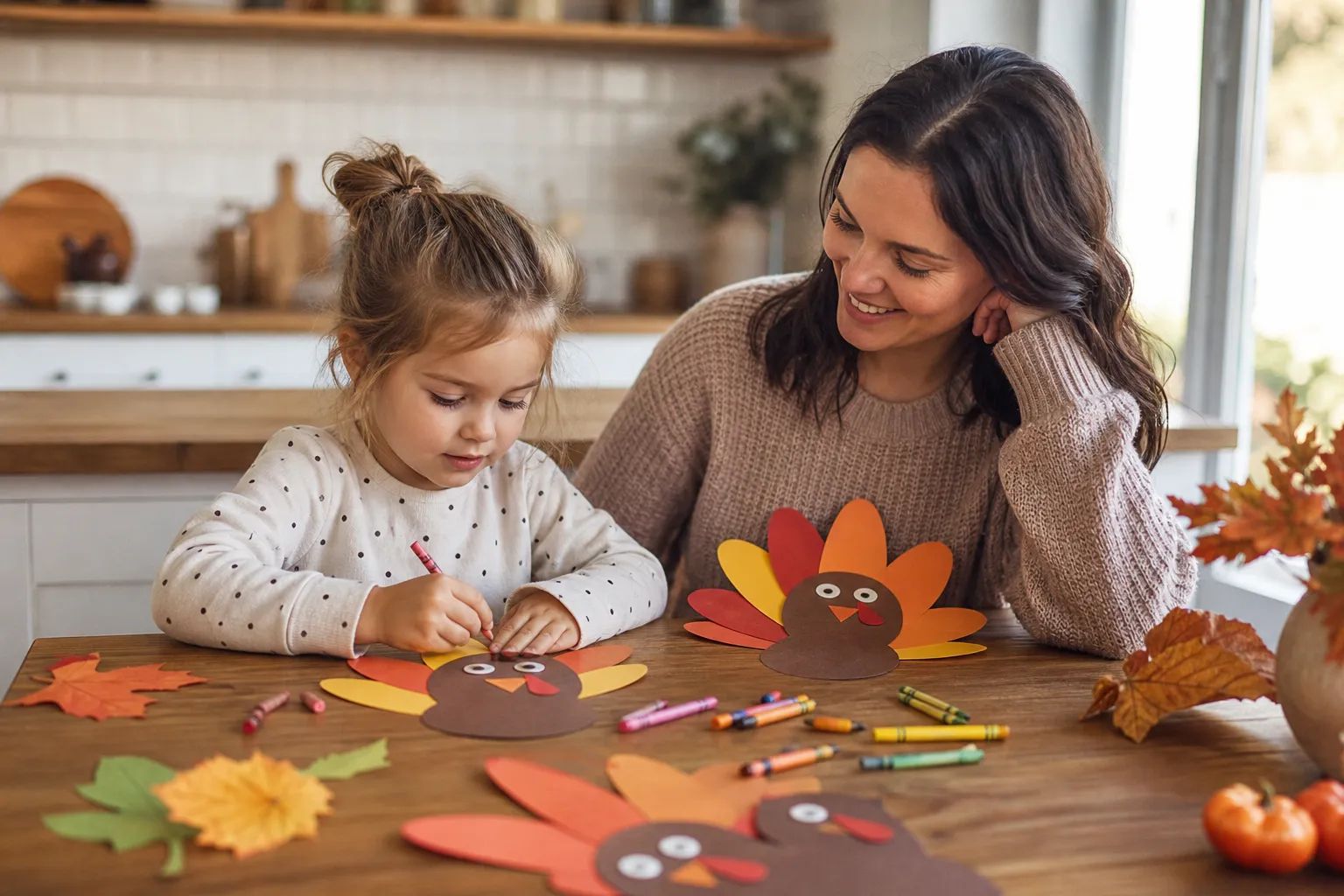
If you want a craft, keep it simple enough that the child can own most of it. Good options include paper turkeys with glued feathers, leaf collages, dot-marker pumpkins, sponge-painted placemats, and sticker-decorated thank-you cards. These work because the child has a clear physical job and gets a visible result quickly.
Open-ended materials are often better than craft kits. NAEYC notes that preschool programs support creative development with open-ended materials such as playdough, chalk, and loose materials that let children create rather than merely copy. Thanksgiving crafts can follow the same idea. Give your child feathers, paper shapes, glue, and crayons and let the turkey look a little uneven. That is usually where the real work happens.
If your child already enjoys art time, our guide to preschool art activities can help you build on the same skills without limiting the ideas to one holiday week.
Add A Thanksgiving Movement Game Before Asking For Table Time
Many preschoolers settle into calmer holiday activities more easily when they get to move first.
This is one of the simplest ways to improve the day. If a preschooler is excited, overstimulated, or restless because relatives are visiting or routines changed, starting with a seated activity can create friction. The CDC recommends active play throughout the day for preschool-aged children, and Thanksgiving games can make that feel seasonal instead of corrective.
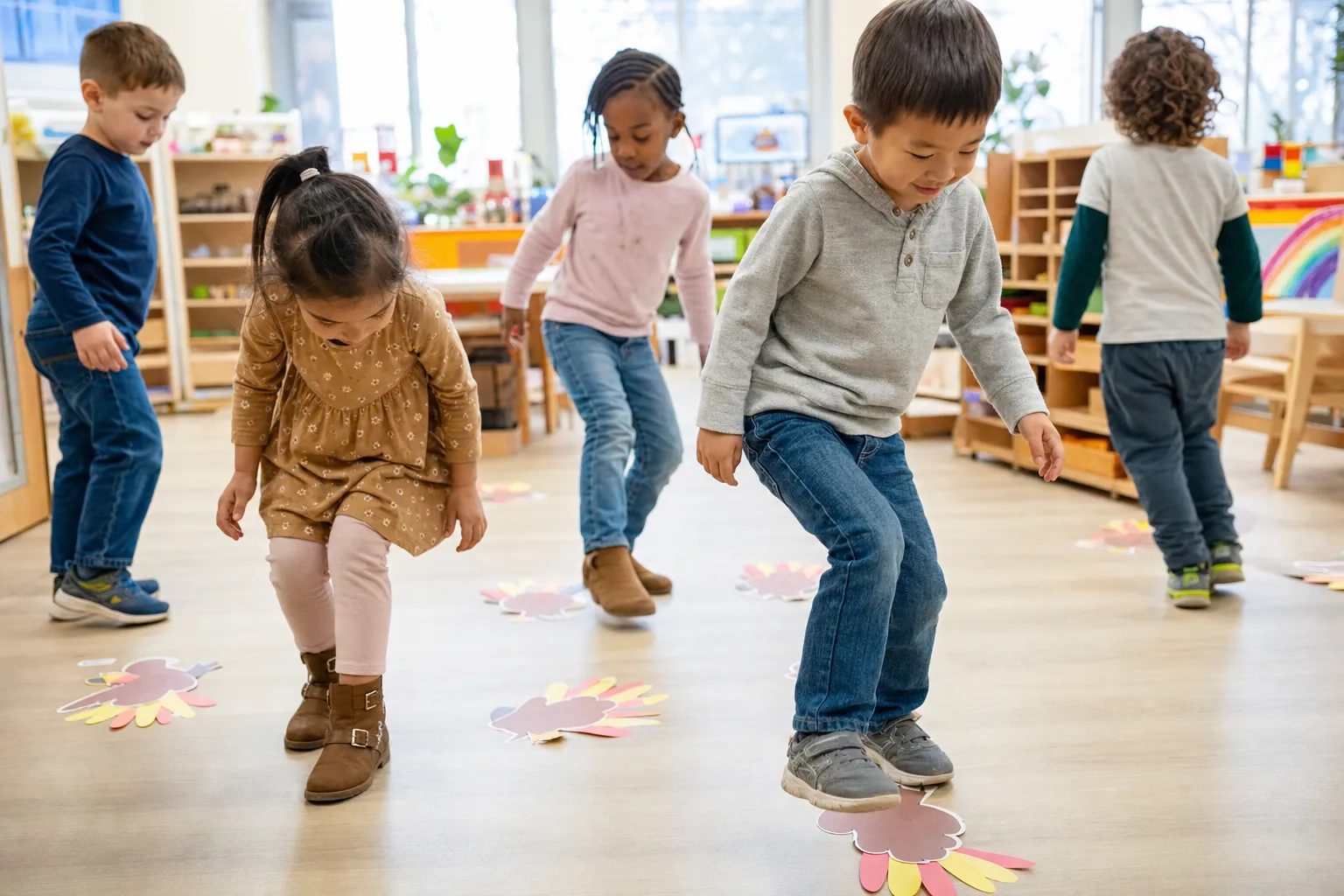
Easy movement ideas include turkey footprint paths, wobble-like-a-turkey races, feather tosses into baskets, pumpkin beanbag carries, and freeze dance with fall songs. You can also turn following directions into a game: flap three times, tiptoe to the couch, hop to the table, freeze, then march back.
Movement games work especially well for preschoolers because they support listening, body control, sequencing, and attention shifting at the same time. They also give adults a quick reset option before dinner prep or family transitions.
Try Sensory Play With A Clear Theme And Clear Boundaries
Thanksgiving sensory activities can hold a preschooler’s attention surprisingly well when the setup stays simple.
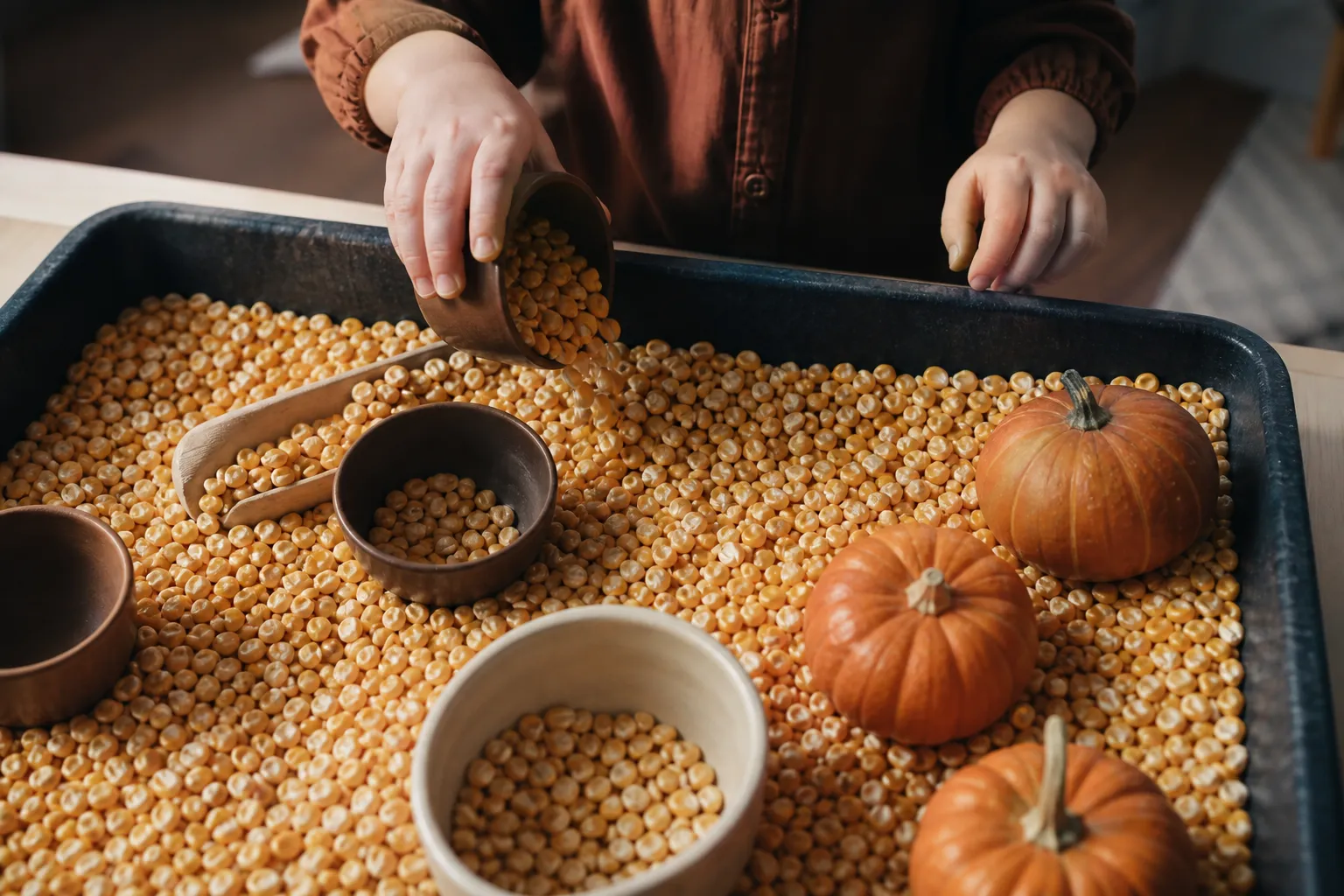
A Thanksgiving sensory bin does not need to be elaborate. Dried corn, scoops, cups, toy pumpkins, silk leaves, wooden spoons, or cinnamon-scented playdough are often enough. The point is to give the child one satisfying action such as scoop, pour, bury, find, sort, or transfer.
Preschoolers usually learn well through hands-on materials because those materials make language, math, and self-regulation more concrete. A child can count mini pumpkins, compare which cup is fuller, sort leaves by color, or practice slow pouring while you narrate what they are doing. That turns sensory play into something richer than just keeping little hands busy.
If your child already likes bins, pouring, or sorting, you may also like our guide to math activities for preschoolers, which uses many of the same hands-on habits in non-seasonal ways.
Let Preschoolers Help With One Real Thanksgiving Cooking Job
Helping in the kitchen can be one of the most meaningful preschool Thanksgiving activities because it gives the child a true role in the day.
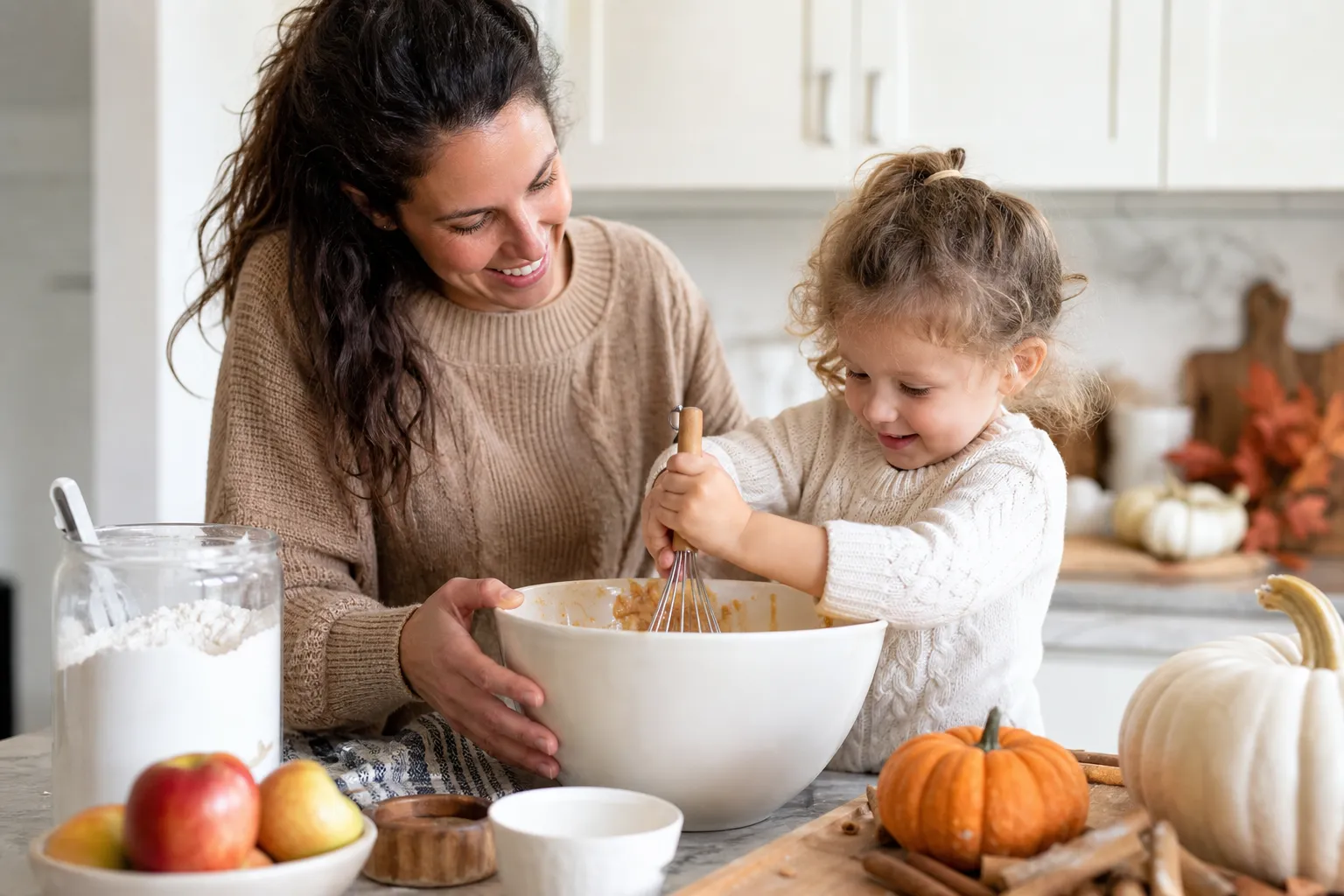
Preschoolers do not need to make the whole meal to feel included. One small job is enough. They can wash apples, stir muffin batter, place napkins, transfer cut vegetables into a bowl, tear herbs, sprinkle cinnamon, or help carry safe ingredients to the counter.
These kinds of tasks support more than family bonding. They build sequencing, vocabulary, and confidence. The CDC’s milestone guidance for 4-year-olds notes that many children this age can serve themselves food or pour water with adult supervision. Thanksgiving kitchen tasks can use that same readiness in a warm, practical way.
Cooking also tends to slow adults down enough to talk. You can count spoonfuls, compare sizes, name colors, and narrate steps in order. That supports early learning while the child feels like a helper instead of a spectator.
Build Calm Thanksgiving Moments With Books, Songs, And Pretend Play
Not every holiday activity needs to be a craft or a game. Preschoolers also benefit from quieter, language-rich routines.
Thanksgiving week often has a lot of stimulation. That is why calmer routines can be just as useful as active ones. Read a simple fall or gratitude-themed picture book. Ask your child what comes next in the story, which character helped someone, or what they would bring to a pretend feast. The CDC suggests reading together and asking children what is happening in the story or what might happen next, which fits this age especially well.
Songs help too. Transition songs, clap patterns, and call-and-response games can make the day feel more organized without making it rigid. NAEYC also points out that singing directions and routines can help young children move through the day more smoothly.
Pretend play is another strong option. Set up a toy Thanksgiving table, stuffed-animal dinner, grocery store, or mini restaurant. According to NAEYC’s guidance on preschool development, children ages 3 to 5 thrive when they can explore materials, roles, and ideas, especially in pretend play. Thanksgiving gives them a ready-made theme for that kind of learning.
A Simple Thanksgiving Activity Rhythm Parents Can Actually Use
When the holiday week feels full, a repeatable rhythm is often more helpful than a huge list of ideas.
If you want structure without overplanning, try this order:
- Start with movement: turkey walk, freeze dance, footprint path, or beanbag carry.
- Shift to a hands-on table activity: craft, gratitude jar, leaf sorting, or sensory tray.
- Give one real helping job: stirring, placing napkins, or carrying safe items.
- Add one calm block: a book, a song, or pretend family dinner with toys.
- End with a sharing moment: show the craft, talk about one happy moment, or sing one last song together.
This kind of structure works because it follows the way many preschoolers regulate best. They move, then settle, then help, then reconnect. If you want more seasonal or at-home ideas nearby, you can also explore our articles on rainy day activities for kids, indoor activities for kids, and toddler activities at home.
How To Keep Thanksgiving Activities Meaningful Without Overdoing Them
The goal is not to fill every minute. The goal is to help a preschooler feel included, successful, and connected.
Parents often get the best results by choosing two or three good ideas instead of trying every printable and craft on the internet. Preschoolers usually remember the feeling of the day more than the number of activities. If the rhythm feels calm, they got to help, and adults were present enough to notice them, that often matters most.
That is also why holiday activities can tell you something useful about your child. You may notice that they love repeating songs, organizing pretend play, copying clap patterns, or finishing short guided tasks with a lot of focus. Those are not just holiday moments. They can be early signs that a child enjoys structured enrichment when it is presented warmly and clearly.
How Amabile Can Help
Amabile School of Music helps Bay Area families turn a child’s natural interest in songs, rhythm, movement, and guided play into confident early musical growth.
Many preschool holiday activities naturally overlap with early music readiness. A child follows patterns, remembers song sequences, takes turns, moves to a beat, and gains confidence by sharing something they made or learned. Those same habits matter when children begin music classes or lessons.
Amabile School of Music gives Bay Area families a warm next step when that interest starts to deepen. Families choose Amabile for caring teachers, a strong local track record since 2008, and frequent recital opportunities that help children build confidence over time. For younger beginners, the school’s Little Mozart group class offers an age-appropriate way to begin with musical games, keyboard basics, and a mini-recital.
If your child lights up during songs, rhythm games, or guided holiday activities, you can explore all programs, learn about recital opportunities, review both locations, or visit the FAQ page before booking.
Frequently Asked Questions
What are the best activities for preschoolers for Thanksgiving?
The best activities for preschoolers for Thanksgiving are simple, hands-on, and easy to finish in a short block of time. Good options include gratitude jars, turkey crafts, leaf sorting, sensory bins, simple baking, movement games, and picture-book-based play.
How long should a Thanksgiving activity last for a preschooler?
Many preschool Thanksgiving activities work best for about 10 to 20 minutes. Some children stay with an activity longer when it includes movement, sensory play, or a meaningful role such as helping in the kitchen.
Do Thanksgiving activities for preschoolers need to be crafts?
No. Crafts are only one option. Preschoolers also benefit from movement games, sensory trays, gratitude routines, songs, simple cooking tasks, pretend play, and reading activities tied to the season.
How can parents make Thanksgiving meaningful for preschoolers without making it too complicated?
Parents can keep Thanksgiving meaningful by focusing on a few simple ideas such as helping, noticing what went well, sharing food tasks, talking about gratitude in real language, and choosing one or two seasonal activities instead of filling the whole day.
When does holiday play show readiness for music or other structured enrichment?
Holiday play can point to readiness when a preschooler enjoys repeating songs, copying rhythms, following short routines, taking turns, and staying engaged with guided activities long enough to finish them with support.