Quick answer
A kindergarten readiness assessment is best used as a broad observation tool, not a pass-or-fail test. It should look at language, listening, attention, self-help routines, social interaction, fine motor skills, and early literacy and math foundations. The goal is to understand whether your child is building the habits that make a kindergarten day feel manageable and positive.
Most Useful Lens
Look for patterns over time rather than testing one busy afternoon
What Parents Miss Most
Social and self-regulation skills often matter as much as early academics
Healthy Goal
Confidence, participation, and steady growth rather than perfection
The broad approach matters. The Ready-for-School Checklist published through Reading Rockets from the U.S. Department of Education points parents toward health, physical well-being, social and emotional preparation, language, and general knowledge. The AAP’s HealthyChildren guidance on school readiness also stresses that social, emotional, and behavior skills are critical to school success. That means a strong kindergarten readiness assessment looks beyond letters and counting.
It also helps to remember that a checklist is not the same thing as a formal developmental screening. The CDC’s milestones by age 5 page explains that milestone checklists help families monitor development, but they are not a substitute for validated screening tools. That is reassuring because most parents do not need to become assessors. They need a calm way to notice strengths, patterns, and areas where more support may help.
What A Kindergarten Readiness Assessment Should Measure
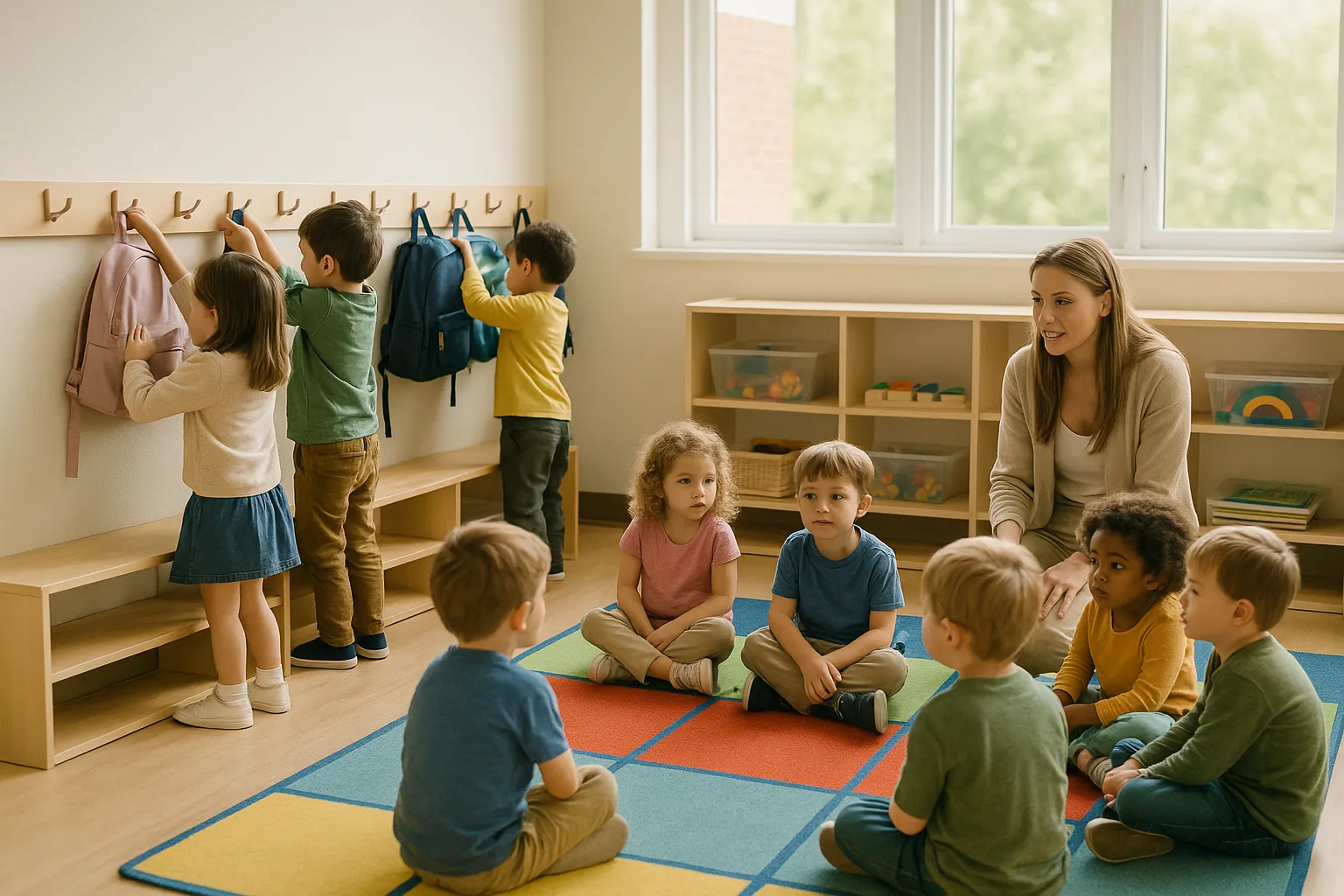
A useful readiness assessment looks at how a child functions in everyday situations, not just what they can memorize on demand.
Most parents start with early academics because they are easy to see. Can my child count to ten? Do they know letters? Can they write their name? Those questions are fine, but they are only part of the picture. Kindergarten asks children to do much more than identify facts. It asks them to listen, wait, transition, communicate needs, manage frustration, and stay engaged in group routines.
NAEYC guidance for families makes this point well. Children do not all arrive with the exact same profile, and readiness is broader than isolated academic skills. A child may need continued growth in one area and still be genuinely ready for school if they can participate with curiosity and support.
A practical kindergarten readiness assessment usually includes these areas:
- language and communication
- social and emotional readiness
- attention and self-regulation
- self-help and routine independence
- fine motor and physical readiness
- early literacy and early math foundations
Language And Communication Signs To Observe
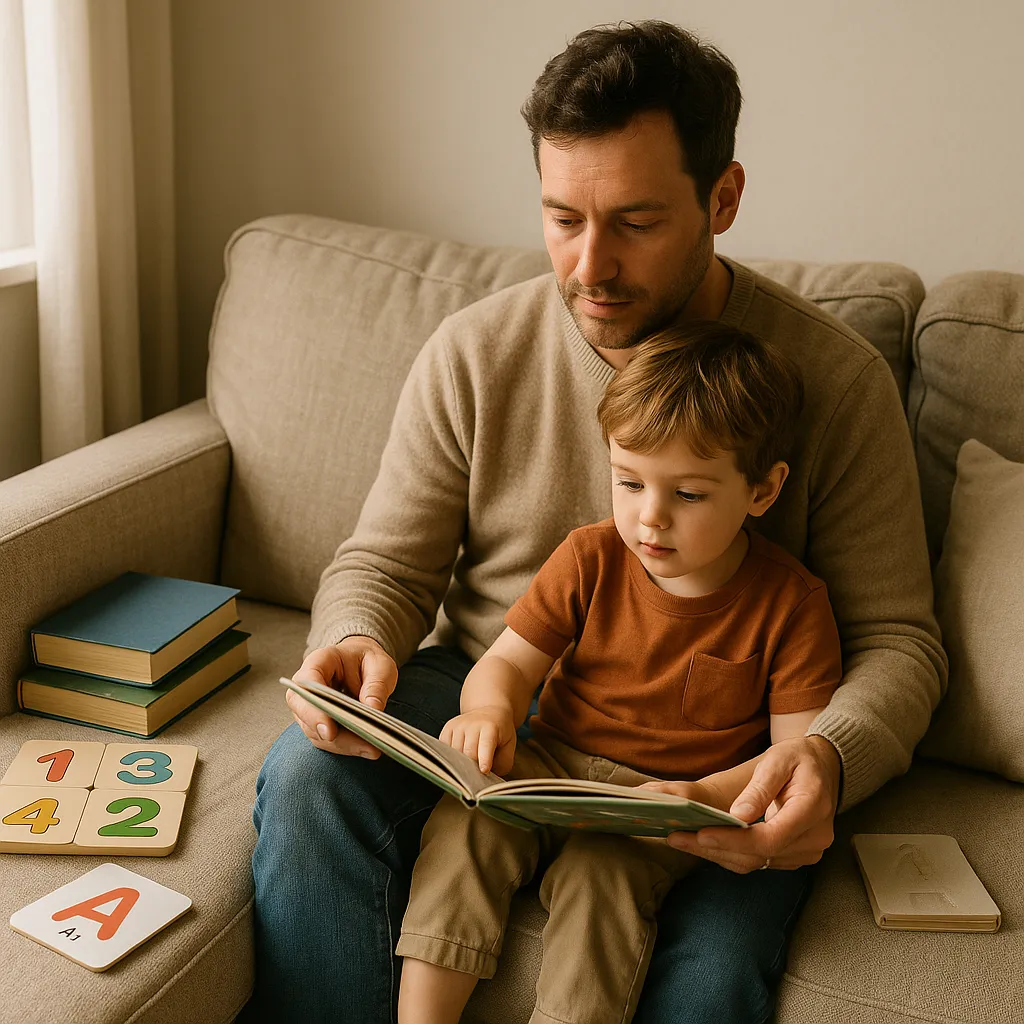
A parent-friendly readiness assessment starts by asking whether your child can participate in normal back-and-forth communication.
Language readiness is not about sounding advanced. It is about whether your child can take part in the communication patterns kindergarten depends on. The CDC’s age-5 milestones include telling a story with at least two events, answering simple questions about a book, and keeping a conversation going for several back-and-forth exchanges.
When you do an informal kindergarten readiness assessment at home, look for signs like these:
- speaks in clear sentences most of the time
- can answer simple who what where questions
- can follow one-step and many two-step directions
- can tell you what happened during part of the day
- can ask for help clearly when needed
- can listen to a short story and answer simple questions about it
If this area still feels uneven, ordinary routines help more than drilling. Read aloud, talk during errands, ask open questions, sing songs with repeating lines, and let your child explain things in their own words. Those moments build real readiness because they strengthen listening and expressive language together.
Social And Emotional Readiness Often Tells You The Most
Many kindergarten transitions go smoothly or feel hard because of social and emotional readiness, not because of letter knowledge alone.
This is the part of a kindergarten readiness assessment that parents often find hardest to judge. A child can be bright, verbal, and curious but still have a tough start if group expectations feel overwhelming. The AAP highlights social, emotional, and behavior skills as central to school success, and that matches what many teachers observe in real classrooms.
Useful questions to ask include:
- Can your child separate from you without ongoing distress?
- Can they take simple direction from another adult?
- Can they wait briefly for a turn?
- Can they recover from a small disappointment with support?
- Can they participate in a group activity for a short stretch?
- Can they ask for help instead of shutting down or exploding every time?
These skills are not about having a quiet or unusually compliant child. They are about whether your child is beginning to handle the rhythms of shared classroom life. That is why some of the strongest kindergarten preparation happens through playdates, preschool routines, library story times, group classes, and other small chances to practice being part of a group.
Attention And Self-Regulation Deserve Their Own Category
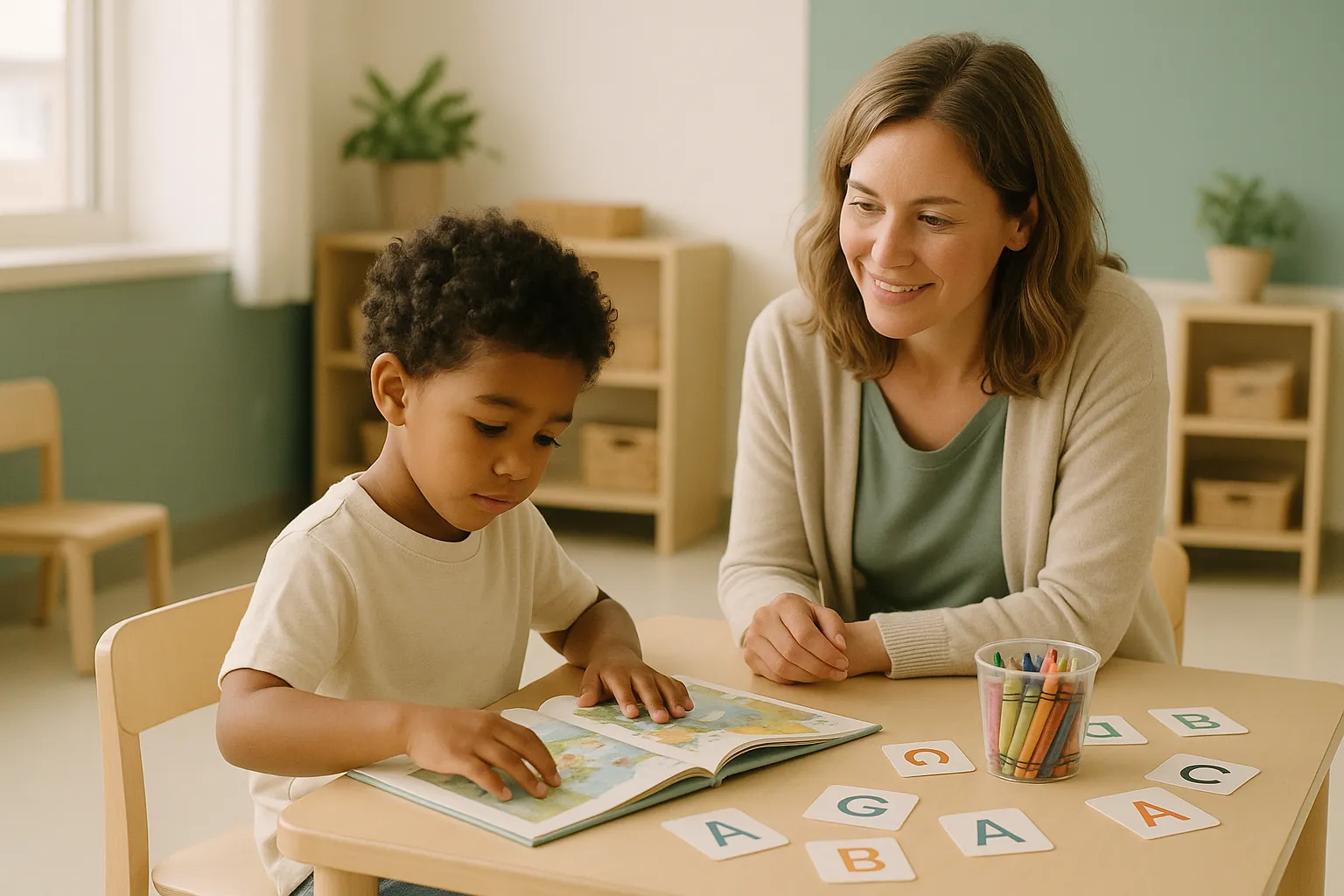
A child may know plenty, but school still feels hard if attention and self-regulation are very shaky.
Executive function skills help children plan, focus attention, shift between tasks, and manage information. Harvard’s Center on the Developing Child describes executive function and self-regulation as an air traffic control system for the brain. That description helps explain why a kindergarten readiness assessment should not stop at academic facts.
In day-to-day terms, you are looking for whether your child can:
- stay with a simple activity for several minutes
- pause and listen when an adult gives direction
- move from one routine to another with support
- remember simple expectations like clean up or line up
- manage excitement or frustration a little better than they could a few months ago
The CDC’s age-5 milestones include paying attention for five to ten minutes during activities like story time or arts and crafts. That is a useful benchmark because it is concrete and realistic. It also reminds parents that attention at this age is still developing. You are not looking for long stretches of perfect stillness. You are looking for growing stamina, responsiveness, and recoverability.
Self-Help Skills Belong In Every Readiness Assessment
A child who can manage basic routines often feels much more secure and capable at school.
Self-help skills are easy to underestimate because they seem ordinary at home. In a classroom, though, they affect comfort and confidence all day long. A kindergarten readiness assessment should include simple questions such as:
- Can your child use the bathroom with age-appropriate independence?
- Can they wash hands and manage simple hygiene with reminders?
- Can they open a lunch container or water bottle?
- Can they put on a jacket or backpack with some independence?
- Can they clean up materials when prompted?
These do not sound academic, but they reduce stress in a major way. A child who can manage more of the day independently often has more energy left for listening, learning, and joining in. If this area needs work, practice during normal routines is usually enough. Let your child try, wait a little longer before stepping in, and repeat the same tasks consistently.
How To Think About Early Academic Skills
A strong readiness assessment includes early literacy and math, but it should not turn them into the whole story.
Parents often worry that a child must be reading before kindergarten. Usually, that is not the right benchmark. Reading Rockets notes that kindergarten is where most children learn to read and write, not where fully formed readers are expected to arrive. A better question is whether the child has the foundations that make classroom learning easier.
In a practical kindergarten readiness assessment, that may look like:
- enjoys being read to and can stay with a short book
- recognizes some letters, especially those in their own name
- notices rhymes or repeated sounds in songs
- counts a small set of objects
- sorts by color, shape, or size
- shows curiosity about print, signs, numbers, and patterns
The U.S. Department of Education checklist is especially helpful here because it includes everyday experiences such as talking, listening, solving problems, sorting and classifying, noticing similarities and differences, and having opportunities to draw, make music, and dance. That is a healthier picture of readiness than worksheet performance alone.
If you want more support around hand strength and pre-writing foundations, our guide to fine motor activities parents can start today can help you build those skills through manageable play at home.
How To Do A Kindergarten Readiness Assessment At Home
The best home assessment is calm, repeatable, and built into ordinary life.
You do not need to sit your child down with a clipboard. In fact, that usually gives a less accurate picture. Children often show their real readiness more clearly during familiar routines than during a one-time test feeling.
A useful home approach looks like this:
- Watch across a few weeks. Notice what your child does consistently, what falls apart under stress, and what improves with repetition.
- Use real settings. Observe at meals, playdates, story time, errands, clean-up time, and transitions out the door.
- Look for trends, not one-off moments. A tired child having a rough day does not tell you everything.
- Ask other adults. Preschool teachers, childcare providers, and pediatricians often notice patterns you do not see at home.
- Separate support needs from readiness panic. A child can need more practice in several areas and still be on a healthy path toward school.
If you want an even simpler frame, sort what you observe into three columns: already comfortable, emerging with support, and still hard. That gives you a more realistic picture than trying to label your child ready or not ready in one sentence.
Why Music Can Support Readiness Skills
Music is not a substitute for preschool, but it can strengthen several habits that also matter in kindergarten.
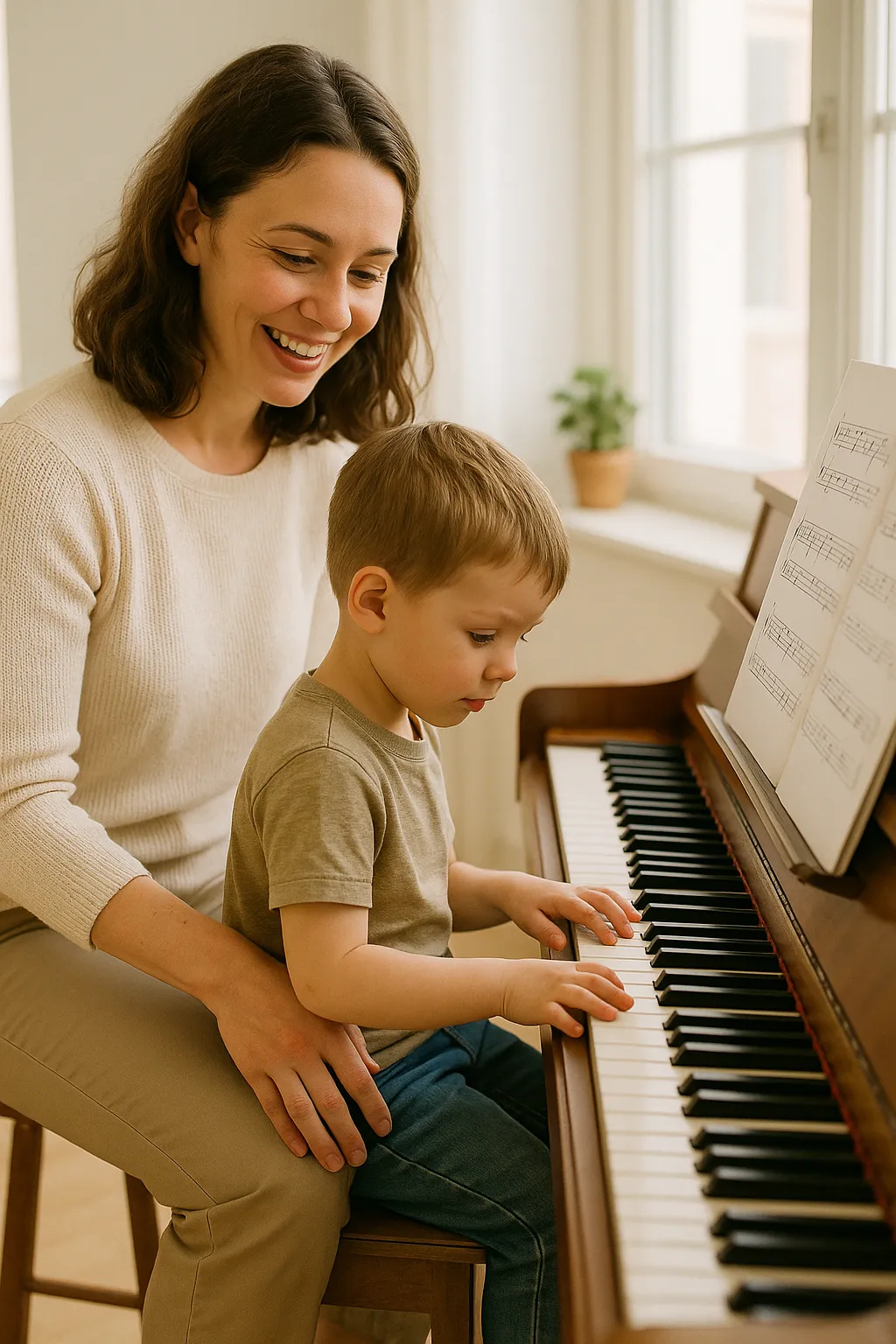
Parents often notice that music asks children to practice many readiness skills at once. A child listens for cues, waits for a turn, copies a pattern, remembers a sequence, transitions between activities, and keeps going through mistakes. In that sense, music can support the same kinds of participation habits that help a kindergarten day feel smoother.
This is especially relevant for families with young beginners. Amabile’s Little Mozart group class gives age-4 students a gentle first step through rhythm, posture, notes, movement, games, and a mini-recital. Those routines can help children practice attention, listening, and confidence in an encouraging group setting. Families can also explore recital opportunities, which give children a positive reason to participate and prepare.
If you are also looking for broader home ideas, our article on a kindergarten readiness checklist for parents pairs well with this assessment guide, and our guide to indoor activities for kids includes simple routines that build listening and attention without turning home into school.
When To Ask For More Support
An informal readiness assessment is useful, but it should not replace professional guidance when concerns are persistent or broad.
Talk with a pediatrician, preschool teacher, or another qualified professional if your child seems delayed across several areas, loses skills they once had, has trouble communicating needs, or becomes consistently overwhelmed by everyday age-appropriate routines. The CDC specifically advises families to act early if a child is not meeting milestones, has lost skills, or if parents have other concerns.
That conversation does not mean you have done something wrong. Often it simply gives you better information and a clearer plan. What matters most is addressing concerns early, calmly, and without shame.
How Amabile Can Help
If your child is showing interest in music while you are also thinking about attention, confidence, and school readiness, Amabile offers a warm next step.
Amabile School of Music serves families in San Francisco, Moraga, Lafayette, Orinda, and nearby Bay Area communities with beginner-friendly music programs, caring teachers, and frequent performance opportunities. Parents can explore music programs, compare both locations, review tuition information, and read common questions on the FAQ page.
For very young beginners, Little Mozart can be a gentle starting point. For children who seem ready for one-on-one attention, a trial lesson can help parents see whether music lessons feel like the right fit for their child’s stage, temperament, and routine.
Frequently Asked Questions
What is a kindergarten readiness assessment?
A kindergarten readiness assessment is a broad look at the skills that help a child handle a kindergarten day. It usually includes language, listening, attention, social skills, self-help routines, fine motor control, and early literacy and math foundations. It should be used as a guide, not a pass-or-fail test.
How can parents do a kindergarten readiness assessment at home?
Parents can do an informal kindergarten readiness assessment by watching how their child handles everyday routines, group situations, listening tasks, simple conversations, early book and number activities, and independent tasks like using the bathroom, washing hands, and opening containers. The goal is to notice patterns over time, not judge one moment.
What skills matter most in a kindergarten readiness assessment?
The most important skills are usually communication, attention, self-regulation, social interaction, and independence with basic routines. Early literacy and math matter too, but most children do not need to read before kindergarten. Schools expect children to keep developing after they start.
Should I worry if my child is strong academically but struggles socially?
That is worth paying attention to because social and emotional readiness strongly affect how smoothly kindergarten goes. A child who can ask for help, follow directions, take turns, and recover from frustration often has an easier school transition, even if academic skills are still developing.
When should parents ask for professional support?
Parents should ask for guidance from a pediatrician, preschool teacher, or another qualified professional if they notice delays across several areas, a loss of skills, consistent difficulty communicating needs, or strong trouble with everyday age-appropriate routines and transitions.